JSTOR Global Plants Home
  • Home
  • Browse
  • About
  • Access
  • Account
    • Saved Items
    • Profile
  • Log in

Global Plants

Skip to Main Content
  • JSTOR Global Plants Home
  • Global Plants

    • Browse
    • About
    • Access
    • Account
      • Saved Items
      • Profile
Log in
  • Browse
  • About
  • Access
  • Account
    • Saved Items
    • Profile
Advanced Search

Compilation
Dactylis paucinervis

8 Images see all

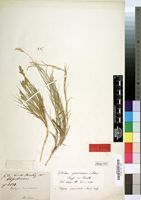
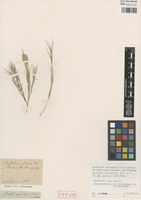
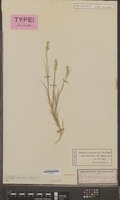
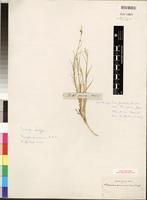
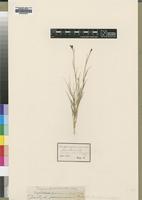
Type of Dactylis paucinervis Nees [family GRAMINEAE]
Syntype of Dactylis paucinervis Nees [family POACEAE]
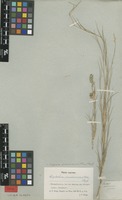
Type of Dactylis paucinervis Nees [family GRAMINEAE]
Isotype of Odyssea paucinervis (Nees) Stapf [family POACEAE]
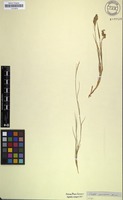
Type of Dactylis paucinervis Nees [family POACEAE]
Type? of Dactylis paucinervis Nees [family POACEAE]
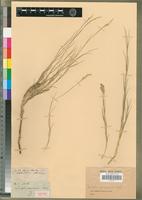
Isotype of Dactylis paucinervis Nees [family POACEAE]
Previous
Next

Name

Identification
Dactylis paucinervis Nees [family GRAMINEAE ] (stored under name); Verified by Not on sheet.,
Related name
  • Odyssea paucinervis
  • Dactylis paucinervis
  • Diplachne paucinervis

Flora

Entry for DIPLACHNE paucinervis Stapf ex Rendle [family POACEAE]
Herbarium
Royal Botanic Gardens, Kew (K)
Collection
Flora Capensis
Resource Type
Reference Sources
Entry From
Flora Capensis, Vol 7, page 310, (1900) Author: (By O. STAPF.)
Names
DIPLACHNE paucinervis Stapf ex Rendle [family POACEAE], in Cat. Afr. Pl. Welw. ii. 232
Dactylis paucinervis Nees [family POACEAE], Fl. Afr. Austr. 429; Steud. Syn. Pl. Glum. i. 297; Durand & Schinz, Consp. Fl. Afr. 904.
Information
perennial, tufted; culms densely fascicled with numerous innovation shoots from a descending rhizome (covered with papery scales), distichously leafy all along, slender, 1/2–1 ft. long, pubescent below the panicle, otherwise glabrous, smooth, many-noded, internodes all enclosed or sometimes the intermediate and upper shortly exserted; leaves glaucous, finely hairy to glabrous; sheaths very tight, striate, scantily bearded at the mouth, lower short, firm, persistent, lowest bladeless or with minute mucro-like blades; ligule a minute, ciliolate rim; blades convolute-subulate from a usually almost flat base, spinously pungent, 1/2–2 in. by 1–1 1/2 lin. (at the base), rigid to very rigid, scabrid along the margins and towards the tips; panicle linear to obovate-oblong, contracted, dense, erect, 1–2 in. long, light green; rhachis angular, scabrid, very finely puberulous and sometimes also with scattered long hairs; branches solitary or geminate, adpressed or obliquely erect, subsecund, bearing spikelets from the base or almost so, angular, scabrid and finely puberulous, lowest 1/3–1 in. long; pedicels very short; spikelets closely imbricate, lanceolate, acute, 2–3 1/2 lin. long, closely 3–7-flowered; glumes subequal, lanceolate, acute, membranous, margins and tips hyaline, keel smooth or scaberulous, upper 1 1/2–2 lin. long, lowest slightly shorter; valves oblong to lanceolate in profile, acute, entire or very minutely 2-toothed, mucronulate from or close to the tip, rigidly membranous, smooth, 3-nerved, side-nerves and keel silky-ciliate, the former to the middle or beyond, the latter scarcely to the middle, scabrid above, or upper valves almost glabrous; pales oblong, obtuse, 1–1 1/4 lin. long, keels scabrid, flaps glabrous or hairy; lodicules cuneate, fleshy, small; anthers 1/2 lin. long. null
Range
Also in Damaraland and tropical Bechuanaland.
Distribution
WESTERN REGION Little Namaqualand; near Henkries, Atherstone, 7! Vanrhynsdorp Div.; at Strand Fontein, near the mouth of the Olifants River, Drège!
Notes
This is evidently very closely allied to D. pungens, Hack. (Bull. Herb. Boiss. iv. App. iii. 25), from Hereroland.

Related Materials

  • Terms and Conditions
  • Privacy Policy
  • Cookie Policy
  • Cookie Settings
  • Accessibility
  • Help
  • Contact Us
  • Facebook
  • Twitter
ITHAKA

JSTOR is part of ITHAKA, a not-for-profit organization helping the academic community use digital technologies to preserve the scholarly record and to advance research and teaching in sustainable ways.

©2000-2026 ITHAKA. All Rights Reserved. JSTOR®, the JSTOR logo, JPASS®, Aluka®, and ITHAKA® are registered trademarks of ITHAKA.

╳