JSTOR Global Plants Home
  • Home
  • Browse
  • About
  • Access
  • Account
    • Saved Items
    • Profile
  • Log in

Global Plants

Skip to Main Content
  • JSTOR Global Plants Home
  • Global Plants

    • Browse
    • About
    • Access
    • Account
      • Saved Items
      • Profile
Log in
  • Browse
  • About
  • Access
  • Account
    • Saved Items
    • Profile
Advanced Search

Compilation
Cystopteris tennesseensis

2 Images see all

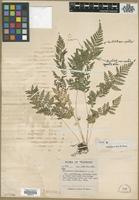
Type of Cystopteris tennesseensis Shaver [family WOODSIACEAE]
Type of Cystopteris fragilis (Linnaeus) Bernhardi f. simulans Weatherby [family ATHYRIACEAE]
Previous
Next

Name

Identification
Cystopteris tennesseensis Shaver [family WOODSIACEAE ] (stored under name); Verified by Shaver,
Related name
  • Cystopteris tennesseensis
Common name
  • Tennessee bladder fern, Flora of North America Vol. 2

Flora

Entry for Cystopteris tennesseensis Shaver [family WOODSIACEAE]
Herbarium
Flora of North America (FNA)
Collection
Flora of North America
Resource Type
Reference Sources
Entry From
Flora of North America, Vol 2,
Names
Cystopteris tennesseensis Shaver [family WOODSIACEAE], J. Tennessee Acad. Sci., 25(2): 107. 1950
Cystopteris fragilis (Linnaeus) Bernhardi forma simulans Weatherby [family WOODSIACEAE]
Cystopteris fragilis var. tennesseensis (Shaver) McGregor [family WOODSIACEAE]
Treatment Author(s)
Christopher H. Haufler
Robbin C. Moran
Michael D. Windham
Information
Stems creeping, not cordlike, internodes short, heavily beset with old petiole bases, hairs absent; scales usually tan to light brown, lanceolate, radial walls tan to brown, thin, luminae tan. Leaves monomorphic, crowded near stem apex, to 45 cm, nearly all bearing sori. Petiole variable in color but mostly dark brown at base, gradually becoming straw-colored distally, shorter than blade, sparsely scaly at base. Blade deltate to narrowly deltate, 2-pinnate-pinnatifid, usually widest at or near base, apex short-attenuate; rachis and costae with occasional unicellular, gland-tipped hairs, with or without bulblets (usually misshapen); axils of pinnae with infrequent multicellular, gland-tipped hairs. Pinnae usually perpendicular to rachis, not curving toward blade apex, margins serrate; proximal pinnae pinnatifid to pinnate-pinnatifid, ± equilateral, basiscopic pinnules not enlarged, basal basiscopic pinnules sessile to short-stalked, base truncate to obtuse; distal pinnae ovate to oblong. Veins directed into teeth and notches. Indusia cup-shaped, apex truncate, with scattered, unicellular, gland-tipped hairs. Spores spiny, usually 38--42 µm. 2 n = 168.
Phenology
Sporulating summer--fall
Altitude range
100--500 m
Distribution
USA Ala.USA Ark.USA Ga.USA Ill.USA Ind.USA IowaUSA Kans.USA Ky.USA Md.USA Mo.USA N.C.USA Ohio.USA Okla.USA Pa.USA Tenn.USA Va.USA W.Va.USA Wis.
Discussion
Cystopteris tennesseensis , an allotetraploid species, has C . bulbifera and C . protrusa as diploid progenitors. The relative distinctiveness of these diploids suggests that identification of C . tennesseensis individuals should be straightforward. As with other members of Cystopteris , however, a series of features makes reliable recognition of this tetraploid challenging. For some characteristics (occasional unicellular, gland-tipped hairs and bulblets; short-attenuate, narrowly deltate blades), it is intermediate between its parents; for others (very short internodes and crowded leaves; occurrence on rock), it tends toward C . bulbifera . This unequal intermediacy, the multiple origins from genetically different individuals (C. H. Haufler et al. 1990), and the occurrence of sterile backcross triploids with its diploid progenitors in zones of sympatry has blurred the already subtle features distinguishing this allopolyploid. For example, some individuals of C . bulbifera may have very few glandular hairs, and some C . tennesseensis appear to lack glandular hairs entirely (R. F. Blasdell 1963). Further, sterile tetraploid hybrids (called C . × wagneri R. C. Moran) between C . tennesseensis and C . tenuis have been reported (R. C. Moran 1983) and verified through isozyme analyses (C. H. Haufler, unpubl. data). Finally, as discussed above, the recently recognized C . utahensis (C. H. Haufler and M. D. Windham 1991) is extremely similar morphologically to C . tennesseensis .

Related Materials

  • Terms and Conditions
  • Privacy Policy
  • Cookie Policy
  • Cookie Settings
  • Accessibility
  • Help
  • Contact Us
  • Facebook
  • Twitter
ITHAKA

JSTOR is part of ITHAKA, a not-for-profit organization helping the academic community use digital technologies to preserve the scholarly record and to advance research and teaching in sustainable ways.

©2000-2026 ITHAKA. All Rights Reserved. JSTOR®, the JSTOR logo, JPASS®, Aluka®, and ITHAKA® are registered trademarks of ITHAKA.

╳