JSTOR Global Plants Home
  • Home
  • Browse
  • About
  • Access
  • Account
    • Saved Items
    • Profile
  • Log in

Global Plants

Skip to Main Content
  • JSTOR Global Plants Home
  • Global Plants

    • Browse
    • About
    • Access
    • Account
      • Saved Items
      • Profile
Log in
  • Browse
  • About
  • Access
  • Account
    • Saved Items
    • Profile
Advanced Search

Compilation
Cyperus excisus

4 Images see all

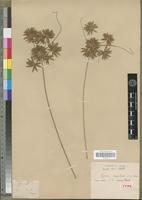
Holotype of Cyperus excisus Böck. [family CYPERACEAE]
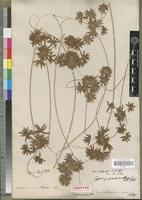
Isotype of Cyperus excisus Böck. [family CYPERACEAE]
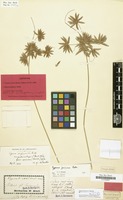
Lectotype of Cyperus excisus Boeckeler [family CYPERACEAE]
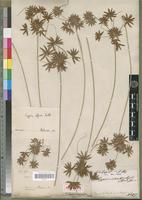
Isotype of Cyperus excisus Böck. [family CYPERACEAE]
Previous
Next

Name

Identification
Cyperus jeminicus Rottb. [family CYPERACEAE ] (stored under name); Cyperus excisus Böck. [family CYPERACEAE ]
Related name
  • Cyperus excisus
  • Cyperus jeminicus

Flora

Entry for CYPERUS cruentus C. B. Clarke Var. excisus [family CYPERACEAE]
Herbarium
Royal Botanic Gardens, Kew (K)
Collection
Flora of Tropical Africa
Resource Type
Reference Sources
Entry From
Flora of Tropical Africa, Vol 8, page 264, (1902) Author: (By C. B. Clarke.)
Names
CYPERUS cruentus C. B. Clarke Var. excisus [family CYPERACEAE], in Durand & Schinz, Conspect. Fl. Afr. v. 555.
CYPERUS excisus Boeck. [family CYPERACEAE], in Linnæa, xxxv. 523.
Information
Glumes more mucronate, their tips slightly spreading in fruit.
Distribution
Senegambia Upper Guinea Heudelot, 517!Senegal Upper Guinea Perrottet!
Notes
In this variety, as in most of C. cruentus type, the spikelets as they ripen get very brown; in C. conglomeratus they usually remain pallid. In a given length of rhachilla there are nearly twice as many nuts in C. cruentus as there are in C. conglomeratus .

Related Materials

  • Terms and Conditions
  • Privacy Policy
  • Cookie Policy
  • Cookie Settings
  • Accessibility
  • Help
  • Contact Us
  • Facebook
  • Twitter
ITHAKA

JSTOR is part of ITHAKA, a not-for-profit organization helping the academic community use digital technologies to preserve the scholarly record and to advance research and teaching in sustainable ways.

©2000-2026 ITHAKA. All Rights Reserved. JSTOR®, the JSTOR logo, JPASS®, Aluka®, and ITHAKA® are registered trademarks of ITHAKA.

╳