JSTOR Global Plants Home
  • Home
  • Browse
  • About
  • Access
  • Account
    • Saved Items
    • Profile
  • Log in

Global Plants

Skip to Main Content
  • JSTOR Global Plants Home
  • Global Plants

    • Browse
    • About
    • Access
    • Account
      • Saved Items
      • Profile
Log in
  • Browse
  • About
  • Access
  • Account
    • Saved Items
    • Profile
Advanced Search

Compilation
Cyperus entrerianus

12 Images see all

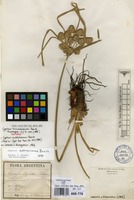
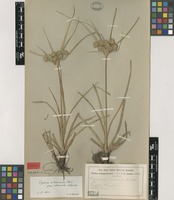
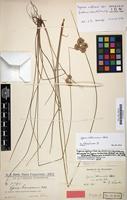
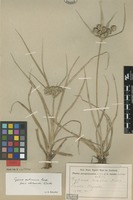
Isotype of Cyperus tucumanensis Boeck. [family CYPERACEAE]
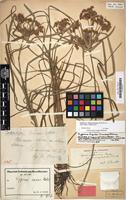
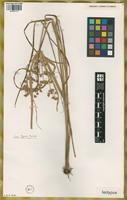
Holotype of Cyperus entrerianus var. parvicapitulatus Kük. [family CYPERACEAE]
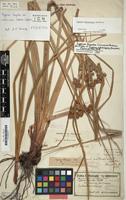
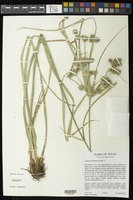
Holotype of Cyperus entrerianus Boeckeler [family CYPERACEAE]
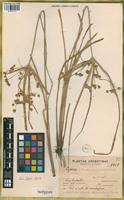
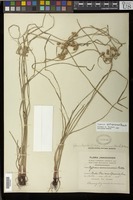
Isosyntype of Cyperus entrerianus Boeckeler var. parvicapitulatus Kük. [family CYPERACEAE]
Syntype of Cyperus entrerianus Boeckeler f. abbreviatus Kük. [family CYPERACEAE]
Holotype of Cyperus surinamensis var. strictus Kük. [family CYPERACEAE]
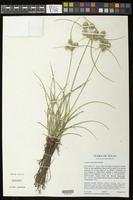
Cyperus entrerianus Boeckeler [family CYPERACEAE]
Syntype of Cyperus entrerianus Boeckeler f. abbreviatus Kük. [family CYPERACEAE]
Isosyntype of Cyperus entrerianus Boeckeler var. parvicapitulatus Kük. [family CYPERACEAE]
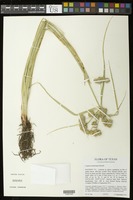
Cyperus entrerianus Boeckeler [family CYPERACEAE]
Filed as Cyperus entrerianus Boeckeler [family CYPERACEAE]
Previous
Next

Name

Identification
Cyperus entrerianus Boeckeler [family CYPERACEAE ] Verified by Denton, M.F., Cyperus luzulae [family CYPERACEAE ] (stored under name); Verified by Not on sheet.,
Related name
  • Cyperus surinamensis
  • Cyperus luzulae
  • Cyperus entrerianus

Flora

Entry for Cyperus entrerianus Boeckeler [family CYPERACEAE]
Herbarium
Flora of North America (FNA)
Collection
Flora of North America
Resource Type
Reference Sources
Entry From
Flora of North America, Vol 23,
Names
Cyperus entrerianus Boeckeler [family CYPERACEAE], Flora, 61: 139. 1878
Cyperus luzulae (Linnaeus) Rottbøll ex Retzius var. entrerianus (Boeckeler) Barros [family CYPERACEAE]
Information
Herbs, perennial, coarse; rhizomes (seldom collected) indurate, oblique, 5–12 mm wide, with fibrous brown floral scales, 1–5 cm. Culms 1–3, trigonous to roundly trigonous, (30–)40–65(–95) cm × (1–)2–3 mm. Leaves (1–)5–10, V-shaped, (10–)30–45(–70) cm × 3–7 mm. Inflorescences: heads loosely to densely globose-ovoid, (6–)10–12(–20) mm diam.; rays 6–10(–12), 1–8(–12) cm; 2d order rays 1–4, 5–15(–23) mm; bracts (5–)6–8(–10), ascending at 45–60(–75)°, V-shaped, (5–)15–40(–55) cm × (1–)3–7 mm. Spikelets (1–)30–50(–65), greenish white, linear to broadly ellipsoid, flattened, 4–6.5 × 1.8–3.2 mm; floral scales (10–)16–20(–26), laterally clear, pale green, off-white, or light brown, medially green or light brown, laterally weakly 1-ribbed, medially 2-ribbed, basally 2-keeled, oblong-lanceolate, (1.2–)1.4–1.6(–1.8) × (0.7–)0.8–1 mm, apex acute, mucronate, distally glabrous or scabridulous. Flowers: stamen 1; anthers ellipsoid, 0.6–0.7 mm, connective apex acute, 0.1–0.2 mm; styles 0.2–0.4 mm; stigmas 0.4–0.6 mm. Achenes brown, stipitate, ellipsoid to narrowly ellipsoid, broadly rounded or contracted basally, gradually tapered toward apex, 0.9–1.1 × 0.3–0.4 mm, stipe 0.1 mm, apex acute, surfaces finely reticulate.
Phenology Fruiting
summer
jun
jul
aug
Altitude range
0–100 m;
Distribution
MexicoCentral America (Nicaragua)South America.USA Ala.USA Fla.USA Ga.USA La.USA Miss.USA Tex.
Discussion
Cyperus entrerianus is a recent introduction in the southern United States (earliest collection from Pensacola County, Florida, Brinker 413, MO in 1941). It has been confused with C. luzulae. The species that Boeckeler had first described 50 years earlier was accepted by G. Kükenthal (1935–1936). Cyperus entrerianus was accepted as a variety of C. luzulae by A. B. Ayers (1946); M. F. Denton (1978b) considered C. entrerianus a synonym of C. luzulae, stating that the features of these two taxa merged so completely throughout their geographic ranges that C. entrerianus could not be given specific status. Cyperus luzulae in the strict sense does not extend northward to North America.
Morphologic differences between Cyperus entrerianus and C. luzulae are as follows (G. C. Tucker 1994). Cyperus entrerianus has culms 40–75 cm; inflorescence bracts ascending at 45–60°; primary rays ascending at 45–60(–75)°; 2d order rays present; heads of spikelets loosely globose-ovoid, light greenish white to golden brown; rachilla dark red with stramineous scale scars; and scale apices acute. Cyperus luzulae has culms 20–40 cm; inflorescence bracts approximately horizontal; primary rays ascending at 15–30°; 2d order rays absent; heads of spikelets densely oblong to pyramidal, bright to dull white; rachilla green throughout; and scale apices rounded.
Native/Introduced
introduced;

Related Materials

  • Terms and Conditions
  • Privacy Policy
  • Cookie Policy
  • Cookie Settings
  • Accessibility
  • Help
  • Contact Us
  • Facebook
  • Twitter
ITHAKA

JSTOR is part of ITHAKA, a not-for-profit organization helping the academic community use digital technologies to preserve the scholarly record and to advance research and teaching in sustainable ways.

©2000-2026 ITHAKA. All Rights Reserved. JSTOR®, the JSTOR logo, JPASS®, Aluka®, and ITHAKA® are registered trademarks of ITHAKA.

╳