JSTOR Global Plants Home
  • Home
  • Browse
  • About
  • Access
  • Account
    • Saved Items
    • Profile
  • Log in

Global Plants

Skip to Main Content
  • JSTOR Global Plants Home
  • Global Plants

    • Browse
    • About
    • Access
    • Account
      • Saved Items
      • Profile
Log in
  • Browse
  • About
  • Access
  • Account
    • Saved Items
    • Profile
Advanced Search

Compilation
Cyperus amomodorus

3 Images see all

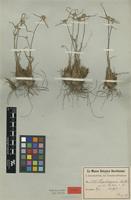
Holotype of Cyperus amomodorus K.Schum. [family CYPERACEAE]
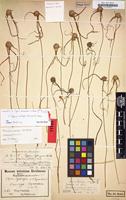
Isotype of Rhynchospora bulbocaulis Boeckeler [family CYPERACEAE]
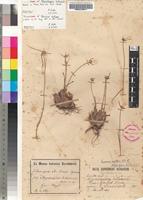
Isosyntype of Mariscus mollipes C.B.Clarke [family CYPERACEAE]
Previous
Next

Name

Identification
Cyperus amomodorus K.Schum. [family CYPERACEAE ] Verified by Beentje, Cyperus mollipes (C.B.Clarke) K.Schum. [family CYPERACEAE ] (stored under name); Verified by Not on sheet.,
Related name
  • Cyperus amomodorus
  • Mariscus mollipes
  • Cyperus mollipes

Flora

Entry for Mariscus mollipes C. B. Clarke [family CYPERACEAE]
Herbarium
Royal Botanic Gardens, Kew (K)
Collection
Flora of Tropical Africa
Resource Type
Reference Sources
Entry From
Flora of Tropical Africa, Vol 8, page 264, (1902) Author: (By C. B. Clarke.)
Names
Mariscus mollipes C. B. Clarke [family CYPERACEAE], in Durand & Schinz, Conspect. Fl. Afr. v. 590.
Rhynchospora bulbocaulis Boeck. [family CYPERACEAE], in Flora, 1879, 567.
Cyperus amomodorus K. Schum. [family CYPERACEAE], in Engl. Pfl. Ost-Afr. C. 122.
Cyperus mollipes K. Schum. [family CYPERACEAE], in Engl. Pfl. Ost-Afr. C. 122.
Information
Basal sheaths torn into many soft fibres, enveloping the thickened base of the stems. Bracts spreading, divaricated, at the base scarcely dilated. Nut linear-oblong; otherwise as M. bulbocaulis .
Distribution
British East Africa Nile Land Jur; Mayob, Schweinfurth, 1547!German East Africa Mozamb. Dist. Karagwe; at Kavingo, on the River Kagera, Stuhlmann, 1950!
Notes
The spikelets and nut are as those of M. circumclusus; the bracts entirely want the dilated striated base seen in those of that species. As to the soft fibres into which the leaf-sheaths break up, such may have been present in the examples of M. circumclusus, but were not secured by the collector.

Related Materials

  • Terms and Conditions
  • Privacy Policy
  • Cookie Policy
  • Cookie Settings
  • Accessibility
  • Help
  • Contact Us
  • Facebook
  • Twitter
ITHAKA

JSTOR is part of ITHAKA, a not-for-profit organization helping the academic community use digital technologies to preserve the scholarly record and to advance research and teaching in sustainable ways.

©2000-2026 ITHAKA. All Rights Reserved. JSTOR®, the JSTOR logo, JPASS®, Aluka®, and ITHAKA® are registered trademarks of ITHAKA.

╳