JSTOR Global Plants Home
  • Home
  • Browse
  • About
  • Access
  • Account
    • Saved Items
    • Profile
  • Log in

Global Plants

Skip to Main Content
  • JSTOR Global Plants Home
  • Global Plants

    • Browse
    • About
    • Access
    • Account
      • Saved Items
      • Profile
Log in
  • Browse
  • About
  • Access
  • Account
    • Saved Items
    • Profile
Advanced Search

Compilation
Cynanchum cordifolium

9 Images see all

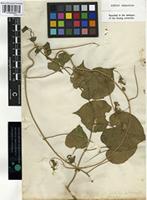
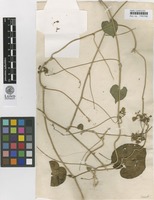
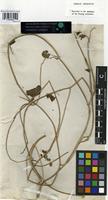
Type? of Cynanchum cordifolium Retz. [family ASCLEPIADACEAE]
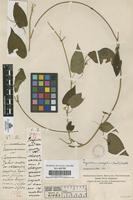
Filed as Cynanchum cordifolium Retz. [family ASCLEPIADACEAE]
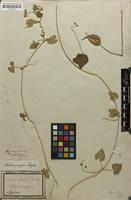
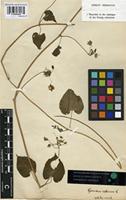
Filed as Oxypetalum cordifolium (Vent.) Schltr. [family ASCLEPIADACEAE]
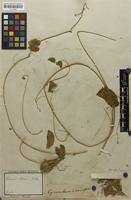
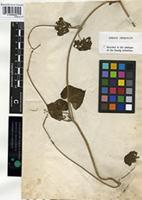
Type of Cynanchum cordifolium Retz. [family APOCYNACEAE]
Filed as Oxypetalum cordifolium (Vent.) Schltr. [family ASCLEPIADACEAE]
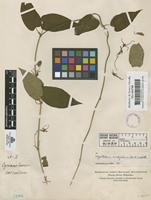
Type? of Cynanchum cordifolium Retz. [family ASCLEPIADACEAE]
Previous
Next

Name

Identification
Cynanchum cordifolium Retz. [family ASCLEPIADACEAE ] Verified by Not on Sheet, Pergularia extensa (R. Br.) N.E. Br. [family ASCLEPIADACEAE ] (stored under name); Verified by Not on Sheet,
Related name
  • Cynanchum extensum
  • Cynanchum cordifolium
  • Cynanchum extensa
  • Pergularia extensa

Flora

Entry for SCHIZOGLOSSUM cordifolium E. Meyer [family ASCLEPIADACEAE]
Herbarium
Royal Botanic Gardens, Kew (K)
Collection
Flora Capensis
Resource Type
Reference Sources
Entry From
Flora Capensis, Vol 4, page 518, (1909) Author: By N. E. BROWN.
Names
SCHIZOGLOSSUM cordifolium E. Meyer [family ASCLEPIADACEAE], Comm. 219
SCHIZOGLOSSUM atropurpureum Schlechter var. lineatum [family ASCLEPIADACEAE], in Engl. Jahrb. xviii. Beibl. 45, 2.
SCHIZOGLOSSUM virens Schlechter [family ASCLEPIADACEAE], l.c. 6 and 16, and Journ. Bot. 1896, 419 (not of E. Meyer).
SCHIZOGLOSSUM Hollandiæ Harv. ex Schlechter [family ASCLEPIADACEAE], in Engl. Jahrb. xviii. Beibl. 45, 6 in note.
SCHIZOGLOSSUM æmulum Schlechter [family ASCLEPIADACEAE], in Journ. Bot. 1894, 258, and 1896, 420.
SCHIZOGLOSSUM æmulatum [family ASCLEPIADACEAE], Ind. Kew. Suppl. i. 384.
SCHIZOGLOSSUM furcatum E. Meyer ex Schlechter [family ASCLEPIADACEAE], in Engl. Jahrb. xxi. Beibl. 54, 3 in a note.
Cynanchum cordifolium Dietr. [family ASCLEPIADACEAE], Synop. Pl. ii. 905.
Information
stem 1/2–1 1/2 ft. high, usually solitary, simple or branching, 3/4–1 1/2 lin. thick, pubescent; internodes 1/4–2 1/3 in. long; leaves usually spreading; petiole 1/2–3 lin. long; blade 1/2–2 in. long, 1/12–1 1/4 in. broad, usually oblong, deltoid-ovate, or deltoid-oblong to roundish-ovate, rarely linear-hastate, acute or obtuse, often apiculate, cordate, subtruncate or more or less hastate at the base, with rounded auricles, flat or narrowly revolute along the margins, more or less pubescent or scaberulous on both sides or only on the veins beneath; umbels usually 3–6 to a stem or branch, pedunculate, the lower racemose, the upper subcorymbose, 4–12-flowered; peduncles 5–15 lin. long, pubescent or subtomentose; bracts filiform, 1 1/2–2 1/2 lin. long; pedicels 3–5 lin. long, pubescent or subtomentose; sepals 1–1 1/2 lin. long, 1/2 lin. broad, lanceolate or linear-oblong, acute, pubescent; corolla in bud globose with an apical depression; lobes 2–3 lin. long, 1 1/4–1 2/3 lin. broad, oblong, subacute, more or less replicate, spreading, with incurved tips, glabrous or with a few hairs near the apex on the back, more or less minutely puberulous at the base on the inner face, greenish according to collectors, in the dried state olive-brown with darker veins, rarely entirely green; corona-lobes ascending-spreading, or often appearing erect in dried flowers, 1/2–1 lin. long, 2/3–1 1/4 lin. broad, broadly cuneate-obovate, cuneately subquadrate or suborbicular, rounded, subtruncate or obtusely pointed at the entire or notched apex, rarely more or less deeply 2-lobed, often with slightly projecting side angles above the middle or at the top, with a divided or entire appendage decurrent in 2 contiguous keels, which are not always obvious, on the inner face, white or whitish; appendage arising near the top of the lobe, 1/2–1 lin. long, usually deeply bifid or divided to the base into 2 straight subulate contiguous segments, rarely entire, or with a third smaller segment behind, ascending to or slightly exceeding the top of the 3/4–1 1/4 lin. long staminal column; anther-wings broadest at the subtruncate base; anther-appendages reniform, erect, reaching to or slightly inflexed over the margin of the broad depressed-truncate style-apex; caudicles attached near or above the middle of the oblong pollen-masses; follicles about 2 1/2 in. long, 1/2 in. thick, fusiform-lanceolate, tapering into a beak, pubescent and beset with subulate processes 2–2 1/2 lin. long. null
Distribution
COAST REGION Tulbagh Div.; Great Winterhoek Mountain, 3500 ft., Bolus in Herb. Guthrie, 4249! Worcester Div.; Dutoits Kloof, Drège! Tyson, 852! Stellenbosch Div.; Jonkers Hoek, Bolus in Herb. Guthrie, 4879! George Div.; Montagu Pass, Bolus, 8684! Uniondale Div.; mountains of Long Kloof near the Wagenbooms River, Burchell, 4904! Uitenhage Div.; Vanstadens Berg, Burchell, 4736! Addo (ex E. Meyer, but the specimen is labelled Galge-bosch) Drège! Port Elizabeth Div.; near Port Elizabeth, Mrs. Holland, 37! Alexandria Div.; Zuur Berg, Cooper, 2726! Albany Div.; hills near Botram, Drège! near Grahamstown, MacOwan, 295! 662! Bolton, Burke! Galpin, 248, ex Schlechter. Komgha Div.; near the Great Kei River, Flanagan, 386! near Komgha, Flanagan, 387! Queenstown Div.; Lesseyton Nek, 4000 ft., Galpin, 1755! Eastern Frontier, Hutton!EASTERN REGION Transkei; Kentani, Miss Pegler, 1144! Natal; Umzinyate, Wood, 1040! Shafton Howick, Mrs. Hutton, 43! and without precise locality, Gerrard, 2166! Zululand; Ngoya, Wood, 8271! Var. β: Tembuland; Bazeia Mountain, 3000 ft., Baur, 548!
Notes
I have seen and dissected the type specimens of all the synonyms quoted side by side with E. Meyer's type of S. cordifolium, and find them identical with that species in appearance and structure. Schlechter has likewise seen E. Meyer's type, but in Engl. Jahrb. xxi. Beibl. 54, 3, he erroneously refers S. cordifolium to S. euphorbioides, and S. Hollandiæ, Harv. (of which the type is Mrs. Holland's 37) to S. virens, so that S. cordifolium, Schlechter in Journ. Bot. 1896, 419, can scarcely be the plant of E. Meyer, and as there is neither description nor collector's number quoted, I cannot identify it. The minute pubescence at the base of the inner face of the corolla-lobes cannot be seen on flowers that have been wetted for dissection until they are dry.

Related Materials

  • Terms and Conditions
  • Privacy Policy
  • Cookie Policy
  • Cookie Settings
  • Accessibility
  • Help
  • Contact Us
  • Facebook
  • Twitter
ITHAKA

JSTOR is part of ITHAKA, a not-for-profit organization helping the academic community use digital technologies to preserve the scholarly record and to advance research and teaching in sustainable ways.

©2000-2026 ITHAKA. All Rights Reserved. JSTOR®, the JSTOR logo, JPASS®, Aluka®, and ITHAKA® are registered trademarks of ITHAKA.

╳