JSTOR Global Plants Home
  • Home
  • Browse
  • About
  • Access
  • Account
    • Saved Items
    • Profile
  • Log in

Global Plants

Skip to Main Content
  • JSTOR Global Plants Home
  • Global Plants

    • Browse
    • About
    • Access
    • Account
      • Saved Items
      • Profile
Log in
  • Browse
  • About
  • Access
  • Account
    • Saved Items
    • Profile
Advanced Search

Compilation
Cylindropsis parvifolia

10 Images see all

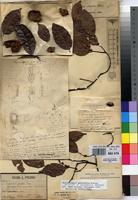
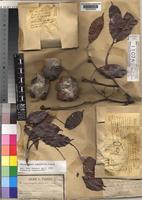
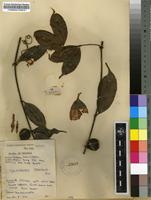
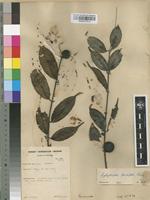
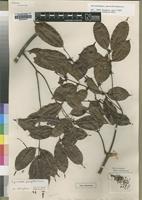
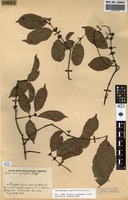
Lectotype of Cylindropsis parvifolia Pierre [family APOCYNACEAE]
Cylindropsis parvifolia Pierre [family APOCYNACEAE]
Filed as Cylindropsis parvifolia Pierre [family APOCYNACEAE]
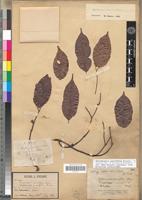
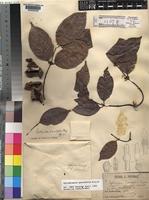
Type of Clitandra talbotiae Wernham [family APOCYNACEAE]
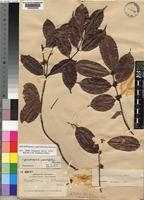
Isolectotype of Cylindropsis parvifolia Pierre [family APOCYNACEAE]
Filed as Cylindropsis parvifolia Pierre [family APOCYNACEAE]
Cylindropsis parvifolia Pierre [family APOCYNACEAE]
Filed as Cylindropsis parvifolia Pierre [family APOCYNACEAE]
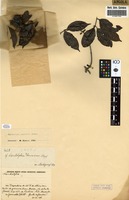
Type of Clitandra parvifolia (Pierre) Stapf [family APOCYNACEAE]
Previous
Next

Name

Identification
Cylindropsis parvifolia Pierre [family APOCYNACEAE ] (stored under name); Clitandra talbotiae Wernham [family APOCYNACEAE ]
Related name
  • Clitandra talbotiae
  • Clitandra talbotii
  • Carpodinus parvifolia
  • Cylindropsis parvifolia
  • Clitandra parvifolia

Flora

Entry for CLITANDRA parvifolia Stapf [family APOCYNACEAE]
Herbarium
Royal Botanic Gardens, Kew (K)
Collection
Flora of Tropical Africa
Resource Type
Reference Sources
Entry From
Flora of Tropical Africa, Vol 4, Part 1, page 24, (1904) Author: (By Otto Stapf.)
Names
CLITANDRA parvifolia Stapf [family APOCYNACEAE]
Cylindropsis parvifolia Pierre [family APOCYNACEAE], in Bull. Soc. Linn. Paris, 1898, 39; Hallier f. Kautschuklianen in Jahrb. Hamburg. Wissensch. Anstalt. xvii. (1899), 3. Beih. 132; K. Schum. in Engl. & Prantl, Pflanzenfam. Ergänz. i. 55.
Carpodinus parvifolius Pierre [family APOCYNACEAE], l.c.
Information
A climbing shrub; young branches slender, glabrous, dark brown, with whitish lenticels. Leaves elliptic to elliptic-oblong, abruptly and obtusely acuminate, rounded or subacute at the base, 2 1/2–3 1/2 in. long, 1 1/4–1 3/4 in. broad, thinly coriaceous, quite glabrous, slightly shining above; midrib flat above, distinctly raised below; secondary nerves rather spreading, almost straight, slender, 8–9 on each side, raised below, connected by bold but very fine arches somewhat remote from the margins; veins lax, very obscure; petiole 3–4 lin. long. Flowers sessile in small sessile axillary and terminal (pseudoterminal?) clusters. Calyx glabrous, 1/2 lin. long; sepals very minutely ciliolate. Corolla glabrous without, not quite 3 lin. long in bud; tube cylindric from the base to just beyond the middle, then more or less inflated, constricted again at the mouth, slightly over 1 1/2 lin. long, pubescent within near the insertion of the stamens; lobes oblong, obtuse, slightly over 1 lin. long. Filaments very slender, short; anthers reaching almost to the narrow mouth, ovate-oblong, apiculate. Ovary ovoid, puberulous in the upper part, passing into the slender style; stigma subsubulate from a thickened base, 2-fid; the whole pistil 1 lin. long. Fruit unknown.
Distribution
Gaboon Lower Guinea Klaine, 103B!
Notes
Pierre described the fruit as cylindric, truncate at both ends and 1–3-seeded, and the seeds as exalbuminous with thick, fleshy cotyledons. It was chiefly this peculiarity which induced him to make it the type of a new genus. The crushed fruits in the Kew and Berlin herbaria, distributed by Pierre in capsules along with flowering branches under the name of Cylindropsis, suggest (as Hallier has already remarked) a globose shape, and the seeds must have been considerably more numerous. The structure of the latter, however, is as Pierre describes it; but proves that the fruit is that of some species of Salacia, which was mixed up with the flowering branches described above. It seems that Klaine had originally sent the true fruits of C. parvifolia, as Pierre remarks in a accompanying the Berlin specimen that the fruit sent by Klaine under No. 103 had albuminous seeds.

Related Materials

  • Terms and Conditions
  • Privacy Policy
  • Cookie Policy
  • Cookie Settings
  • Accessibility
  • Help
  • Contact Us
  • Facebook
  • Twitter
ITHAKA

JSTOR is part of ITHAKA, a not-for-profit organization helping the academic community use digital technologies to preserve the scholarly record and to advance research and teaching in sustainable ways.

©2000-2026 ITHAKA. All Rights Reserved. JSTOR®, the JSTOR logo, JPASS®, Aluka®, and ITHAKA® are registered trademarks of ITHAKA.

╳