JSTOR Global Plants Home
  • Home
  • Browse
  • About
  • Access
  • Account
    • Saved Items
    • Profile
  • Log in

Global Plants

Skip to Main Content
  • JSTOR Global Plants Home
  • Global Plants

    • Browse
    • About
    • Access
    • Account
      • Saved Items
      • Profile
Log in
  • Browse
  • About
  • Access
  • Account
    • Saved Items
    • Profile
Advanced Search

Compilation
Cylicomorpha parviflora

6 Images see all

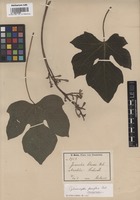
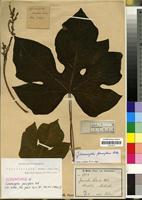
Syntype of Cylicomorpha parviflora Urb. [family CARICACEAE]
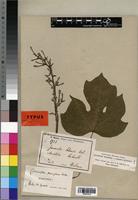
Cylicomorpha parviflora Urb. [family CARICACEAE]
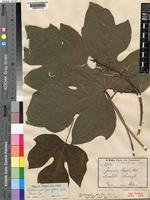
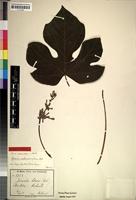
Isotype of Cylicomorpha solmsii (Urb.) Urb. [family CARICACEAE]
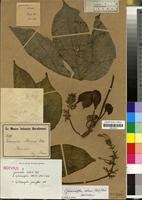
Isosyntype of Cylicomorpha parviflora Urb. [family CARICACEAE]
Syntype of Cylicomorpha parviflora Urb. [family CARICACEAE]
Previous
Next

Name

Identification
Cylicomorpha parviflora Urb. [family CARICACEAE ] (stored under name); Verified by Data not digitized,
Related name
  • Jacaratia solmsii
  • Cylicomorpha parviflora
  • Cylicomorpha solmsii
  • Jacaratia boliviana

Flora

Entry for Cylicomorpha parviflora Urban [family CARICACEAE]
Herbarium
Royal Botanic Gardens, Kew (K)
Collection
Flora of Tropical East Africa
Resource Type
Reference Sources
Entry From
Flora of Tropical East Africa, page 1, (1958) Author: J. H. Hemsley
Names
Cylicomorpha parviflora Urban [family CARICACEAE], in E.J. 30 : 116, with fig. (1901); T.S.K., ed. 1 : 18, with habit photo., (1926); T.T.C.L. : 121 (1949). Types : Tanganyika, Lushoto District, Mashewa, Holst 8723 (B, syn. †, K, isosyn.!) and E. Usambara Mts., Nguelo, Scheffler 11 (B, syn.†)
Jacaratia solmsii Urb. [family CARICACEAE], in P.O.A. C : 282 (1895), pro parte, quoad specimina usambarensia
Cylicomorpha parviflora Urb. var. brachyloba [family CARICACEAE], in E.J. 30: 117, with fig. (1901); T.T.C.L. : 121 (1949). Type : Tanganyika, Rungwe District: Umuamba [about 35 km. E. of Tukuyu], by Lake Yungururu, Goetze 1314 (B, holo.†)
Information
A rapid-growing and short-lived medium to tall tree, height to 35 m.; trunk simple with very few branches, hollow, exuding copious white latex when cut; upper part of trunk and branches armed with short straight prickles; old bark becoming ± smooth and dark greenish-grey in colour. Leaves clustered at branch tips; petioles to 45 cm. long, glabrous, terete; lamina broadly ovate to suborbicular in outline, to 25 cm. long, 35 cm. wide, palmately divided into 3–5 lobes but the terminal lobe sometimes deeply incised with a tendency to a 7-lobed condition, ± glabrous, main nerves 5–7, pinkish to pale yellow in colour, giving a very decorative appearance to young plants; lobes ± ovate or rhomboidal, ranging from ± same length as the undivided portion to four times as long; leaf-margin entire or lobulate. Inflorescences axillary; ♂ paniculate, many-flowered with rhachis to 40 cm. long, ± farinose and flowers sessile; ♀ shortly racemose, bearing 1–5 flowers with rhachis thick and woody, to 3.5 cm. long, and pedicels short and stout, to 5 mm. long. Male flowers : calyx to 4.5 mm. long, 4 mm. diam., lobes ± obsolete; corolla cream; tube to 2.5 cm. long and 4 mm. in diameter; lobes lanceolate, to 1.5 cm. long and 4 mm. wide; filaments of episepalous stamens to 6 mm. long, of epipetalous to 3 mm. long, all connate at base into a ± 2-mm. long tube; anthers linear-lanceolate; rudimentary ovary and style present. Female flowers : calyx to 5 mm. long and 1 cm. in diameter; corolla-lobes pale greenish externally, cream internally, to 3.0 cm. long, 1 cm. wide; androecium entirely absent; ovary 5-angled, to 1.5 cm. long, 1 cm. in diameter, glabrous; style to 3 mm. long; stigmas to 1.3 cm. long, densely beset with short papillose hairs. Fruit a greenish-yellow, smooth, 5-angled berry, to 8 cm. long, closely resembling a small papaw; seeds to 7 mm. long, with acute apex. Fig. 1.
Range
DISTR. K4; T3, 6, 7 and southwards into Nyasaland.
Altitude range
800–1600 m.
Distribution
KENYA Eastern Mt. Kenya [Meru and neighbourhood], 5 Aug. 1914 (fl.), Battiscombe 813 ! & Meru, Battiscombe 1093 ! & 18 Feb. 1922 (fl.), Fries 1726 !TANGANYIKA Lushoto District E. Usambara Mts., forest above Amani–Monga road, 23 July 1953 (♂ fl.), Drummond & Hemsley 3435 ! & Amani–Kwamkoro road, 25 July 1953 (♀ fl.), Drummond & Hemsley 3448 ! ;TANGANYIKA Morogoro District Nguru Mts., Mhonda–Maskati, 10 June 1933, B. D. Burtt 4447 !
Notes
The var. brachyloba Urb. was distinguished by Urban as having leaf-lobes shorter than the undivided part of the leaf, the apical lobe shortly rhomboidal, the lateral lobes triangular and the basal lobes overlapping each other. These characters do not hold in the material now available. All relationships from leaf-lobes less than four times as long as the undivided part can be found; similarly, shape of lobe varies greatly due to age of leaf and its position on the tree. Leaves with basal lobes overlapping and leaves with the basal sinus open can be found on a single tree as is shown in the gathering Drummond & Hemsley 3435.  C. solmsii (Urb.) Urb. has been recorded from the Livingstone Mts. (V.E. 1 (1) : 381 (1901)), but this record almost certainly refers to C. parviflora Urb. and may in fact have been based on Goetze’s specimen cited in the synonym above. The former species is restricted to the British Cameroons.

Related Materials

  • Terms and Conditions
  • Privacy Policy
  • Cookie Policy
  • Cookie Settings
  • Accessibility
  • Help
  • Contact Us
  • Facebook
  • Twitter
ITHAKA

JSTOR is part of ITHAKA, a not-for-profit organization helping the academic community use digital technologies to preserve the scholarly record and to advance research and teaching in sustainable ways.

©2000-2026 ITHAKA. All Rights Reserved. JSTOR®, the JSTOR logo, JPASS®, Aluka®, and ITHAKA® are registered trademarks of ITHAKA.

╳