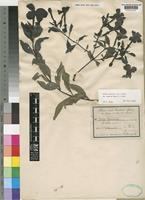
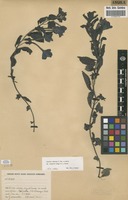
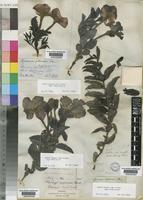
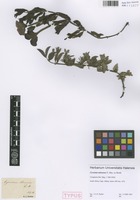
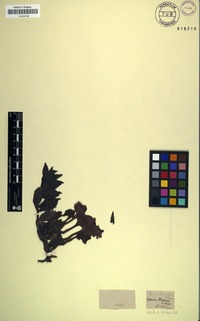
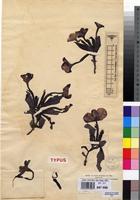
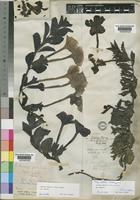
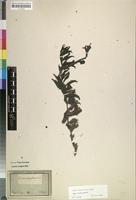
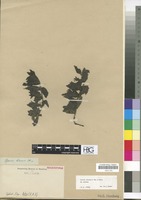
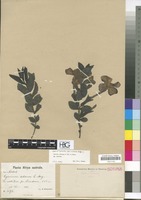
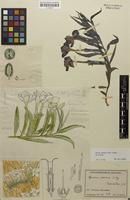
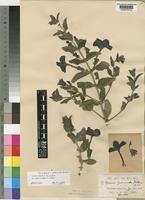
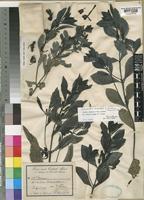
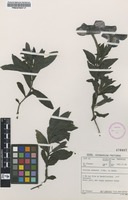
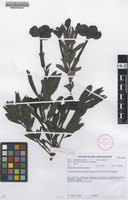
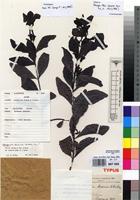
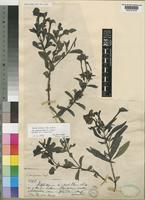
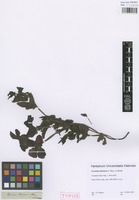
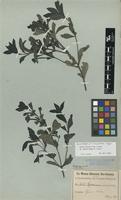
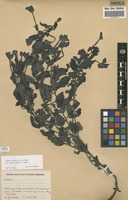
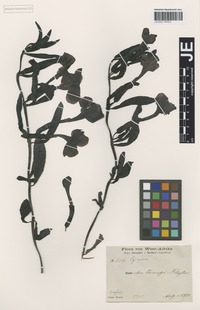
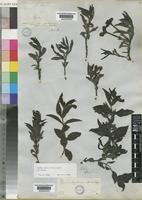
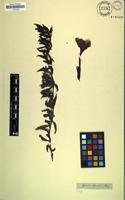
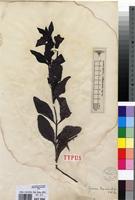
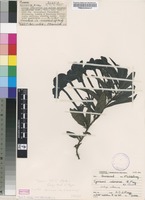
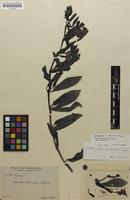
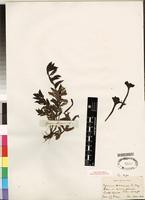
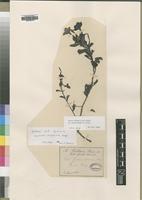
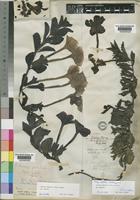
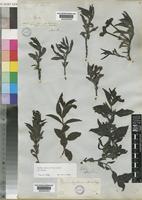
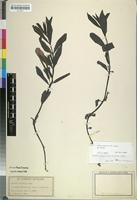
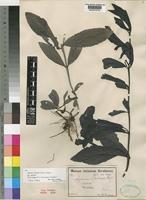
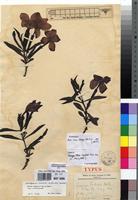
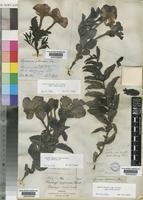
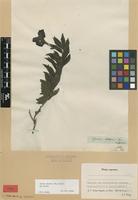
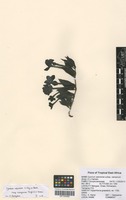
a perennial herb, low, densely cæspitose, woody at the root-stock, turning livid-blueish, at length dusky when dry; stems numerous, prostrate, ascending, purplish when fresh, pubescent, leafy, 1/2–2 ft. long; leaves herbaceous-green when fresh, opposite, spreading or secund-erect, oval or elliptical, more or less acutely narrowed or obtuse at both ends, subsessile or very shortly petiolate, serrate- or incise-dentate, hispid-scabrid on both faces, sub-5-nerved at the base, 1–3 in. long, 1/3–1 1/6 in. broad; flowers axillary, 2 3/4–4 in. long, at first white or pink, soon turning clear blue or purple, then livid violet, at length when dry dusky; peduncles pubescent or hispidulous, 1/4– 1/2 in. long; bracteoles 2, opposite, sublinear, adnate to the base of the calyx, 2/5– 3/5 in. long, hispidulous-scabrid; calyx campanulate-oblong, loose, 10-nerved, shortly pubescent chiefly along the nerves and margins, 1–1 3/4 in, long, 5-lobed; lobes ovate, oblong or semi-elliptical, obtuse or scarcely acute, unequal, 1/5– 1/2 in. long; corolla-tube slender, cylindrical, funnel-shaped at the apex, shaggy with glandular hairs outside, pubescent within, straight or not much curved, furrowed near the top, 2 1/2–3 1/2 in. long, about 1/6 in. in diam. about the middle; limb spreading, 1 1/2–3 in. in diam.; lobes 5, broadly ovate, 3/4–1 3/8 in. long, the two upper connate higher up than the others; throat and filaments yellow; stamens inserted below or about the middle of the corolla-tube; filaments bearded or puberulous; anthers obtuse at the base, glabrous; pistil about 7/8 in. long, glabrous; ovary 1/5 in. long, suborbicular; style straight; stigma lanceolate, 3/8 in. long; capsule oval or ovoid, obtuse, apiculate with the remains of the style, obsoletely puberulous, about 1/2 in. long. null