JSTOR Global Plants Home
  • Home
  • Browse
  • About
  • Access
  • Account
    • Saved Items
    • Profile
  • Log in

Global Plants

Skip to Main Content
  • JSTOR Global Plants Home
  • Global Plants

    • Browse
    • About
    • Access
    • Account
      • Saved Items
      • Profile
Log in
  • Browse
  • About
  • Access
  • Account
    • Saved Items
    • Profile
Advanced Search

Compilation
Cyclosorus gongylodes

10 Images see all

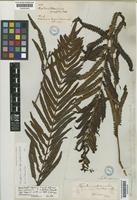
Type? of Nephrodium unitum R.Br. [family THELYPTERIDACEAE]
Cyclosorus gongylodes (Schkuhr) Link [family THELYPTERIDACEAE]
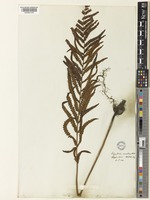
Type? of Nephrodium propinquum R.Br. [family DRYOPTERIDACEAE]
Cyclosorus gongylodes (Schkuhr) Link [family THELYPTERIDACEAE]
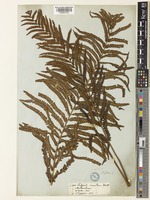
Type? of Nephrodium propinquum R.Br. [family DRYOPTERIDACEAE]
Cyclosorus gongylodes (Schkuhr) Link [family THELYPTERIDACEAE]
Cyclosorus gongylodes (Schkuhr) FLink [family THELYPTERIDACEAE]
Previous
Next

Name

Identification
Cyclosorus interruptus (Willd.) H.It� [family THELYPTERIDACEAE ] (stored under name); Nephrodium unitum R.Br. [family THELYPTERIDACEAE ] Thelypteris interrupta (Willd.) K.Iwats. [family THELYPTERIDACEAE ] Verified by Gopinath Panigrahi, Cyclosorus gongylodes (Schkuhr) Link [family THELYPTERIDACEAE ] Verified by Gopinath Panigrahi,
Related name
  • Nephrodium paludosum
  • Nephrodium propinquum
  • Dryopteris gongylodes
  • Cyclosorus interruptus
  • Nephrodium unitum
  • Cyclosorus gongylodes
  • Thelypteris interrupta
  • Aspidium gongylodes
  • Aspidium politum
Common name
  • Hottentot fern, Flora of North America Vol. 2
  • limba (JB) (SENEGAL, WOLOF), Burkill, H.M. 1985. The useful plants of west tropical Africa, Vol. 5
  • spready tri-vein fern, Flora of North America Vol. 2
  • Willdenow's fern, Flora of North America Vol. 2

Flora

Entry for Thelypteris interrupta (Willdenow) K. Iwatsuki [family THELYPTERIDACEAE]
Herbarium
Flora of North America (FNA)
Collection
Flora of North America
Resource Type
Reference Sources
Entry From
Flora of North America, Vol 2,
Names
Thelypteris interrupta (Willdenow) K. Iwatsuki [family THELYPTERIDACEAE], Jap. J. Bot., 38: 314. 1963
Pteris interrupta Willdenow [family ], Phytographia, 13. 1794
Cyclosorus gongylodes (Schkuhr) Link [family THELYPTERIDACEAE]
Cyclosorus interruptus (Willdenow) H. Itô [family THELYPTERIDACEAE]
Cyclosorus tottus (Thunberg) Pichi-Sermolli [family THELYPTERIDACEAE]
Dryopteris gongylodes (Schkuhr) Kuntze [family DRYOPTERIDACEAE]
Thelypteris gongylodes (Schkuhr) Small [family THELYPTERIDACEAE]
Thelypteris totta (Thunberg) Schelpe [family THELYPTERIDACEAE]
Treatment Author(s)
Alan R. Smith
Information
Stems long-creeping, cordlike, 3--6 mm diam. Leaves monomorphic, evergreen, 3--6 cm apart, 50--150(--250) cm. Petiole straw-colored to tan, 20--125 cm × 3--6 mm, scaleless. Blade 30--125 cm, broadest at base, gradually narrowed distally to pinnatifid apex. Pinnae 7--30 × 1--2 cm, incised 1/3--1/2(--3/5) of width; segments deltate, rounded to acute; proximal pair of veins from adjacent segments united at acute or obtuse angle below sinus, with excurrent vein 2--4 mm. Indument abaxially of hairs 0.1--0.3 mm on costae and veins, or hairs often lacking, costae also with tan, ovate scales; veins, costules, and costae adaxially glabrous or sparsely pubescent; blade tissue without hairs on both sides, or hairy abaxially, usually with red to orange, shiny, sessile, hemispheric glands abaxially. Sori round, medial to supramedial; indusia tan, glabrous to hairy; sporangia with red- or orange-capped, stalked, globose glands arising from sporangial stalks. 2 n = 144.
Altitude range
0--50 m
Distribution
MexicoWest Indies in the AntillesCentral AmericaSouth America to Argentinatropical and subtropical AsiaAfrica.USA Fla.USA La.
Discussion
D. B. Lellinger (1985) applied the name Thelypteris interrupta to specimens from India, while using T . totta (type from South Africa) for North American and South American specimens. Diploid cytotypes are known from Africa and Asia, whereas all counts from the Neotropics are tetraploid. Until more counts are available and the morphologic variation (chiefly in glands, pubescence, and leaf size) in this species complex is better understood, I prefer to circumscribe the species broadly.
R. E. Holttum (1982) circumscribed Cyclosorus (as a genus) to include this species and one or two others.

Related Materials

  • Terms and Conditions
  • Privacy Policy
  • Cookie Policy
  • Cookie Settings
  • Accessibility
  • Help
  • Contact Us
  • Facebook
  • Twitter
ITHAKA

JSTOR is part of ITHAKA, a not-for-profit organization helping the academic community use digital technologies to preserve the scholarly record and to advance research and teaching in sustainable ways.

©2000-2026 ITHAKA. All Rights Reserved. JSTOR®, the JSTOR logo, JPASS®, Aluka®, and ITHAKA® are registered trademarks of ITHAKA.

╳