JSTOR Global Plants Home
  • Home
  • Browse
  • About
  • Access
  • Account
    • Saved Items
    • Profile
  • Log in

Global Plants

Skip to Main Content
  • JSTOR Global Plants Home
  • Global Plants

    • Browse
    • About
    • Access
    • Account
      • Saved Items
      • Profile
Log in
  • Browse
  • About
  • Access
  • Account
    • Saved Items
    • Profile
Advanced Search

Compilation
Cyathula divulsa

9 Images see all

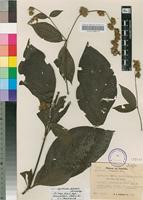
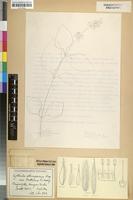
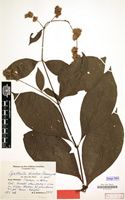
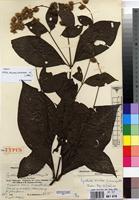
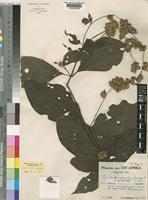
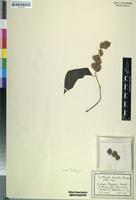
Isotype of Cyathula divulsa Suess. [family AMARANTHACEAE]
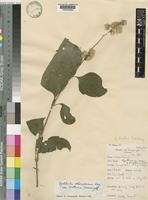
Isotype of Cyathula schimperiana Moq. var. burttiana Suess. [family AMARANTHACEAE]
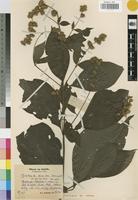
Type of Cyathula divulsa Suess. [family AMARANTHACEAE]
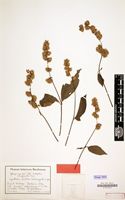
Isotype of Cyathula divulsa Suess. [family AMARANTHACEAE]
Cyathula divulsa Suess. [family AMARANTHACEAE]
Isotype of Cyathula divulsa Suess. [family AMARANTHACEAE]
Type of Cyathula divulsa Suess. [family AMARANTHACEAE]
Isotype of Cyathula divulsa Suess. [family AMARANTHACEAE]
Previous
Next

Name

Identification
Cyathula divulsa Suess. [family AMARANTHACEAE ] (stored under name); Verified by Not on sheet.,
Related name
  • Cyathula polycephala
  • Cyathula unrecorded
  • Cyathula schimperiana
  • Cyathula divulsa

Flora

Entry for Cyathula divulsa Suesseng. [family AMARANTHACEAE]
Herbarium
Royal Botanic Gardens, Kew (K)
Collection
Flora Zambesiaca
Resource Type
Reference Sources
Entry From
FZ, Vol 9, Part 1, page 28, (1988) Author: C. C. Townsend
Names
Cyathula divulsa Suesseng. [family AMARANTHACEAE], in Fedde, Repert. 51: 196 (1952). Type from Tanzania.
Cyathula schimperiana var. burttiana Suesseng. [family AMARANTHACEAE], in Mitt. Bot. Staatss. München 1 : 189 (1953). Type from Tanzania.
Information
Herb (duration unknown), erect and apparently little branched, lax in habit, 0.3–1 m.; stem and branches slender, terete and striate below to bluntly or clearly tetragonous above, greenish- to purplish-brown, more or less densely furnished with spreading, ascending or sometimes deflexed, brownish multicellular hairs, older parts more or less glabrescent; nodes distinctly swollen, stem and branches contracted above the nodes or sometimes not. Leaves large, broadly elliptical, 5.5–18 × 3.5–10 cm., acute or acuminate at the apex, at the base abruptly narrowed or cuneate into the 1–2 cm. long petiole, moderately pilose to tomentose on both surfaces with the hairs longer on the venation of the lower surface. Inflorescences terminal on the stem and branches, each a lax, spiciform thyrse formed of very shortly stalked globose or cuneate-based condensed cymes 1.5–2 cm. in diam., the entire thyrse c. 3 cm. wide and up to 20 cm. long (but often less), the lower cymes increasingly distant in fruit; peduncle very short or up to 7 cm. long, both it and the inflorescence axis densely brownish-pilose; bracts deltoid or lanceolate-ovate, 4–6.5 mm. long, membranous, densely pilose and scarcely shining, shortly aristate with the excurrent midrib; bracteoles similar but longer from the long-excurrent, uncinate-tipped midrib, 7.5–8 mm. long; ultimate divisions of the lateral cymes formed of a central fertile flower subtended on each side by a triad of one fertile and two lateral modified flowers, or one of the latter sometimes missing. Outer 2 tepals narrowly lanceolate, thinly to densely (and matted) long-pilose, 6.5–8 mm. long, both with a long, uncinate awn formed by the excurrent midrib, narrowly hyaline-margined, with or without 1–2 fainter lateral nerves at the base which are evanescent below or a little above the middle of the tepal; inner 3 tepals shorter, 5.5–7 mm. long, narrowly lanceolate, more broadly hyaline-margined, thinly long-pilose to densely lanate, 3–5(6)-nerved with the inner 2 nerves meeting the midrib below the apex but the outer much shorter, the midrib excurrent in a short, rather fine and sharp mucro. Modified flowers of 2–4 narrowly lanceolate bracteoliform processes and 2–4 uncinate spines. Filaments delicate, 2.75–3 mm. long; pseudostaminodes 1–1.5 mm. long, broadly cuneate-obovate, thinly to densely lanate-pilose around the margins, dentate at the plane or incurved apex, with a subulate or finely fimbriate dorsal scale. Style slender,2–4 mm. long; ovary obovoid, thickened above, 1.75–2 mm. long. Capsule shortly cylindrical, 2.5 mm. long, with a hardened rim around the concave apex; seed 2.25 mm. long, ovoid, brown, almost smooth.
Habitat
Always in shade, in or at the edge of forests or among shrubs
Altitude range
1000–1150 m.
1150
1000
Distribution
Mozambique MS Garuso Forest, iv.1935, Gilliland 1818 (BM; LISC).Zimbabwe E edge of Chirinda Forest, 1150 m., 23.iv.1947, Wild 1916 (K; SRGH).Zambia 14 km. N. of Muzombwe, W. side of Mweru-wa-Ntipa, 1000 m., 16.iv.1961, Phipps & Vesey-Fitzgerald 3237 (K; LISC; SRGH).
Distribution (external)
Tanzania
Notes
Apparently always a scarce and scattered species throughout its limited range.

Related Materials

  • Terms and Conditions
  • Privacy Policy
  • Cookie Policy
  • Cookie Settings
  • Accessibility
  • Help
  • Contact Us
  • Facebook
  • Twitter
ITHAKA

JSTOR is part of ITHAKA, a not-for-profit organization helping the academic community use digital technologies to preserve the scholarly record and to advance research and teaching in sustainable ways.

©2000-2026 ITHAKA. All Rights Reserved. JSTOR®, the JSTOR logo, JPASS®, Aluka®, and ITHAKA® are registered trademarks of ITHAKA.

╳