JSTOR Global Plants Home
  • Home
  • Browse
  • About
  • Access
  • Account
    • Saved Items
    • Profile
  • Log in

Global Plants

Skip to Main Content
  • JSTOR Global Plants Home
  • Global Plants

    • Browse
    • About
    • Access
    • Account
      • Saved Items
      • Profile
Log in
  • Browse
  • About
  • Access
  • Account
    • Saved Items
    • Profile
Advanced Search

Compilation
Cyanotis lapidosa

6 Images see all

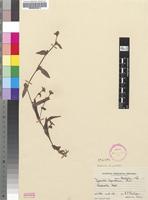
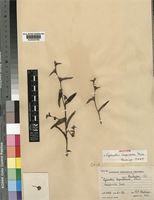
Holotype of Cyanotis lapidosa E.Phillips [family COMMELINACEAE]
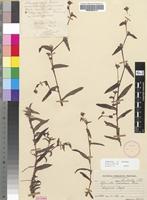
Filed as Cyanotis lapidosa E.Phillips [family COMMELINACEAE]
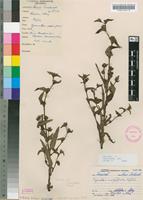
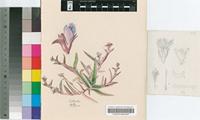
Isotype of Cyanotis lapidosa E.Phillips [family COMMELINACEAE]
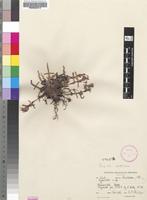
Cyanotis lapidosa E.Phillips [family COMMELINACEAE]
Cyanotis lapidosa E.Phillips
Isotype of Cyanotis lapidosa E.Phillips [family COMMELINACEAE]
Previous
Next

Name

Identification
Cyanotis lapidosa E.Phillips [family COMMELINACEAE ]
Related name
  • Cyanotis lapidosa

Flora

Entry for Cyanotis lapidosa [family COMMELINACEAE]
Herbarium
South African National Biodiversity Institute, Compton Herbarium, Cape Town (SAM)
Collection
Flora of Southern Africa
Resource Type
Reference Sources
Entry From
Flora of South Africa, (2003) Author: Dr J.P. Roux
Names
Cyanotis lapidosa [family COMMELINACEAE]
Information
Small, spreading rhizomatous perennials often with light to dark vinaceous colouring at base, saxicolous, forming colonies; roots thin, branched. Sterile shoots perennial, with limited growth, forming a basal cluster of c. 7 subdecussate to rosulate leaves; lamina sheathing basally, broadly linear, c. 150 x 12 mm, upper smaller (immature), lanate with long, white, appressed hairs, rarely glabrous; further apical growth suppressed towards time of flowering. Fertile shoots, annual, aris­ing below basal leaf-cluster, forming long, de­cumbent, spreading stems with the narrowly ovate, leaf-like spathes diminishing in size to­wards apex, and enclosing compact, few-many-flowered sessile cymes in their axils; lower nodes producing 1-2 short adventitious side branches which pierce lower empty spathes on adaxial side; roots, if developed, similarly adventitious. After flowering (usually) new decumbent shoots sprout from adventitious buds below leaf-cluster; these give rise to new clusters, the plants thus in time forming large colonies. Flowers typical; corolla c. 10 mm long, purple, mauve or pink. Stamens with filaments fusiform towards apex, where they are densely covered with beaded hairs, darker in colour than petals. Capsule with seeds typical, 1,5 mm long. Fig. 13.
Habitat
Unfortunately collectors often omit to gather the whole plant, picking only the annual flowering shoots.
Use
1. Cyanotis lapidosa Phill. in Flower. PI. Afr. t. 318 (1928). Type: Transvaal, Kaapse Hoop, Phillips 3449 (PRE, holo.!).
Range
So far only recorded from the eastern Transvaal, with one record from the N.W. Transvaal; in montane areas, on quartzite ledges. Flowering December. Map 45.

Related Materials

  • Terms and Conditions
  • Privacy Policy
  • Cookie Policy
  • Cookie Settings
  • Accessibility
  • Help
  • Contact Us
  • Facebook
  • Twitter
ITHAKA

JSTOR is part of ITHAKA, a not-for-profit organization helping the academic community use digital technologies to preserve the scholarly record and to advance research and teaching in sustainable ways.

©2000-2026 ITHAKA. All Rights Reserved. JSTOR®, the JSTOR logo, JPASS®, Aluka®, and ITHAKA® are registered trademarks of ITHAKA.

╳