JSTOR Global Plants Home
  • Home
  • Browse
  • About
  • Access
  • Account
    • Saved Items
    • Profile
  • Log in

Global Plants

Skip to Main Content
  • JSTOR Global Plants Home
  • Global Plants

    • Browse
    • About
    • Access
    • Account
      • Saved Items
      • Profile
Log in
  • Browse
  • About
  • Access
  • Account
    • Saved Items
    • Profile
Advanced Search

Compilation
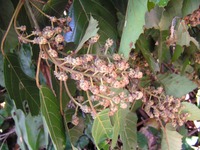
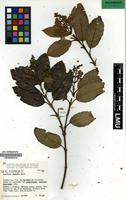
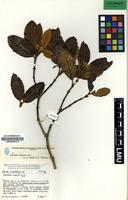
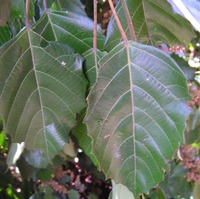
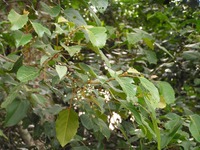
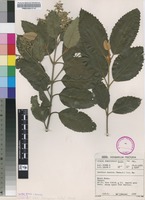
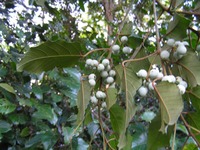
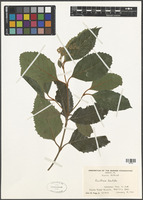
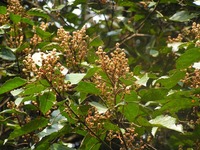
Curtisia dentata

11 Images see all

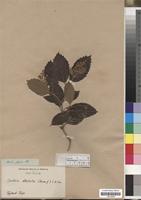
Curtisia dentata
Filed as Curtisia dentata (Burm.f.) C.A.Sm. [family CORNACEAE]
Curtisia dentata
Curtisia dentata (Burm.F.) C.A.Sm. [family CURTISIACEAE]
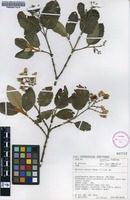
Paratype of Curtisia dentata (Burm.f.) C.A.Sm. [family CORNACEAE]
Curtisia dentata
Filed as Curtisia dentata (Burm. f.) C.A. Sm. [family CORNACEAE]
Curtisia dentata
Filed as Curtisia dentata (Burm.f.) C.A.Sm. [family CORNACEAE]
Curtisia dentata
Previous
Next

Name

Identification
Curtisia dentata (Burm. f.) C.A. Sm. [family CORNACEAE ] (stored under name); Verified by HBG-formal name change, 2009 Curtisia faginea Aiton [family CORNACEAE ] Verified by Not on sheet,
Related name
  • Curtisia dentata
  • Curtisia faginea

Flora

Entry for Curtisia dentata Burm. f. C. A. Sm. [family CORNACEAE]
Herbarium
Royal Botanic Gardens, Kew (K)
Collection
Flora Zambesiaca
Resource Type
Reference Sources
Entry From
FZ, Vol 4, Part 0, page 635, (1978) Author: J. F. M. Cannon
Names
Curtisia dentata Burm. f. C. A. Sm. [family CORNACEAE], in Journ. S. Afr. For. Ass. no. 20: 50 (1951). TAB. 170. Type from S. Africa.
Sideroxylon dentatum Burm. f. [family CORNACEAE], Rar. Afr. Pl. 235, t. 82 (1738); Fl. Cap. Prodr.: 6 (1768). Type as above.
Curtisia faginea Aiton [family CORNACEAE], Hort. Kew. 1: 162 (1789).—Harv. in Harv. & Sond., F.C. 2: 570 (1862).—Wangerin in Engl., Pflanzenr. IV, 229: 30 (1910).—Bak. f. in Journ. Linn. Soc., Bot. 40: 76 (1911).—Eyles in Trans. Roy. Soc. S. Afr. 5: 435 (1916).—Burtt Davy, F.P.F.T. 2: 512 (1932).—Steedman, Trees etc. S. Rhod.: 60 (1933). Type from S. Africa.
Information
A shrub or small tree up to 8(13) m. high. Twigs densely covered with a rusty tomentum when young, becoming dark purplish brown and finally greyish and more or less glabrous. Leaves opposite, up to 10 × 5·5 cm., simple, ovate (elliptic), coriaceous. Margins ± regularly serrate in the apical 1/2, the serrations becoming reduced in the basal 1/2 to subentire (very rarely the whole margin may be subentire); apex rounded to acute, occasionally with a small mucro; base rounded to cuneate, rarely slightly oblique. Upper surface of the lamina glossy, glabrous but with some hairs along the main vein and some laterals; lower surface densely rusty tomentose when young becoming ± glabrous (apart from the veins) with maturity. Venation penninerved, regular and conspicuous; petioles up to 2·5 cm. long, tomentose when young, becoming less so with age. Inflorescence of terminal panicles, the branches with a dense yellowish-brown tomentum. Bracts obvious, linear-lanceolate, tomentose, subtending the opposite primary branches of the panicle. Flowers sessile to very shortly pedicellate; calyx pubescent, adnate to the ovary but with 4 broadly triangular free teeth; petals 4, 1–1·5 × 0·75 mm., ovate, glabrous within. Stamens 4, alternating with and slightly shorter than the petals. Ovary inferior, turbinate, disk slightly conical, pubescent; style short with stigma with 4 short lobes. Fruit drupaceous, 5–7 × 3–5 mm., subglobose to ovoid, crowned with the remains of the calyx and style, 4-locular with 1 seed in each loculus.
Habitat
In montane forest and in stream gullies.
Distribution
Mozambique MS Chimanimani Mts., fr. 7.vi.1949, Wild 2943 (LISC; SRGH).Zimbabwe E Umtali, Vumba, Leopard Rock Hotel, fl. 5.i.1949, Chase 1643 (BM; SRGH).
Distribution (external)
S. Africa
Notes
A timber tree valued for its heavy, hard, close-grained wood.

Related Materials

  • Terms and Conditions
  • Privacy Policy
  • Cookie Policy
  • Cookie Settings
  • Accessibility
  • Help
  • Contact Us
  • Facebook
  • Twitter
ITHAKA

JSTOR is part of ITHAKA, a not-for-profit organization helping the academic community use digital technologies to preserve the scholarly record and to advance research and teaching in sustainable ways.

©2000-2026 ITHAKA. All Rights Reserved. JSTOR®, the JSTOR logo, JPASS®, Aluka®, and ITHAKA® are registered trademarks of ITHAKA.

╳