JSTOR Global Plants Home
  • Home
  • Browse
  • About
  • Access
  • Account
    • Saved Items
    • Profile
  • Log in

Global Plants

Skip to Main Content
  • JSTOR Global Plants Home
  • Global Plants

    • Browse
    • About
    • Access
    • Account
      • Saved Items
      • Profile
Log in
  • Browse
  • About
  • Access
  • Account
    • Saved Items
    • Profile
Advanced Search

Compilation
Cucumis kalahariensis

3 Images see all

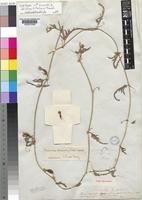
Syntype of Cucumis dissectifolius Naudin [family CUCURBITACEAE]
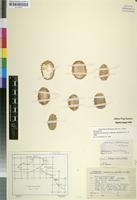
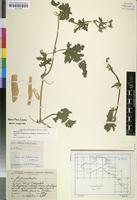
Paratype of Cucumis kalahariensis A.Meeuse [family CUCURBITACEAE]
Previous
Next

Name

Identification
Cucumis kalahariensis A.Meeuse [family CUCURBITACEAE ] (stored under name); Cucumis dissectifolius Naudin [family CUCURBITACEAE ] Verified by J.H.Kirkbride,
Related name
  • Cucumis dissectifolius
  • Cucumis kalahariensis

Flora

Entry for Cucumis kalahariensis Meeuse [family CUCURBITACEAE]
Herbarium
Royal Botanic Gardens, Kew (K)
Collection
Flora Zambesiaca
Resource Type
Reference Sources
Entry From
FZ, Vol 4, Part 0, page 414, (1978) Author: C. Jeffrey
Names
Cucumis kalahariensis Meeuse [family CUCURBITACEAE], in Bothalia 8: 70 (1962).–Launert & Roessler in Prodr. Fl. SW. Afr. 94, Cucurb.: 14 (1968). TAB. 112 fig. C. Type cultivated from seed from SW. Africa.
Information
Perennial; stems prostrate, to 3 m., sparsely setulose, rooting at nodes, arising from tuberous roots up to 1 m. below ground. Leaf-lamina 6·5–12·5 × 3·5–10 cm., ovate or ovate-oblong in outline, finely setulose or hispid above and more densely so beneath, becoming scabrid, deeply palmately (3)5(7)-lobed, lobes elliptic, narrowly oblong-elliptic or lanceolate, obtuse to acute, apiculate, sinuate-dentate or sinuate-lobulate, the central much the largest. Petioles 1–5 cm. long, aculeate-setulose, becoming scabrid. Flowers dioecious. male flowers solitary or 2–3 in small fascicles; pedicels 8–10(20) mm. long. Receptacle-tube 5–7 mm. long; lobes 2·5–5 mm. long. Petals 5·5–10 mm. long, yellow. female flowers solitary; pedicels (4)8–10 mm. long; ovary c. 13 × 5 mm., ellipsoid, densely setose; perianth rather larger than in male flowers, otherwise similar. Fruit 3–5·5 × 2–3 cm., oblong or oblong-ellipsoid, rounded at the ends, densely shortly softly spiny, green or greenish-white, longitudinally variegated with brownish-purple; spines 2–5 mm. long, laterally compressed, rather thick; fruit-stalk stout, c. 2 cm. long, slightly expanded upwards. Seeds 6–7 × 3–4 × 1·5–2 mm., elliptic in outline, smooth, pallid, subcompressed.
Habitat
Bushland and grassland on Kalahari sand.
Distribution
Botswana SE 211 km. NW. of Molepolole, fr. 15.vi.1955, Story 4895 (K; PRE; SRGH).Botswana SW 13 km. N. of Werda. fr. 26.ii.1960, Wild 5162 (SRGH).
Distribution (external)
SW. Africa

Related Materials

  • Terms and Conditions
  • Privacy Policy
  • Cookie Policy
  • Cookie Settings
  • Accessibility
  • Help
  • Contact Us
  • Facebook
  • Twitter
ITHAKA

JSTOR is part of ITHAKA, a not-for-profit organization helping the academic community use digital technologies to preserve the scholarly record and to advance research and teaching in sustainable ways.

©2000-2026 ITHAKA. All Rights Reserved. JSTOR®, the JSTOR logo, JPASS®, Aluka®, and ITHAKA® are registered trademarks of ITHAKA.

╳