JSTOR Global Plants Home
  • Home
  • Browse
  • About
  • Access
  • Account
    • Saved Items
    • Profile
  • Log in

Global Plants

Skip to Main Content
  • JSTOR Global Plants Home
  • Global Plants

    • Browse
    • About
    • Access
    • Account
      • Saved Items
      • Profile
Log in
  • Browse
  • About
  • Access
  • Account
    • Saved Items
    • Profile
Advanced Search

Compilation
Cucumis africanus

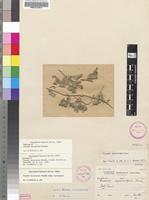
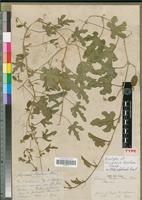
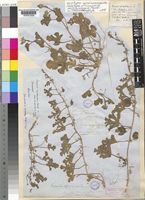
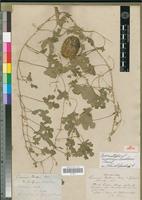
14 Images see all

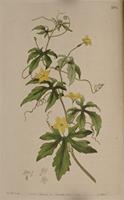
Cucumis africanus. Print from Botanical Register.
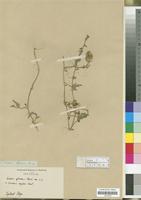
Filed as Luffa operculata (L.) Cogn. [family CUCURBITACEAE]
Cucumis quintanilhae R.Fern. & A.Fern. [family CUCURBITACEAE]
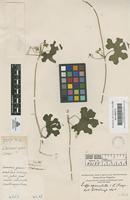
Neotype of Cucumis hookeri Naud. [family CUCURBITACEAE]
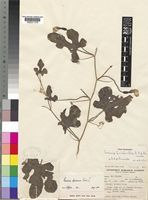
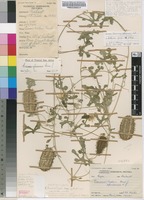
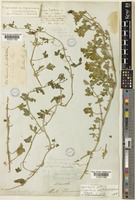
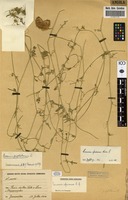
Syntype of Cucumis myriocarpus Naudin [family CUCURBITACEAE]
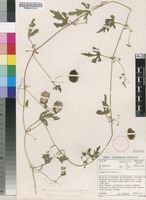
Isoneotype of Cucumis hookeri Naud. [family CUCURBITACEAE]
Filed as Cucumis zeyheri Sond. [family CUCURBITACEAE]
Filed as Cucumis africanus L.f. [family CUCURBITACEAE]
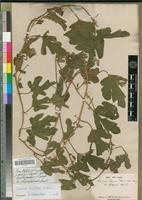
Syntype of Cucumis africanus L.f. var. myriocarpus (Naudin) Burtt Davy [family CUCURBITACEAE]
Paratype of Cucumis figarei Naud. var. cyrtopodus Naud. [family CUCURBITACEAE]
Filed as Cucumis africanus L.f. [family CUCURBITACEAE]
African Cucumber
Syntype of Cucumis myriocarpus Naudin [family CUCURBITACEAE]
Filed as Cucumis africanus L.f. [family CUCURBITACEAE]
Previous
Next

Name

Identification
Cucumis africanus Lindl. [family CUCURBITACEAE ]
Related name
  • Cucumis africanus

Flora

Entry for CUCUMIS Africanus Linn. fil. [family CUCURBITACEAE]
Herbarium
Royal Botanic Gardens, Kew (K)
Collection
Flora Capensis
Resource Type
Reference Sources
Entry From
Flora Capensis, Vol 2, page 482, (1894) Author: (BY W. SONDER.)
Names
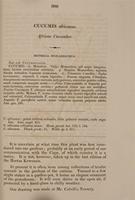
CUCUMIS Africanus Linn. fil. [family CUCURBITACEAE], Suppl. 423
Information
annual, green, scabrous everywhere; branches angulate; leaves deeply 3- or 5- lobed, lobes entire or sublobed, denticulate, as well as the sinus rotundate, middle lobe obovate, longer than the lateral ones; ovary oblong, muricate-echinate, on a slender peduncle; pepo ovoid, densely beset with short, but sharp spines. Stem much branched. Leaves on longish petioles, in var. α. 1 1/4–1 3/4 inch long, 1–1 1/2 inch wide, the upper smaller; in var. β. 1 1/2–2 1/2 inches long, and very similar to those of C. Anguria, L. Male flowers fascicled, very small, much shorter than the hispid petiole; female flowers on longer peduncles. Fruit 1 1/2 inch long, 3/4 or nearly 1 inch broad. Spines 2 lines long; the ripe fruit sometimes denudate or only tubercled by the remaining base of the spines. Seeds nearly 2 lines long. C. arenarius, Schrad.! E. & Z.! 1795, founded on a single specimen, is a depauperated state of C. Africanus. C. arenarius, Arn. and Planch. in herb. Hook. is C. myriocarpus, Naud. C. arenarius, Schum. and Thom.! is a quite different plant; the branches are hispid, tendrils very long, leaves about 2 inches long, 15 lines broad, bluntish-5-lobed, the ovate middle lobe 1 inch long, the four lateral ones short but equal; the whole leaf on both sides subsilky by appressed hairs, a little hispid on the nerves beneath; flowers very small, fascicled and short peduncles, the tube hirsute; the fruit unknown. N. 4919 of Drege's collection has some resemblance to this, but the flowers are much larger, the tendrils very short, and the branches pubescent.
Distribution
SOUTH AFRICA Var. α. on the Gariep, in the distr. of George and near Omtata, Drege; Caledon river, Zeyh. 584. Var. β. Mount Winterberg, Caffirland, and in the gardens near Capetown, E. & Z. and Dr. Pappe; Port Natal, Miss Owen. Sept.-Jan. (Herb. Th. Hk. D. Sd.)
Notes
Cucumis spec. Drege, 8182, without flower and fruit, may be the true C. prophetarum. Cucumis spec. Gueinzius, 397, without female flowers and fruit, seems to be a new species. Bryonia spec. Drege, 8185, with very small, reniform, and trilobate puberulous leaves, and racemose flowers, is perhaps a Coniandra. Bryonia acutangula, Thunb.! fl. cap. 35, and herbar. is a species of Senecio.

Related Materials

  • Terms and Conditions
  • Privacy Policy
  • Cookie Policy
  • Cookie Settings
  • Accessibility
  • Help
  • Contact Us
  • Facebook
  • Twitter
ITHAKA

JSTOR is part of ITHAKA, a not-for-profit organization helping the academic community use digital technologies to preserve the scholarly record and to advance research and teaching in sustainable ways.

©2000-2026 ITHAKA. All Rights Reserved. JSTOR®, the JSTOR logo, JPASS®, Aluka®, and ITHAKA® are registered trademarks of ITHAKA.

╳