JSTOR Global Plants Home
  • Home
  • Browse
  • About
  • Access
  • Account
    • Saved Items
    • Profile
  • Log in

Global Plants

Skip to Main Content
  • JSTOR Global Plants Home
  • Global Plants

    • Browse
    • About
    • Access
    • Account
      • Saved Items
      • Profile
Log in
  • Browse
  • About
  • Access
  • Account
    • Saved Items
    • Profile
Advanced Search

Compilation
Cryptocarya latifolia

16 Images see all

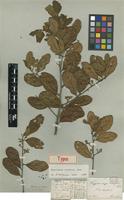
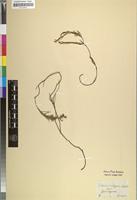
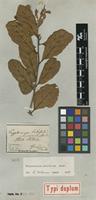
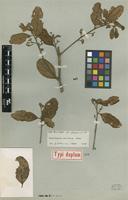
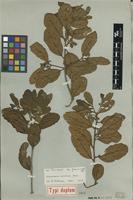
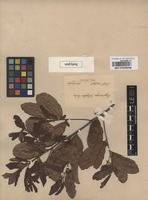
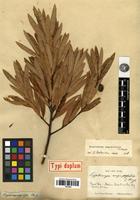
Type of Cryptocarya latifolia Sond. [family LAURACEAE]
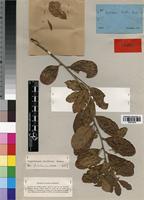
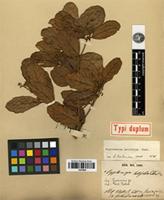
Isotype of Cryptocarya latifolia Sond. [family LAURACEAE]
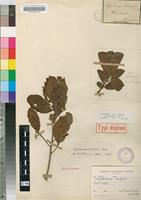
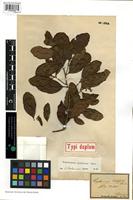
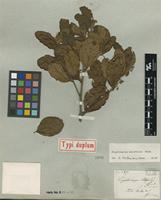
Holotype of Cryptocarya latifolia Sond. [family LAURACEAE]
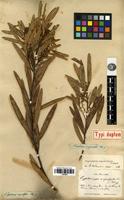
Syntype of Cryptocarya angustifolia E. Mey [family LAURACEAE]
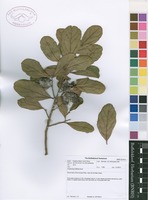
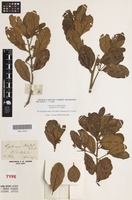
Isosyntype of Cryptocarya latifolia Sond. [family RUTACEAE]
Type of Cryptocarya latifolia Sond. [family LAURACEAE]
Isotype of Cryptocarya latifolia Sond. [family LAURACEAE]
Filed as Cryptocarya latifolia Sond. [family LAURACEAE]
Type of Cryptocarya latifolia Sond. [family LAURACEAE]
Syntype of Cryptocarya angustifolia E. Mey [family LAURACEAE]
Type of Cryptocarya latifolia Sond. [family LAURACEAE]
Isotype of Cryptocarya latifolia Sond. [family LAURACEAE]
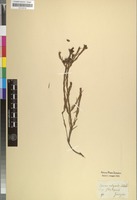
Filed as Diosma vulgaris Schltdl. [family RUTACEAE]
Previous
Next

Name

Identification
Cryptocarya latifolia Sond. [family LAURACEAE ] (stored under name); Verified by A. Kostermans, 1938
Related name
  • Cryptocarya angustifolia
  • Diosma vulgaris
  • Cryptocarya latifolia
  • Cryptocarya [illegible]

Flora

Entry for CRYPTOCARYA latifolia Sonder [family LAURACEAE]
Herbarium
Royal Botanic Gardens, Kew (K)
Collection
Flora Capensis
Resource Type
Reference Sources
Entry From
Flora Capensis, Vol 5, page 493, (1912) Author: By O. STAPF.
Names
CRYPTOCARYA latifolia Sonder [family LAURACEAE], in Linnæa, xxiii. 101;—Meisn. in DC. Prodr. xv. i. 74.
Information
a large tree; branches fulvo-pubescent; leaves elliptic to elliptic-oblong, very obtuse, rarely subacute, subcuneate at the base, 2–3 in. long, 1–1 3/4 in. broad, thinly coriaceous, cinnamon-colour below, finely pubescent and at length glabrous above, finely fulvo-tomentellous (particularly along the nerves) when young, slowly becoming more or less glabrous; lateral nerves about 4 on each side, the lowest pair from the base or almost so, remote from the next pair, very oblique and long produced beyond the middle, transverse nerves loose, slightly raised below and above, reticulation faint and close or obscure; petioles 3–4 lin. long; panicles axillary, up to 1 1/2 in. long (including the peduncle), few- to over 12-flowered, the larger sometimes with 1 or 2 small foliage leaves in the upper part densely fulvo-pubescent or almost velvety, the uppermost often reduced to 3 or 2 on very short peduncles; bracts minute, very early deciduous; flowers subsessile in small clusters at the ends of the branchlets; perianth campanulate, up to over 1 1/2 lin. long, fulvo-tomentellous without and within; receptacle oblong, constricted at the insertion of the segments; segments ovate-oblong, subequal, about 1 lin. long; filaments pubescent; anthers equalling the filaments, ovate-oblong, subacute, outer 6 about 3/8 lin. long, inner smaller; staminal glands sessile or subsessile; staminodes subsessile, ovate-lanceolate, acuminate; fruit unknown. null
Distribution
EASTERN REGION Natal; near Durban, Gueinzius; Berea, McKen, 13! and without precise locality, Gerrard, 1656!
Notes
This is probably the unnamed Cryptocarya mentioned by Sim, For. Flor. Cap. 289, which he describes as a large tree, up to 60 ft. high with a trunk 3 ft. in diameter, and producing fruits 3/4 in. across, with a green skin which blackens after falling. It is known in Pondoland and lower Natal as “Umtungwa.”

Related Materials

  • Terms and Conditions
  • Privacy Policy
  • Cookie Policy
  • Cookie Settings
  • Accessibility
  • Help
  • Contact Us
  • Facebook
  • Twitter
ITHAKA

JSTOR is part of ITHAKA, a not-for-profit organization helping the academic community use digital technologies to preserve the scholarly record and to advance research and teaching in sustainable ways.

©2000-2026 ITHAKA. All Rights Reserved. JSTOR®, the JSTOR logo, JPASS®, Aluka®, and ITHAKA® are registered trademarks of ITHAKA.

╳