JSTOR Global Plants Home
  • Home
  • Browse
  • About
  • Access
  • Account
    • Saved Items
    • Profile
  • Log in

Global Plants

Skip to Main Content
  • JSTOR Global Plants Home
  • Global Plants

    • Browse
    • About
    • Access
    • Account
      • Saved Items
      • Profile
Log in
  • Browse
  • About
  • Access
  • Account
    • Saved Items
    • Profile
Advanced Search

Compilation
Croton tinctorius

10 Images see all

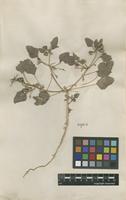
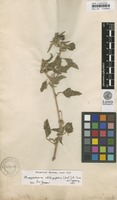
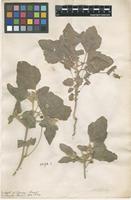
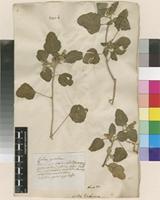
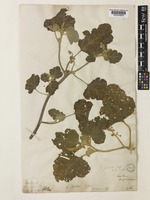
Filed as Croton tinctorius L. [family EUPHORBIACEAE]
Lectotype of Croton tinctorius L. [family EUPHORBIACEAE]
Filed as Chrozophora tinctoria (L.) Raf. [family EUPHORBIACEAE]
Filed as Croton tinctorius L. [family EUPHORBIACEAE]
Croton tinctorius L. [family EUPHORBIACEAE]
Filed as Chrozophora tinctoria (L.) Raf. [family EUPHORBIACEAE]
Filed as Croton tinctorius L. [family EUPHORBIACEAE]
Type of Chrozophora rottleri (Geiseler) A.Juss. ex Spreng. [family EUPHORBIACEAE]
Previous
Next

Name

Identification
Croton tinctorius L. [family EUPHORBIACEAE ] (stored under name); Verified by Not on sheet, Chrozophora tinctoria (L.) A.Juss. [family EUPHORBIACEAE ] Verified by Not on sheet,
Related name
  • Chrozophora tinctoria
  • Croton tinctorius

Flora

Entry for Chrozophora plicata Vahl A. Juss. ex Spreng. [family EUPHORBIACEAE]
Herbarium
Royal Botanic Gardens, Kew (K)
Collection
Flora Zambesiaca
Resource Type
Reference Sources
Entry From
FZ, Vol 9, Part 4, (1996) Author: A. Radcliffe-Smith
Names
Chrozophora tinctoria [family EUPHORBIACEAE], sensu Klotzsch in Peters, Naturw. Reise Mossambique 6, 1: 99 (1861), non (L.) Raf.
Chrozophora plicata var. prostrata Müll. Arg. [family EUPHORBIACEAE], in De Candolle, Prodr. 15, 2: 747 (1866), quoad spec. Afr. cit. tantum.
Chrozophora plicata var. obliquifolia Vis. Prain [family EUPHORBIACEAE], in F.T.A. 6, 1: 835 (1912); in Bull. Misc. Inform., Kew 1918: 94 (1918).
Chrozophora plicata var. erecta Prain [family EUPHORBIACEAE], in Bull. Misc. Inform., Kew 1918: 94 (1918); in F.C. 5, 2: 457 (1920); Burtt Davy, Fl. Pl. Ferns Transvaal: 304 (1932). Type: Mozambique, Gaza Province, Guijá Distr., E bank of the R. Limpopo, Beijer s.n. in Tvl. Mus. Herb. 26114 (PRE, holotype).
Croton plicatus Vahl [family EUPHORBIACEAE], Symb. Bot. 1: 78 (1790).
Croton obliquifolius Vis. [family EUPHORBIACEAE], Pl. Aegypt., No. 171, p. 39, t. 7, f. 2 (1836). Type as above.
Croton tinctorius [family EUPHORBIACEAE], sensu Burman f., Fl. Ind.: 304, t. 62, f. 2 (1768), non L.
Chrozophora plicata Vahl A. Juss. ex Spreng. [family EUPHORBIACEAE], Syst. Veg. 3: 850 (1826), excl. syn. Lam. —Klotzsch in Peters, Naturw. Reise Mossambique 6, 1: 576 (corr.) (1864). —Müller Argoviensis in De Candolle, Prodr. 15, 2: 747 (1866). —Engler, Pflanzenw. Ost-Afrikas C: 237 (1895). —Pax in Engler, Pflanzenr. [IV, fam. 147, vi] 57: 19 (1912). —Prain in F.T.A. 6, 1: 834 (1912); in Bull. Misc. Inform., Kew 1918: 92 (1918). —Engler, Pflanzenw. Afrikas (Veg. Erde 9) 3, 2: 51 (1921). —F.W. Andrews, Fl. Pl. Anglo-Egypt. Sudan 2: 58 (1952). —Keay in F.W.T.A., ed. 2, 1, 2: 398 (1958). —Radcliffe-Smith in F.T.E.A., Euphorb. 1: 161 (1987). Type from Egypt.
Information
A prostrate, decumbent or ± erect, branched annual or perennial herb up to c. 50 cm high.Stems yellowish or pinkish.Petioles 1–7 cm long.Leaf blades 1.5–7 × 1–5.5 cm, broadly ovate to rhombic-ovate, sometimes shallowly 3-lobed, obtuse or rounded at the apex, asymmetrically cuneate, truncate or shallowly cordate at the base, plicate-undulate at first, later ± flat and shallowly repand-dentate or ± entire on the margin, thinly chartaceous, with 2 discoid dark purple glands at the base, 3–5-nerved from the base; leaf upper surface at first incubously bullate, later ± flat; lateral nerves in 2–3 pairs, tertiary nerves arachnoid, scarcely prominent on both surfaces.Stipules 1–2 mm long, subulate.Inflorescences 1.5–3.5 cm long; bracts resembling the stipules.Male flowers: pedicels c. 1 mm long; calyx lobes 3 × 1 mm, lanceolate, acute, stellate-pubescent without, glabrous within; petals 3 × 1 mm, elliptic-oblong, ± obtuse, lepidote without, glabrous within, yellowish-orange or pinkish; disk c. 1 mm in diameter; staminal column 4 mm high, anthers 15 in (2)3 series, 1 mm long.Female flowers: pedicels 3–7 mm long, extending to 1.5–2 cm in fruit; sepals 1.5–2 × 0.5 mm, linear-lanceolate, acute, stellate-pubescent without, simply puberulous within; petals minute or absent; disk more or less as in the male flowers; ovary 2 × 2 mm, 3-lobed, densely stellate-pubescent; styles 1.5–2 mm long, abaxially stellate-pubescent, adaxially coarsely-papillose, crimson.Fruit 4–5 × 7–9 mm, strongly 3-lobed, densely stellate-pubescent, green at first, later reddish- or bluish-purple.Seeds 3.5 × 3 mm, minutely tuberculate-rugulose or ± smooth; sarcotesta papery when dry, pale grey; sclerotesta dark brownish or blackish.
Habitat
Low altitude river floodplains, usually in damp or drying black clay and alluvium, on mudflats, sandbanks, and pan margins
Range
tropical Africa from Senegal to Ethiopia and south to South Africa (Transvaal)
Altitude range
40–610 m.
610
40
Distribution
Mozambique GI Guijá-Mapai, Limpopo R., fr. 8/9.v.1944, Torre 6602 (LISC; PRE).Mozambique MS Gorongosa Nat. Park, Urema floodplains, fl. vii.1970, Tinley 1934 (K; LISC; PRE; SRGH).Zimbabwe S Manjinji Pan, SW of Malapati, fl. 3.vi.1971, Grosvenor 614 (FHO; K; LISC; MO; PRE; SRGH).Zambia S Ngoma, Kafue Nat. Park, fr. 23.viii.1964, Fanshawe 8878 (K; LISC; NDO; SRGH).Zambia E Chipata Distr., 13°06'S, 31°47'E, y. fr. 26.v.1970, Abel 118 (SRGH).Zambia N Mfuwe, Luangwa Valley, fr. 16.vii.1968, Astle 5366 (K; SRGH).Mozambique T 11 km from Régulo Fortuna to Ancuaze (Dôa), fl. & y. fr. 20.vi.1949, Barbosa & Carvalho in Barbosa 3187 (K; LISC; LUAI).Zimbabwe N Hurungwe Distr., Mana Pools Game Reserve, Chewore Wilderness Area, fr. x.1971, P.R. Guy 1884 (K; MO; PRE; SRGH).Zambia B “NW Rhodesia”, fr. vii.1908, Allen 716 (K).
Distribution (external)
Egypt
Syria
Palestine
western Arabia

Related Materials

  • Terms and Conditions
  • Privacy Policy
  • Cookie Policy
  • Cookie Settings
  • Accessibility
  • Help
  • Contact Us
  • Facebook
  • Twitter
ITHAKA

JSTOR is part of ITHAKA, a not-for-profit organization helping the academic community use digital technologies to preserve the scholarly record and to advance research and teaching in sustainable ways.

©2000-2026 ITHAKA. All Rights Reserved. JSTOR®, the JSTOR logo, JPASS®, Aluka®, and ITHAKA® are registered trademarks of ITHAKA.

╳