JSTOR Global Plants Home
  • Home
  • Browse
  • About
  • Access
  • Account
    • Saved Items
    • Profile
  • Log in

Global Plants

Skip to Main Content
  • JSTOR Global Plants Home
  • Global Plants

    • Browse
    • About
    • Access
    • Account
      • Saved Items
      • Profile
Log in
  • Browse
  • About
  • Access
  • Account
    • Saved Items
    • Profile
Advanced Search

Compilation
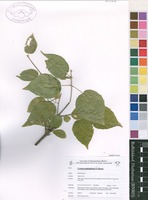
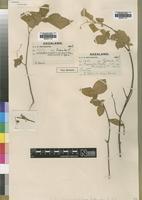
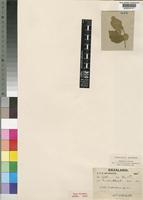
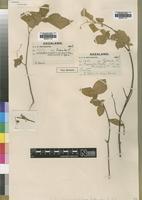
Croton madandensis

4 Images see all

Filed as Croton madandensis S.Moore [family EUPHORBIACEAE]
Type of Croton madandensis S.Moore [family EUPHORBIACEAE]
Previous
Next

Name

Identification
Croton madandensis S.Moore [family EUPHORBIACEAE ] (stored under name);
Related name
  • Croton madandensis

Flora

Entry for Croton scheffleri Pax [family EUPHORBIACEAE]
Herbarium
Royal Botanic Gardens, Kew (K)
Collection
Flora Zambesiaca
Resource Type
Reference Sources
Entry From
FZ, Vol 9, Part 4, (1996) Author: A. Radcliffe-Smith
Names
Croton scheffleri Pax [family EUPHORBIACEAE], in Bot. Jahrb. Syst. 43: 78 (1909). —Hutchinson in F.T.A. 6, 1: 733 (1912). —Engler, Pflanzenw. Afrikas (Veg. Erde 9) 3, 2: 48 (1921). —Brenan, Check-list For. Trees Shrubs Tang. Terr.: 206 (1949). —Dale & Greenway, Kenya Trees & Shrubs: 192 (1961). —White, F.F.N.R.: 197 (1962). —Drummond in Kirkia 10: 252 (1975). —K. Coates Palgrave, Trees Southern Africa, ed. 2, rev.: 419 (1983). —Radcliffe-Smith in F.T.E.A., Euphorb. 1: 147 (1987). —Beentje, Kenya Trees, Shrubs Lianas: 193 (1994). Type from Kenya (Central Province).
Croton madandensis [family EUPHORBIACEAE], sensu Drummond in Kirkia 10: 252 (1975), non S. Moore.
Information
A shrub or small tree to 6 m tall, monoecious or sometimes dioecious.Twigs dark purplish-grey.Young growth stellate-hirsute.Stipules up to 7 mm long, filiform, soon falling.Petioles 1–4 cm long.Leaf blades 4–12 × 2–9 cm, broadly ovate to ovate-lanceolate, acuminate at the apex, somewhat irregularly serrulate on the margin, wide-cuneate to rounded or truncate at the base, with a pair of shortly-stipitate or subsessile discoid basal glands on the lower surface, chartaceous, sparingly stellate-pubescent on upper surface, evenly to densely so beneath; 5–7-nerved from the base, lateral nerves in 3–4 pairs, slightly prominent beneath.Racemes 4–7 cm long, terminal, few-flowered, usually androgynous, sometimes male; bracts resembling the stipules.Male flowers: pedicels 5–6 mm long; sepals 5, 2.5 × 2 mm, ovate, stellate-pubescent without, glabrous within, greenish; petals 5, 2.5 × 1.5 mm, obovate-spathulate, ciliate but otherwise glabrous, cream-coloured; disk glands 5, rounded-subtruncate, fleshy, pubescent; stamens 15, filaments 2 mm long, glabrous, anthers 1.25 mm long, orange-yellow; receptacle villous.Female flowers: pedicels 2–3 mm long, extending to 1.5–2 cm in fruit; sepals 5, 3 × 2 mm, accrescent to 10 × 5 mm in fruit, ovate-lanceolate to elliptic-oblong, subacute, becoming foliaceous, with a midrib and 2–3 pairs of lateral nerves, sparingly stellate-pubescent without, subglabrous within, green; petals absent; disk shallowly 5-lobed, the lobes alternating with the sepals, rounded, puberulous; ovary 2 mm in diameter, trilobate-subglobose, densely fulvous stellate-tomentose; styles 3, 3–4 mm long, divaricate, deeply 2-partite, the segments filiform, sparingly stellate-pubescent basally, apically subglabrous.Fruits 5 × 7 mm, trilobate-subglobose, septicidal, evenly scurfily and sparingly patent stellate-pubescent.Seeds 4.5 × 3 mm, ovoid-ellipsoid, smooth, shiny, dark brown; caruncle 1 mm wide.
Habitat
On steep rocky slopes in dry deciduous woodland with Sterculia, Adansonia, Commiphora and Combretum, also in riverine thicket
Altitude range
550–1500 m.
1500
550
Distribution
Malawi S Mangochi Distr., Namaso Bay, fr. 17.iii.1979, Blackmore & Hargreaves 659 (K; MAL).Zambia N Mbala Distr., Vomo Gap, fl. 27.xii.1967, Richards 22828 (K).
Distribution (external)
Kenya
Tanzania
Notes
Balaka, Seyani & Kaunda 820 (K; MAL), from Malawi, Mulanje Distr., Machemba Hill, 17.xi.1984, differs from typical C. scheffleri in having chestnut-brown peltate scales admixed with the whitish stellate hairs on the midribs and main nerves on lower surface of some leaves, and furthermore the female calyx lobes do not appear to be accrescent.The status of this entity remains uncertain at present.

Related Materials

  • Terms and Conditions
  • Privacy Policy
  • Cookie Policy
  • Cookie Settings
  • Accessibility
  • Help
  • Contact Us
  • Facebook
  • Twitter
ITHAKA

JSTOR is part of ITHAKA, a not-for-profit organization helping the academic community use digital technologies to preserve the scholarly record and to advance research and teaching in sustainable ways.

©2000-2026 ITHAKA. All Rights Reserved. JSTOR®, the JSTOR logo, JPASS®, Aluka®, and ITHAKA® are registered trademarks of ITHAKA.

╳