JSTOR Global Plants Home
  • Home
  • Browse
  • About
  • Access
  • Account
    • Saved Items
    • Profile
  • Log in

Global Plants

Skip to Main Content
  • JSTOR Global Plants Home
  • Global Plants

    • Browse
    • About
    • Access
    • Account
      • Saved Items
      • Profile
Log in
  • Browse
  • About
  • Access
  • Account
    • Saved Items
    • Profile
Advanced Search

Compilation
Croton kilwae

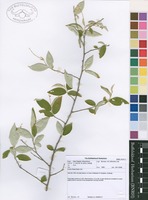
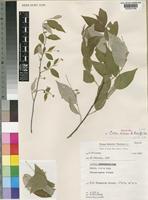
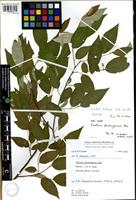
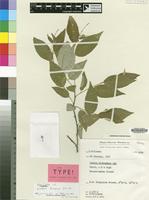
4 Images see all

Filed as Croton kilwae Radcl.-Sm. [family EUPHORBIACEAE]
Holotype of Croton kilwae Radcl.-Sm. [family EUPHORBIACEAE]
Isotype of Croton kilwae Radcl.-Sm. [family EUPHORBIACEAE]
Previous
Next

Name

Identification
Isotype of Croton kilwae Radcl.-Sm. [family EUPHORBIACEAE ] (stored under name); Verified by K.Vollesen, Croton dichogamus Pax [family EUPHORBIACEAE ] Verified by K.Vollesen, 1979
Related name
  • Croton kilwae
  • Croton dichogamus

Flora

Entry for Croton kilwae Radcl.-Sm. [family EUPHORBIACEAE]
Herbarium
Royal Botanic Gardens, Kew (K)
Collection
Flora Zambesiaca
Resource Type
Reference Sources
Entry From
FZ, Vol 9, Part 4, (1996) Author: A. Radcliffe-Smith
Names
Croton kilwae Radcl.-Sm. [family EUPHORBIACEAE], in Kew Bull. 37: 422 (1982); 42, 2: 395 (1987); in F.T.E.A., Euphorb. 1: 141 (1987). Type from Tanzania (Southern Province).
Information
A shrub up to 4 m high, monoecious.Twigs greyish-brown.Young growth densely rusty-lepidote.Stipules 1–2 mm long, triangular-subulate.Petioles 3–5 mm long.Leaf blades 2–10 × 1–3.5 cm, elliptic-ovate to ovate-lanceolate, acuminate at the apex, entire, rounded to cordulate at the base, with a pair of shortly-stipitate or sessile basal glands at the petiole apex, membranaceous, evenly minutely stellate-pubescent and green on the upper surface, silvery-lepidote and faintly brown-flecked beneath; lateral nerves in 10–18 pairs, not or scarcely prominent above or beneath.Racemes 3–5 cm long, slender, terminal on short lateral shoots, mostly male with 1–2 female flowers at the base; bracts resembling the stipules.Male flowers: pedicels 7 mm long, slender; sepals 5, 2 × 1.5 mm, ovate, lepidote without, glabrous within, white; petals 5, 2 × 0.5 mm, narrowly oblanceolate, ciliate but otherwise glabrous, white; disk 5-lobed, the lobes truncate; stamens 16, filaments 1 mm long, pubescent, anthers 0.75 mm long.Female flowers: pedicels 3–8 mm long, stouter than in the male, densely lepidote; sepals 5, 2 × 1 mm, elliptic, lepidote without, minutely puberulous within near the apex; petals absent; disk crenellate, thin, flat; ovary 2 mm in diameter, globose, densely lepidote; styles 3–4, 2–2.5 mm long, suberect, deeply 4-partite with filiform segments, lepidote at the base, otherwise glabrous, purplish.Fruits 7 × 7–8 mm, very slightly trilobate or quadrilobate-subglobose, septicidal, evenly lepidote.Seeds 6 × 4 × 3 mm, somewhat compressed-ellipsoid, smooth, slightly shiny, pale greyish-brown; caruncle c. 1.5 mm wide, shallowly convex.
Habitat
In grassland with scattered trees and shrubs, and on granite rock outcrops
Altitude range
400 m.
400
400
Distribution
Mozambique N Eráti, 12 km Namapa–Alua, Mt. Geovi, fr. 8.i.1964, Torre & Paiva 9879 (LISC); Cabo Delgado, 15 km Pemba–Montepuez, fr. 27.i.1984, Groenendijk, Maite, de Koning & Dungo 826 (K; LMA; LMU).
Distribution (external)
southern Tanzania
Notes
Since only fruiting material has been seen from Mozambique, the descriptions of the flowers are based on Tanzanian material.C. kilwae is very close to C. menyharthii, but the 4-partite styles are diagnostic.

Related Materials

  • Terms and Conditions
  • Privacy Policy
  • Cookie Policy
  • Cookie Settings
  • Accessibility
  • Help
  • Contact Us
  • Facebook
  • Twitter
ITHAKA

JSTOR is part of ITHAKA, a not-for-profit organization helping the academic community use digital technologies to preserve the scholarly record and to advance research and teaching in sustainable ways.

©2000-2026 ITHAKA. All Rights Reserved. JSTOR®, the JSTOR logo, JPASS®, Aluka®, and ITHAKA® are registered trademarks of ITHAKA.

╳