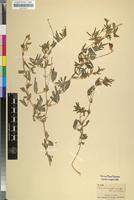
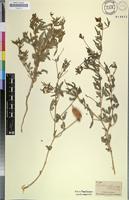
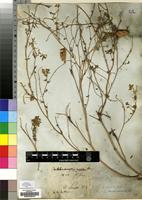
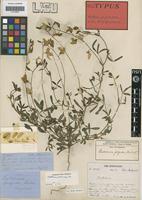
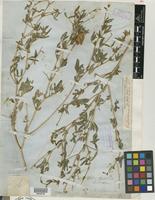
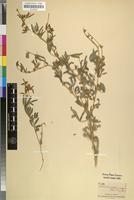
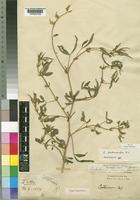
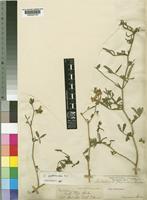
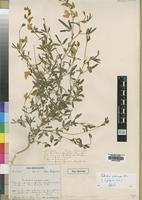
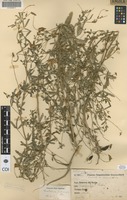
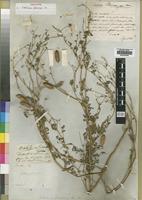
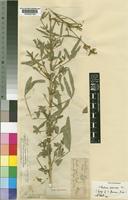
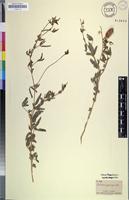
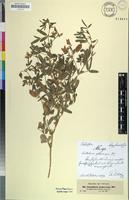
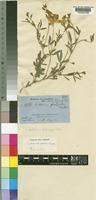
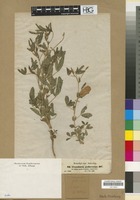
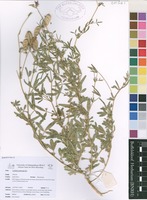
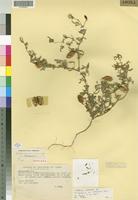
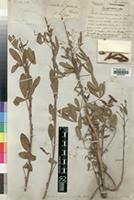
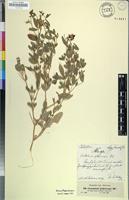
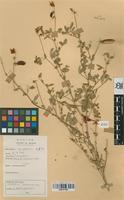
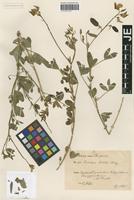
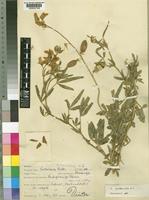
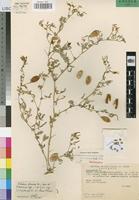
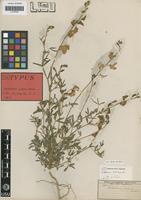
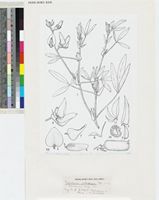
erect, herbaceous, divaricately-branched, thinly clothed with long, patent, soft hairs; stipules leaf-like, one-sided, falcate, ribbed, ciliate; leaflets oblong or oblongo-lanceolate, acute, ciliate on margin and midrib; racemes opposite the leaves, 2–6–8-flowered; flowers subdistant; calyx-lobes lanceolate-acuminate, much longer than the tube; legume stipitate, many-seeded, glabrous. 1–2 feet high, much-branched; the branches pale. Pubescence long, loose, yellowish. Petioles 1–1 1/2 inch long. Leaflets (on our specimens) 1–1 1/2 inch long, the medial longest, lanceolate, 2 1/2–3 lines wide. Stipules 6–7 lines long, dimidiate, 1 1/2 line wide. A native also of Tropical and North Africa. It varies with obovate leaflets and in amount of pubescence. The calyx-lobes in our specimen are glabrous. Carina long-rostrate. Miss Elliott has also sent from Damaraland a single specimen of a Crotalaria, allied to C. podocarpa, differing chiefly in having appressed and rigid pubescence; and in the stipules, which are pedately or secundly trifoliolate, a character so remarkable that I fear to assume it to be normal without further evidence. If this specimen prove to belong to a new species, it may be called C. diversistipula.