JSTOR Global Plants Home
  • Home
  • Browse
  • About
  • Access
  • Account
    • Saved Items
    • Profile
  • Log in

Global Plants

Skip to Main Content
  • JSTOR Global Plants Home
  • Global Plants

    • Browse
    • About
    • Access
    • Account
      • Saved Items
      • Profile
Log in
  • Browse
  • About
  • Access
  • Account
    • Saved Items
    • Profile
Advanced Search

Compilation
Crotalaria macrostachya

3 Images see all

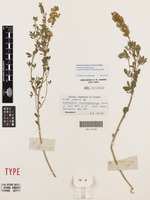
Isotype of Crotalaria macrostachya Sond. [family FABACEAE]
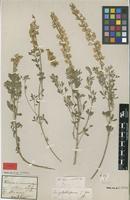
Type of Crotalaria macrostachya Sond. [family FABACEAE]
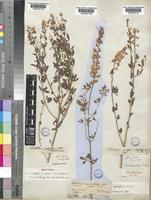
Isotype of Crotalaria macrostachya Sond. [family LEGUMINOSAE-PAPILIONOIDEAE]
Previous
Next

Name

Identification
Crotalaria globifera E.Mey. [family LEGUMINOSAE-PAPILIONOIDEAE ] (stored under name); Lebeckia unrecorded unrecorded [family LEGUMINOSAE-PAPILIONOIDEAE ] Isotype of Crotalaria macrostachya Sond. [family LEGUMINOSAE-PAPILIONOIDEAE ]
Related name
  • Crotalaria macrostachya
  • Lebeckia unrecorded
  • Crotalaria globifera

Flora

Entry for CROTALARIA globifera E. Mey. [family LEGUMINOSAE-PAPILIONOIDEAE]
Herbarium
Royal Botanic Gardens, Kew (K)
Collection
Flora Capensis
Resource Type
Reference Sources
Entry From
Flora Capensis, Vol 2, page 1, (1894) Author: (By W. H. HARVEY).
Names
CROTALARIA globifera E. Mey. [family LEGUMINOSAE-PAPILIONOIDEAE], Comm. p. 24;—Benth. l. c. p. 581.
CROTALARIA macrostachya Sond. [family LEGUMINOSAE-PAPILIONOIDEAE], ! Linn. 23. p. 26.
Information
suffrutescent, many-stemmed, more or less puberulent or canescent, with angular, virgate branches; stipules bristle-shaped or wanting; leaflets cuneate-oblong, glabrous above, appressedly pubescent beneath; racemes terminal, densely many flowered; ovules four; legume stipitate, obliquely obovoid-subglobose, appressedly pubescent. Root with a thick crown throwing up several sub-erect or ascending, curved stems, a foot or eighteen inches in height; with several lateral virgate branches. Pubescence close-pressed, thin and minute. Petioles 1/2– 3/4 inch long, scarcely equalling the lamina, in var. γ. much shorter; leaflet cuneate at base, obtuse or mucronate, the midrib very prominent on the lower surface. Raceme short, with 12–20 yellow flowers: carina taper-pointed; vexillum thinly silky. Pods scarcely as large as peas; in var. β. smaller. I cannot distinguish Sonder's C. macrostachya from Krauss's No. 440, which differs from his 341 merely in what may be referred to luxuriant growth; namely, a longer raceme, somewhat longer petioles (but this varies), and more evident stipules. In Gueinzius' specimens, referred by Sonder to C. globifera, the flowers are smaller and the foliage more glabrous; these answer well to E. Meyer's var. α, glabra. I have not seen any Dregean specimens.
Distribution
SOUTH AFRICA Between the Omsamcaba and Omsamwubo, Drege. Port Natal, Krauss! 341 and 440, Gueinzius! β. Magaliesberg, Burke! γ. Port Natal, Gueinzius! (Herb. Hk., Sd., D.)

Related Materials

  • Terms and Conditions
  • Privacy Policy
  • Cookie Policy
  • Cookie Settings
  • Accessibility
  • Help
  • Contact Us
  • Facebook
  • Twitter
ITHAKA

JSTOR is part of ITHAKA, a not-for-profit organization helping the academic community use digital technologies to preserve the scholarly record and to advance research and teaching in sustainable ways.

©2000-2026 ITHAKA. All Rights Reserved. JSTOR®, the JSTOR logo, JPASS®, Aluka®, and ITHAKA® are registered trademarks of ITHAKA.

╳