JSTOR Global Plants Home
  • Home
  • Browse
  • About
  • Access
  • Account
    • Saved Items
    • Profile
  • Log in

Global Plants

Skip to Main Content
  • JSTOR Global Plants Home
  • Global Plants

    • Browse
    • About
    • Access
    • Account
      • Saved Items
      • Profile
Log in
  • Browse
  • About
  • Access
  • Account
    • Saved Items
    • Profile
Advanced Search

Compilation
Crotalaria insignis

6 Images see all

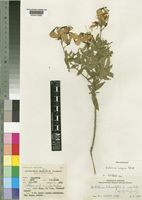
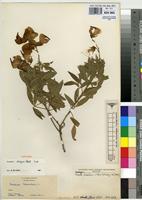
Holotype of Crotalaria insignis Polhill [family LEGUMINOSAE-PAPILIONOIDEAE]
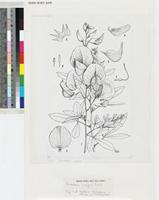
Crotalaria insignis Polhill original illustration from Flora Zambesiaca
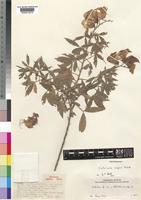
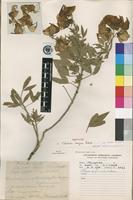
Isotype of Crotalaria insignis Polhill [family LEGUMINOSAE-PAP]
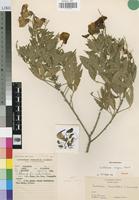
Isotype of Crotalaria insignis Polhill [family FABACEAE]
Crotalaria insignis Polhill [family LEGUMINOSAE-PAPILIONOIDEAE]
Previous
Next

Name

Identification
Crotalaria insignis Polhill [family LEGUMINOSAE ]
Related name
  • Crotalaria insignis

Flora

Entry for Crotalaria insignis Polhill [family LEGUMINOSAE]
Herbarium
Royal Botanic Gardens, Kew (K)
Collection
Flora Zambesiaca
Resource Type
Reference Sources
Entry From
FZ, Vol 3, Part 7, (2003) Author: various authors
Names
Crotalaria insignis Polhill [family LEGUMINOSAE], Crotalaria Africa & Madagascar: 76, fig. 7 (1982). —Lock, Leg. Afr. Check-list: 183 (1989). TAB. 3,7: 22. Type: Zimbabwe, Mt. Pene, SW slope, Mermaid’s Grotto, Chase 6893 (K, holotype; LISC; P; SRGH).
Information
Virgately branched shrub, 1.5–3 m tall, with shortly, densely and persistently pubescent branches. Leaves 3-foliolate; leaflets mostly 3.4–5 × 0.9–2.2 cm, narrowly elliptic to elliptic, acute to rounded at the apex, glabrous above, densely appressed puberulous beneath; petiole shorter than leaflets; stipules 2–3 mm long, subulate, persistent. Racemes lax, 6–12-flowered; bracts 3–4 mm long, linear-subulate; bracteoles setaceous. Calyx with funnel-shaped hypanthium 1.5–1.7 cm long, densely puberulous; upper lobes narrowly attenuate-triangular, ± as long as calyx tube plus hypanthium. Standard broadly elliptic, yellow turning bronze; wings longer than the keel; keel 2.4–2.8 cm long, strongly rounded, ± straight along upper margin, abruptly contracted into a well developed darker marked upwardly directed truncate beak. Pod including the 0.8–1.2 cm long stipe 5.5–6.5 cm long, oblong-clavate, densely pubescent. Seeds not seen.
Habitat
Forest margins, streamsides and secondary scrub
Range
Known only from the Zimbabwe-Mozambique border mountains
Altitude range
1050–1800 m.
1800
1050
Distribution
Mozambique MS Chimanimani Mts., fl. 7.vi.1949, Wild 2931 (K; SRGH). Without locality, fl. 1948, Pedro 2324 (LISC).Zimbabwe E Chimanimani Distr., Chisengu Forest Reserve, fl. v.1968, Goldsmith 73/68 (K; SRGH); Kasipiti, fl. 1.vi.1966, Loveridge 1565 (K; SRGH).
Notes
Cultivated at Marondera, Grasslands Research Station, Corby 1869 (K; LISC; SRGH).

Related Materials

  • Terms and Conditions
  • Privacy Policy
  • Cookie Policy
  • Cookie Settings
  • Accessibility
  • Help
  • Contact Us
  • Facebook
  • Twitter
ITHAKA

JSTOR is part of ITHAKA, a not-for-profit organization helping the academic community use digital technologies to preserve the scholarly record and to advance research and teaching in sustainable ways.

©2000-2026 ITHAKA. All Rights Reserved. JSTOR®, the JSTOR logo, JPASS®, Aluka®, and ITHAKA® are registered trademarks of ITHAKA.

╳