JSTOR Global Plants Home
  • Home
  • Browse
  • About
  • Access
  • Account
    • Saved Items
    • Profile
  • Log in

Global Plants

Skip to Main Content
  • JSTOR Global Plants Home
  • Global Plants

    • Browse
    • About
    • Access
    • Account
      • Saved Items
      • Profile
Log in
  • Browse
  • About
  • Access
  • Account
    • Saved Items
    • Profile
Advanced Search

Compilation
Crotalaria hildebrandtii

7 Images see all

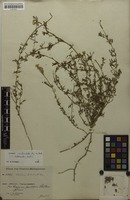
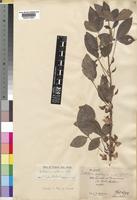
Isotype of Crotalaria hildebrandtii Baill.; nom. illeg. [family FABACEAE]
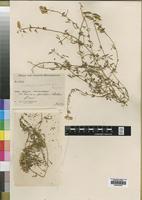
Type of Crotalaria hildebrandtii Baill. [family LEGUMINOSAE]
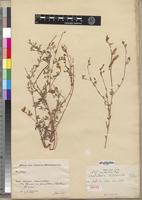
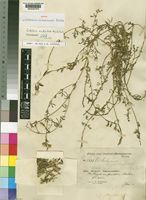
Holotype of Crotalaria hildebrandtii Baill. [family FABACEAE-PAPILIONOIDEAE]
Crotalaria axillaris Aiton [family LEGUMINOSAE-PAPILIONOIDEAE]
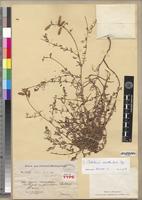
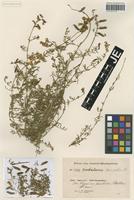
Isotype of Crotalaria hildebrandtii Baill. [family LEGUMINOSAE-PAPILIONOIDEAE]
Isotype of Crotalaria hildebrandtii Baill. [family FABACEAE]
Previous
Next

Name

Identification
Crotalaria hildebrandtii Baill. [family LEGUMINOSAE ] Crotalaria xanthoclada Bojer ex Benth. [family LEGUMINOSAE ] (stored under name);
Related name
  • Crotalaria axillaris
  • Crotalaria orthoclada
  • Crotalaria hildebrandtii
  • Crotalaria xanthoclada

Flora

Entry for Crotalaria axillaris Aiton [family LEGUMINOSAE]
Herbarium
Royal Botanic Gardens, Kew (K)
Collection
Flora Zambesiaca
Resource Type
Reference Sources
Entry From
FZ, Vol 3, Part 7, (2003) Author: various authors
Names
Crotalaria hildebrandtii Vatke [family LEGUMINOSAE], in Oesterr. Bot. Z. 29: 220 (1879). —Taubert in Engler, Pflanzenw. Ost-Afrikas C: 207 (1895). Type from Kenya.
Crotalaria axillaris Aiton [family LEGUMINOSAE], Hort. Kew. 3: 20 (1789). —E.G. Baker in J. Linn. Soc., Bot. 42: 388 (1914). —Verdoorn in Bothalia 2: 389 (1928). —Wilczek in F.C.B. 4: 138, t. 8 (1953). —Topham, Check List For. Trees Shrubs Nyasaland Prot.: 74 (1958). —Torre in C.F.A. 3: 64 (1962). —Binns, First Check List Herb. Fl. Malawi: 78 (1968). —Polhill in F.T.E.A., Leguminosae, Pap.: 954 (1971); Crotalaria Africa & Madagascar: 268, fig. 67/6 (1982). —Lock, Leg. Afr. Check-list: 166 (1989). Type from Ghana, cultivated in England.
Information
Bushy herb or shrub, 1–3 m tall; branches rather thinly to densely covered with short appressed or crisped hairs. Leaves 3-foliolate; leaflets mostly 4–10 × 2–5 cm, elliptic, shortly hairy beneath, with appressed or more often slightly spreading hairs most dense along the nerves; petiole 3–10 cm long; stipules 0.5–2 mm long, linear. Flowers 2–6(12) in the axils, clustered or very shortly racemose; bracts up to 1.5 mm long, linear; bracteoles minute. Calyx 1–1.3(1.5) cm long, puberulous to pubescent; lobes narrowly attenuate-triangular, twice as long as the tube. Standard subcircular-obovate, clear yellow, tinged reddish with age, medially puberulous outside; wings as long as the keel; keel 1.5–1.8 cm long, rounded a little below the middle, with a twisted beak. Pod 4.5–6 × 0.8–1.5 cm, oblong-clavate, narrowed into a stipe 0.6–1(1.5) cm long, puberulous or pubescent, becoming venose, c. 16–20-seeded. Seeds 4–5 mm long, subreniform, smooth, orange-brown or buff.
Habitat
Riverine forest or woodland, coastal bushland on coral
Range
Quite widespread in parts of tropical Africa with a higher and more equable distribution of rainfall, from Ghana to southern Ethiopia, south to Angola and the Flora Zambesiaca area, but with a number of disjunctions in the range.
Altitude range
0–1150 m.
1150
0
Distribution
Mozambique N Mueda Distr., andados 30 km de Nairoto (Nantulo) para Mueda, c. 310m, fl. & fr. 10.iv.1964, Torre & Paiva 11856 (LISC); Mossuril Distr., Goa I., fl. 26.i.1954, Gomes e Sousa 4171 (COI; K; LMA).Malawi S Zomba, fl. xi.1900, Purves 12 (K).Zambia N Mbala Distr., Lunzua Valley, above Kafukulu (Kafakulu) Village, fl. & fr. 5.iii.1955, Richards 4782 (K).
Notes
Plants from the coastal region of eastern Africa, including specimens from Goa I., have a very short appressed white indumentum on the branches; inland the hairs are usually at least slightly spreading, often crisped, slightly yellowish and rather variable in density.

Related Materials

  • Terms and Conditions
  • Privacy Policy
  • Cookie Policy
  • Cookie Settings
  • Accessibility
  • Help
  • Contact Us
  • Facebook
  • Twitter
ITHAKA

JSTOR is part of ITHAKA, a not-for-profit organization helping the academic community use digital technologies to preserve the scholarly record and to advance research and teaching in sustainable ways.

©2000-2026 ITHAKA. All Rights Reserved. JSTOR®, the JSTOR logo, JPASS®, Aluka®, and ITHAKA® are registered trademarks of ITHAKA.

╳