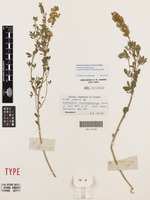
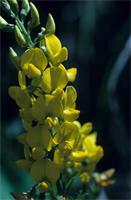
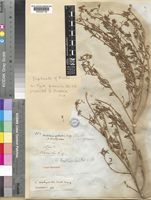
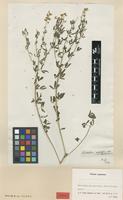
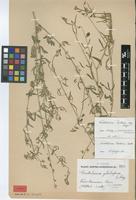
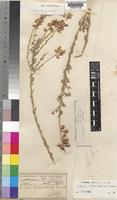
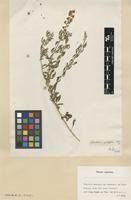
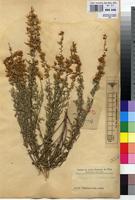
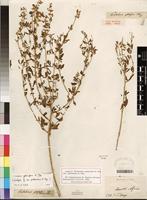
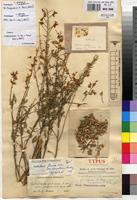
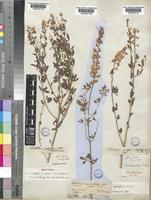
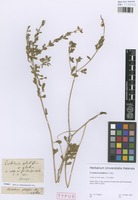
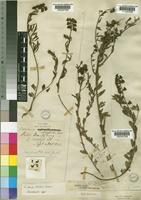
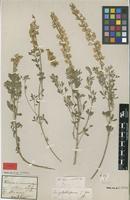
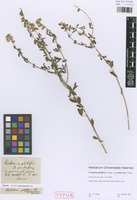
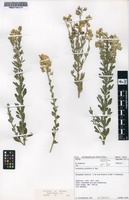
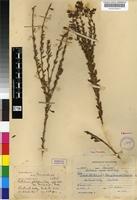
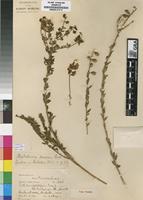
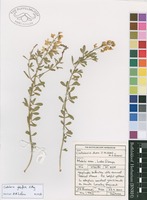
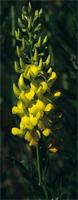
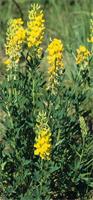
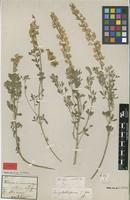
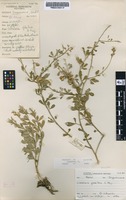
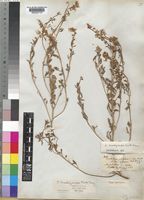
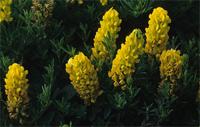
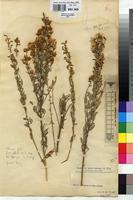
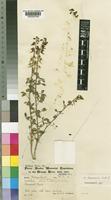
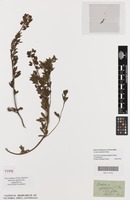
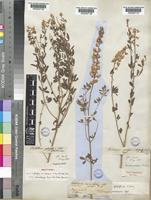
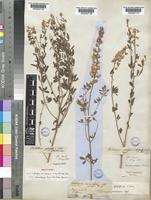
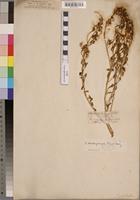
suffrutescent, many-stemmed, more or less puberulent or canescent, with angular, virgate branches; stipules bristle-shaped or wanting; leaflets cuneate-oblong, glabrous above, appressedly pubescent beneath; racemes terminal, densely many flowered; ovules four; legume stipitate, obliquely obovoid-subglobose, appressedly pubescent. Root with a thick crown throwing up several sub-erect or ascending, curved stems, a foot or eighteen inches in height; with several lateral virgate branches. Pubescence close-pressed, thin and minute. Petioles 1/2– 3/4 inch long, scarcely equalling the lamina, in var. γ. much shorter; leaflet cuneate at base, obtuse or mucronate, the midrib very prominent on the lower surface. Raceme short, with 12–20 yellow flowers: carina taper-pointed; vexillum thinly silky. Pods scarcely as large as peas; in var. β. smaller. I cannot distinguish Sonder's C. macrostachya from Krauss's No. 440, which differs from his 341 merely in what may be referred to luxuriant growth; namely, a longer raceme, somewhat longer petioles (but this varies), and more evident stipules. In Gueinzius' specimens, referred by Sonder to C. globifera, the flowers are smaller and the foliage more glabrous; these answer well to E. Meyer's var. α, glabra. I have not seen any Dregean specimens.