JSTOR Global Plants Home
  • Home
  • Browse
  • About
  • Access
  • Account
    • Saved Items
    • Profile
  • Log in

Global Plants

Skip to Main Content
  • JSTOR Global Plants Home
  • Global Plants

    • Browse
    • About
    • Access
    • Account
      • Saved Items
      • Profile
Log in
  • Browse
  • About
  • Access
  • Account
    • Saved Items
    • Profile
Advanced Search

Compilation
Crotalaria debilis

5 Images see all

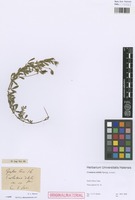
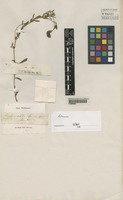
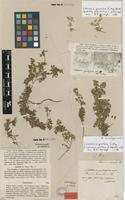
Original material of Crotalaria debilis Spreng. [family FABACEAE]
Filed as Crotalaria debilis Spreng. [family LEGUMINOSAE]
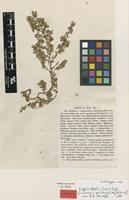
Lectotype of Leptis debilis Eckl.&Zeyh. [family FABACEAE]
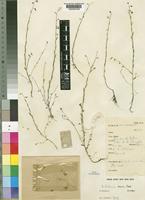
Holotype of Crotalaria debilis Polhill [family LEGUMINOSAE-PAPILIONOIDEAE]
Isolectotype of Leptis debilis Eckl.&Zeyh. [family FABACEAE]
Previous
Next

Name

Identification
Crotalaria debilis Polhill [family LEGUMINOSAE-PAPILIONOIDEAE ] (stored under name);
Related name
  • Crotalaria debilis

Flora

Entry for Crotalaria debilis Polhill [family LEGUMINOSAE]
Herbarium
Royal Botanic Gardens, Kew (K)
Collection
Flora Zambesiaca
Resource Type
Reference Sources
Entry From
FZ, Vol 3, Part 7, (2003) Author: various authors
Names
Crotalaria debilis Polhill [family LEGUMINOSAE], Crotalaria Africa & Madagascar: 359, fig. 101/19–26 (1982). —Lock, Leg. Afr. Check-list: 173 (1989). TAB. 3,7: 47, fig. C. Type: Zambia, banks of Kafue R., 11 km north of Chingola, E.A. Robinson 3707 (K, holotype).
Information
Diminutive erect branching annual 15–25 cm tall; stem wiry, subglabrous. Leaves simple, subsessile, without stipules; blades 4–12 × 1–2.5 mm, linear-lanceolate and acute above to oblanceolate-oblong and obtuse below, shortly rounded to the base, sparsely puberulous beneath. Racemes 2–4 cm long, laxly 3–6-flowered, with a few other flowers developing in the axils below; bracts 1–2 mm long, linear; pedicels 2–4 mm long, without bracteoles. Calyx 2–3 mm long, thinly appressed puberulous; upper lobes attenuate-triangular, 1.5 times as long as the tube. Standard obovate, yellow, lined and later flushed red, subglabrous; wings shorter than the keel; keel 4 mm long, angular, with a narrow twisted only slightly incurved beak. Pod sessile, 3 mm long, ovoid-globose, minutely puberulous, 1–2-seeded. Seeds 1.5 mm long, oblique-cordiform, smooth, with a prominent aril.
Habitat
Short wet grassland by rivers and drying laterite pavements
Range
Known only from western Zambia
Altitude range
1350–1400 m.
1400
1350
Distribution
Zambia W Mwinilunga Distr., Matonchi, Kalenda Plain, fl. 16.iv.1960, E.A. Robinson 3629B (K).

Related Materials

  • Terms and Conditions
  • Privacy Policy
  • Cookie Policy
  • Cookie Settings
  • Accessibility
  • Help
  • Contact Us
  • Facebook
  • Twitter
ITHAKA

JSTOR is part of ITHAKA, a not-for-profit organization helping the academic community use digital technologies to preserve the scholarly record and to advance research and teaching in sustainable ways.

©2000-2026 ITHAKA. All Rights Reserved. JSTOR®, the JSTOR logo, JPASS®, Aluka®, and ITHAKA® are registered trademarks of ITHAKA.

╳