JSTOR Global Plants Home
  • Home
  • Browse
  • About
  • Access
  • Account
    • Saved Items
    • Profile
  • Log in

Global Plants

Skip to Main Content
  • JSTOR Global Plants Home
  • Global Plants

    • Browse
    • About
    • Access
    • Account
      • Saved Items
      • Profile
Log in
  • Browse
  • About
  • Access
  • Account
    • Saved Items
    • Profile
Advanced Search

Compilation
Crotalaria chirindae

5 Images see all

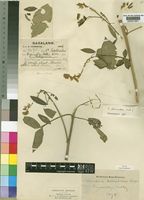
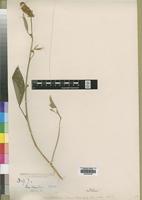
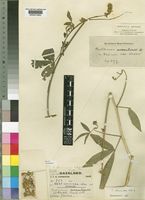
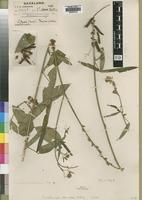
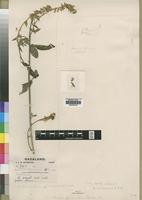
Type of Crotalaria chirindae Baker f. [family LEGUMINOSAE-PAPILIONOIDEAE]
Syntype of Crotalaria chirindae Baker f. [family LEGUMINOSAE]
Type of Crotalaria chirindae Baker f. [family LEGUMINOSAE-PAPILIONOIDEAE]
Previous
Next

Name

Identification
Crotalaria chirindae Baker f. [family LEGUMINOSAE ] Crotalaria chrinidae Baker f. [family LEGUMINOSAE ] (stored under name);
Related name
  • Crotalaria mossambicensis
  • Crotalaria chirindae
  • Crotalaria chrinidae

Flora

Entry for Crotalaria chirindae Baker f. [family LEGUMINOSAE]
Herbarium
Royal Botanic Gardens, Kew (K)
Collection
Flora Zambesiaca
Resource Type
Reference Sources
Entry From
FZ, Vol 3, Part 7, (2003) Author: various authors
Names
Crotalaria chirindae Baker f. [family LEGUMINOSAE], in J. Linn. Soc., Bot. 42: 377 (1914). —Eyles in Trans. Roy. Soc. South Africa 5: 370 (1916). —Verdoorn in Bothalia 2: 399 (1928). —Brenan in Mem. New York Bot. Gard. 8: 248 (1953). —Binns, First Check List Herb. Fl. Malawi: 79 (1968). —Polhill in F.T.E.A., Leguminosae, Pap.: 923 (1971). —Drummond in Kirkia 8: 217 (1972). —Polhill, Crotalaria Africa & Madagascar: 205 (1982). —Lock, Leg. Afr. Check-list: 171 (1989). Syntypes: Zimbabwe, Chirinda, Swynnerton 397; Mozambique, Manica e Sofala, Inhamadzi Valley, Swynnerton 1498 (BM, syntypes; K).
Information
Erect, straggling-ascending or decumbent well-branched herb, up to 1–1.5 m tall; branches appressed puberulous. Leaves all 3-foliolate or sometimes uppermost 1-foliolate; leaflets mostly 5–15 × 0.8–4 cm, usually narrowly oblong-lanceolate above to elliptic lower down, sometimes all elliptic, often acuminate, puberulous beneath; petiole shorter than the leaflets; stipules mostly 2–4 mm long, subulate or filiform, sometimes caducous. Racemes 10–23(40) cm long, rather densely many-flowered; bracts mostly 4–8 mm long, subulate-caudate; bracteoles at the base of the calyx, 4–9 mm long, linear-caudate. Calyx 3.5–4.5 mm long, becoming basally truncate and deflexed against the pedicel, appressed pubescent; lobes narrowly acuminate-triangular, at least as long as the tube. Standard broadly elliptic, yellow, veined purple or reddish-brown; wings markedly shorter than the keel; keel 8–10 mm long, rounded about the middle, with a narrow incurved sharp beak. Pod shortly stipitate, 2.4–3 × 0.6–0.7 cm, narrowly cylindrical, densely pubescent, 20–26-seeded. Seeds 2.5–3 mm long, oblique-cordiform, smooth, yellow to orange.
Habitat
Forest margins, streamsides, open miombo woodland and tree savanna
Altitude range
750–1900 m.
1900
750
Distribution
Mozambique MS Sussundenga Distr., Mavita, fl. 8.iv.1948, Barbosa 1381 (LISC).Mozambique Z Gurué Mts., fl. & fr. 4.viii.1979, de Koning 7569 (K; LMU; WAG).Malawi S Zomba Plateau, fl. & fr. 5.vi.1946, Brass 16242 (K; NY; SRGH).Malawi C Dedza Mt., fl. 24.v.1968, Salubeni 1099 (K; SRGH).Zimbabwe E Chipinge (Chipinga), fl. 29.ii.1956, Drummond 5122 (BR; COI; K; SRGH).Mozambique N Lichinga (Vila Cabral), fl. & fr. immat. 17.v.1948, Pedro & Pedrógão 3651 (LMA).Malawi N Mzimba Distr., 3 km SW of Mzuzu, fl. & fr. 21.vi.1972, Pawek 5475 (K).Zimbabwe C Hwedza (Wedza) Mt., fl. & fr. 27.iv.1961, Corby 1000 (SRGH).Zambia E Chipata (Fort Jameson), fl. 4.v.1962, Verboom 872 (SRGH).
Distribution (external)
southern Tanzania

Related Materials

  • Terms and Conditions
  • Privacy Policy
  • Cookie Policy
  • Cookie Settings
  • Accessibility
  • Help
  • Contact Us
  • Facebook
  • Twitter
ITHAKA

JSTOR is part of ITHAKA, a not-for-profit organization helping the academic community use digital technologies to preserve the scholarly record and to advance research and teaching in sustainable ways.

©2000-2026 ITHAKA. All Rights Reserved. JSTOR®, the JSTOR logo, JPASS®, Aluka®, and ITHAKA® are registered trademarks of ITHAKA.

╳