JSTOR Global Plants Home
  • Home
  • Browse
  • About
  • Access
  • Account
    • Saved Items
    • Profile
  • Log in

Global Plants

Skip to Main Content
  • JSTOR Global Plants Home
  • Global Plants

    • Browse
    • About
    • Access
    • Account
      • Saved Items
      • Profile
Log in
  • Browse
  • About
  • Access
  • Account
    • Saved Items
    • Profile
Advanced Search

Compilation
Crotalaria cernua

3 Images see all

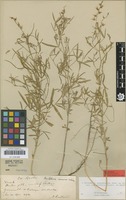
Original material of Crotalaria cernua Schinz [family FABACEAE]
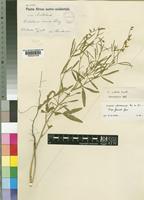
Type of Crotalaria cernua Schinz [family LEGUMINOSAE-PAPILIONOIDEAE]
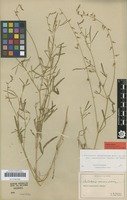
Original material of Crotalaria cernua Schinz [family FABACEAE]
Previous
Next

Name

Identification
Crotalaria sphaerocarpa Perr. ex DC. [family LEGUMINOSAE-PAPILIONOIDEAE ] (stored under name); Verified by Polhill, R.M., Crotalaria cernua Schinz [family LEGUMINOSAE-PAPILIONOIDEAE ] Crotalaria nubica Benth. [family LEGUMINOSAE-PAPILIONOIDEAE ] Verified by illegible,
Related name
  • Crotalaria nubica
  • Crotalaria sphaerocarpa
  • Crotalaria cernua

Flora

Entry for Crotalaria sphaerocarpa subsp. sphaerocarpa [family LEGUMINOSAE]
Herbarium
Royal Botanic Gardens, Kew (K)
Collection
Flora Zambesiaca
Resource Type
Reference Sources
Entry From
FZ, Vol 3, Part 7, (2003) Author: various authors
Names
Crotalaria sphaerocarpa subsp. sphaerocarpa [family LEGUMINOSAE], —Polhill, Crotalaria Africa & Madagascar: 236, fig. 60 (1982). —Lock, Leg. Afr. Check-list: 204 (1989). TAB. 3,7: 34.
Crotalaria nubica Benth. [family LEGUMINOSAE], in Hooker, London J. Bot. 2: 581 (1843). —J.G. Baker in F.T.A. 2: 23 (1871). —Verdoorn in Bothalia 2: 384 (1928). —Burtt Davy, Fl. Pl. Ferns Transvaal, pt. 2: 398 (1932). Lectotype, selected by J.G. Baker, loc. cit. (1971), from Sudan.
Crotalaria nutans Welw. ex Baker [family LEGUMINOSAE], in F.T.A. 2: 24 (1871). —E.G. Baker in J. Linn. Soc., Bot. 42: 284 (1914). Type from Angola.
Crotalaria sphaerocarpa var. lanceolata Schinz [family LEGUMINOSAE], in Verh. Bot. Vereins Prov. Brandenburg 30: 160 (1888). —E.G. Baker in J. Linn. Soc., Bot. 42: 290 (1914). —Schreiber in Mitt. Bot. Staatssamml. München 2: 291 (1957). Type from Namibia.
Crotalaria cernua Schinz [family LEGUMINOSAE], in Mém. Herb. Boissier No. 1: 127 (1900). —E.G. Baker in J. Linn. Soc., Bot. 42: 297 (1914). —Torre in C.F.A. 3: 47 (1962). Syntypes from Namibia.
Crotalaria sphaerocarpa var. angustifolia Hochst. ex Baker f. [family LEGUMINOSAE], in J. Linn. Soc., Bot. 42: 289 (1914). —Eyles in Trans. Roy. Soc. South Africa 5: 372 (1916). —Schreiber in Mitt. Bot. Staatssamml. München 2: 291 (1957). Type as for Crotalaria nubica.
Information
Erect annual (10)30–100(170) cm tall, much branched from the base upwards, covered in longish appressed to somewhat spreading hairs. Leaves 3-foliolate; leaflets very variable, mostly 2–6 × 0.2–2 cm, linear to lanceolate, oblanceolate or elliptic, with longish ± appressed hairs at least beneath; petiole shorter than the leaflets; stipules 1.5–5 mm long, subulate to linear-lanceolate. Racemes laxly 12–many-flowered; bracts 1–1.5 mm long, linear-lanceolate; bracteoles on pedicel, inconspicuous. Calyx 2.5–3.5(4) mm long, pubescent; lobes subulate, 2–3 times as long as the tube. Standard elliptic to oblong-obovate, usually pale yellow, pubescent outside; wings shorter than the keel; keel (4)5–7(9) mm long, angled in the lower part with a long narrow beak, pubescent on the sides. Pod shortly stipitate, 5–7 × 3.5–4.5 mm, shortly oblong-ellipsoid or oblong-obovoid, 1–4(6)-seeded, pubescent. Seeds 2.5–3 mm long, bluntly triangular to very obliquely cordiform, rugulose to nearly smooth, brown.
Habitat
Woodland and savanna, usually on sand (sometimes on loam or clay), along rivers, on dunes and waste ground
Range
Tropical Africa, in savanna areas of moderately low rainfall, in a narrow northern zone (c. 12°N) from Senegal to the Sudan, then throughout the Zambezian Domain to 30°S, disjunct between.
Altitude range
0–1350 m.
1350
0
Distribution
Mozambique M Matutuíne (Bela Vista) to Salamanga, fl. & fr. 23.iv.1948, Torre 7700 (BM; K; LISC).Mozambique GI R. Chicomo, near Chicomo, fl. & fr. 8.xii.1944, Mendonça 3333 (BM; K; LISC).Zimbabwe S Beitbridge, fl. & fr. 16.ii.1955, Exell, Mendonça & Wild 435 (BM; LISC; SRGH).Zimbabwe E Mutare Distr., near Odzi, fl. & fr. 11.iii.1969, Corby 2120 (K; SRGH).Zimbabwe C Harare (Salisbury) Experimental Station, fl. & fr. 22.v.1943, Arnold in GHS 10093 (K; SRGH).Zimbabwe W Hwange (Wankie) Reserve, near Matetsi R., fl. & fr. 28.ii.1963, Wild 6058 (K; LISC; SRGH).Zambia S Namwala, fl. & fr. 9.i.1957, E.A. Robinson 2104 (K; SRGH).Zambia E Luangwa Valley, fl. & fr. 24.iii.1963, Verboom 831 (SRGH).Zambia C Mkushi, fl. & fr. 2.v.1957, Fanshawe 3271 (BR; K; NDO; SRGH); Luangwa Game Reserve, Mfuwe, fl. & fr. 17.v.1965, Mitchell 2915 (K; SRGH).Botswana SW 27 km north of Kang, fl. & fr. 18.ii.1960, Wild 5033 (COI; K; SRGH).Mozambique MS 5 km Chemba–Nhacolo (Tambara), fl. & fr. 23.iv.1960, Lemos & Macuácua 141 (BM; K; LISC; LMA; SRGH).Malawi S Mangochi, near airfield, fl. & fr. 24.ii.1979, Brummitt & Patel 15455 (K; LISC; MAL; SRGH).Zimbabwe N Hurungwe Distr., Urungwe Reserve, Musukwi (Msuku) R., fl. & fr. iv.1956, R.M. Davies 1868 (K; LISC; SRGH).Zambia B Sesheke Distr., Masese, fl. & fr. 10.v.1961, Fanshawe 6547 (BR; K; LISC; LMA; NDO; SRGH) – large-flowered form.Botswana N Nata R. near Madsiara Drift, fl. & fr. 21.iv.1957, Drummond & S.C. Seagrief 5180 (K; SRGH).Botswana SE Central Distr., Palapye, Molete (Malete), fl. & fr. 7.ii.1958, de Beer 698 (K; LISC; SRGH).
Notes
The various varieties based on differences in leaflet shape seem worthless. In a zone of varying width either side of the Cunene and upper Zambezi Valleys plants with large flowers (keel 7–9 mm long) and ovules varying freely from 2–6 in number are quite frequent. Some incipient divergence seems to be occurring, but is insufficiently marked for any formal taxonomic recognition to be practicable. The names C. nutans and C. cernua are based on larger flowered specimens from this region.Subsp. polycarpa (Benth.) Hepper is entirely glabrous and restricted to Senegal.

Related Materials

  • Terms and Conditions
  • Privacy Policy
  • Cookie Policy
  • Cookie Settings
  • Accessibility
  • Help
  • Contact Us
  • Facebook
  • Twitter
ITHAKA

JSTOR is part of ITHAKA, a not-for-profit organization helping the academic community use digital technologies to preserve the scholarly record and to advance research and teaching in sustainable ways.

©2000-2026 ITHAKA. All Rights Reserved. JSTOR®, the JSTOR logo, JPASS®, Aluka®, and ITHAKA® are registered trademarks of ITHAKA.

╳