

Compilation
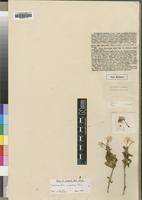
Crossandra smithii
1 Images see all
Name
Identification
Crossandra smithii S.Moore [family ACANTHACEAE ] Crossandra nilotica Oliv. [family ACANTHACEAE ] (stored under name); Verified by Vollesen,K.,
Related name
- Crossandra smithii
- Crossandra nilotica
Flora
Entry for Crossandra nilotica Oliver [family ACANTHACEAE]
Herbarium
Royal Botanic Gardens, Kew (K)
Collection
Flora of Tropical East Africa
Resource Type
Reference Sources
Entry From
Flora of Tropical East Africa, page 1, (2008) Author: Kaj Vollesen
Names
Crossandra nilotica Oliver [family ACANTHACEAE], in Trans. Linn. Soc. 29: 128, t. 85 (1875); Lindau in P.O.A. C: 370 (1895); C.B. Clarke in F.T.A. 5: 115 (1899), excl. syn.; De Wild., Contrib. Fl. Katanga 1: 202 (1921) & Pl. Beq. 4: 28 (1926); F.P.N.A. 2: 294 (1947); Napper in K.B. 24: 338 (1970); Champluvier in Fl. Rwanda 3: 450 (1985); Vollesen in K.B. 45: 121 & 508 (1990); Lebrun & Stork, Enum. Pl. Afr. Trop. 4: 476 (1997); Friis & Vollesen in Biol. Skr. 51(2): 440 (2005); Ensermu in F.E.E. 5: 364 (2006). Types: Uganda, West Nile District: Madi, Grant 685 (K!, lecto.); Tanzania, Biharamulo District: Usui, Grant 135 (K!, syn.)
Crossandra smithii S.Moore [family ACANTHACEAE], in J. B. 38: 462 (1900). Type: Sudan, Magois (Msai), Donaldson Smith s.n. (BM!, holo.)
Crossandra nilotica Lindau var. acuminata [family ACANTHACEAE], in Ann. Ist. Bot. Roma 6: 76 (1896), nom. nud.; C.B. Clarke in F.T.A. 5: 115 (1899), excl. spec. ex Somalia; Fiori, Boschi e piante legn. Eritrea: 346 (1912); Jex-Blake, Gard. E. Afr. (ed. 4): 337, pl. 12, 2 (1957)
Crossandra nilotica (C.B.Clarke) Napper subsp. acuminata [family ACANTHACEAE], in K.B. 24: 338 (1970). Type: Eritrea, near Ghinda, Donkollo, Schweinfurth & Riva 303 (K!, lecto.; FT!, iso.; selected by Napper (l.c.))
Crossandra rhynchocarpa (Klotzsch) Cuf. [family ACANTHACEAE], E.P.A.: 955 (1964), non Barleria rhynchocarpa Klotzsch (1861)
Information
Erect or straggling to scrambling perennial or shrubby herb to 1.5 m tall; young stems glabrous to sericeous-puberulous. Leaves in whorls of 4; sessile or petiole up to 1.5(–4) cm long; lamina ovate to elliptic, largest 6.5–18(–23)≈2–7 cm, apex subacuminate to acute (rarely rounded), the actual tip rounded, subglabrous to puberulous (rarely pubescent), densest on veins. Spikes 2–8.5 cm long; peduncles 2–18 cm long, puberulous or sparsely so (rarely pubescent); fertile bracts ovate to elliptic or broadly so (rarely obovate or narrowly ovate), 12–33≈4–16 mm, length/width-ratio 1.3–2.2(–3), narrowing gradually to an acute tip with a straight mucro up to 0.5 mm long, finely puberulous or sparsely so and with usually dense stalked capitate glands, ciliate on edges (sometimes also on veins) from long many-celled hairs, with 3–5 longitudinal veins and raised reticulum; bracteoles 8–18 mm long, finely puberulous, with long capitate glands, ciliate. Sepals acuminate to cuspidate, finely puberulous and with sparse to dense capitate glands towards tip, dorsal broadly elliptic, 8–17 mm long, ventral ovate-elliptic, 8–17 mm long, lateral 6–14 mm long. Corolla light red to bright red or scarlet (? sometimes orange); tube 20–32 mm long, straight, not infundibuliformapically; limb 10–16 mm long. Capsule ± 14 mm long. Seed ± 3≈3 mm.
Range
DISTR. U 1–4; K 2; T 1, 4
Altitude range
750–1550 m
Distribution
KENYA Turkana District 32 km NE of Amodet, Sep. 1968, Carr 470!TANZANIA Bukoba District Buhamira, Oct. 1931, Haarer 2248!TANZANIA Mwanza District Uzinza, Geita, 3 June 1937, Burtt 6543!TANZANIA Kigoma District 15 km N of Kigoma, Kakombe, 7 July 1959, Newbould & Harley 4278!UGANDA Karamoja District Moroto, Oct. 1952, Dale 813!UGANDA Bunyoro District Budongo Forest, 26 Nov. 1971, Synnott 774!UGANDA Mbale District Bungulilo, 1 Mar. 1951, G.H. Wood 107!
Distribution (external)
Sudan
Eritrea
Ethiopia
Congo-Kinshasa
Rwanda
Burundi
Angola
Zambia
Malawi
Notes
The description of a 4-lobed calyx with 2 large and 2 small decussate lobes and 2 stamens plus 2 staminodes clearly indicates that Barleria rhynchocarpa is a true Barleria, and that it was erroneously synonymised by Clarke (l.c.). This mistake unfortunately led Cufodontis to publish the combination Crossandra rhynchocarpa. Napper (l.c.) has explained the intricate synonymy of C. nilotica in detail. There are gradual morphological changes from south to north in the distribution area. Southern plants (Tanzania, Angola, Zambia) have wide bracts (length/width-ratio 1.3–2(–2.2)) and long sepals (12–17 mm), while northern plants (Sudan, Ethiopia) have narrow bracts (length/width-ratio 1.7–3) and short sepals (8–13 mm). But the variation is quite gradual with most Ugandan material falling in between, and there is no justification for maintaining subsp. acuminata for the northern form. The lectotype of C. nilotica from N Uganda has sepals 13 mm long and bracts exactly twice as long as wide. The corresponding measurements for the lectotype of subsp. acuminata are exactly the same.