JSTOR Global Plants Home
  • Home
  • Browse
  • About
  • Access
  • Account
    • Saved Items
    • Profile
  • Log in

Global Plants

Skip to Main Content
  • JSTOR Global Plants Home
  • Global Plants

    • Browse
    • About
    • Access
    • Account
      • Saved Items
      • Profile
Log in
  • Browse
  • About
  • Access
  • Account
    • Saved Items
    • Profile
Advanced Search

Compilation
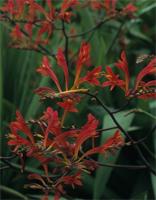
Crocosmia paniculata

10 Images see all

Crocosmia paniculata (Klatt) Goldblatt
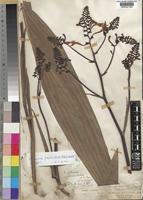
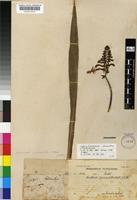
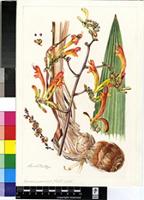
Holotype of Crocosmia paniculata (Klatt) Goldblatt [family IRIDACEAE]
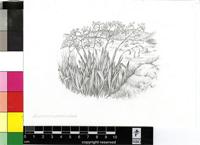
Filed as Crocosmia paniculata (Klatt) Goldblatt [family IRIDACEAE]
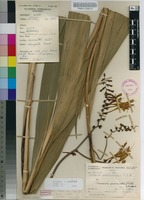
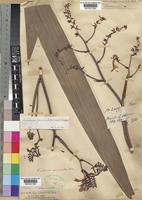
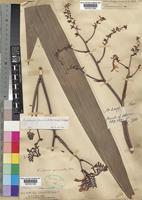
Isotype of Crocosmia paniculata (Klatt) Goldblatt [family IRIDACEAE]
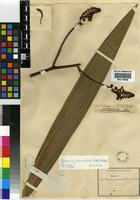
Type of Crocosmia paniculata (Klatt) Goldblatt [family IRIDACEAE]
Isotype of Crocosmia paniculata (Klatt) Goldblatt [family IRIDACEAE]
Crocosmia paniculata (Klatt) Goldblatt
Crocosmia paniculata (Klatt) Goldblatt [family IRIDACEAE]
Previous
Next

Name

Identification
Crocosmia paniculata (Klatt) Goldblatt [family IRIDACEAE ]
Related name
  • Crocosmia paniculata

Flora

Entry for Crocosmia paniculata Klatt Goldblatt [family IRIDACEAE]
Herbarium
Royal Botanic Gardens, Kew (K)
Collection
Flora Zambesiaca
Resource Type
Reference Sources
Entry From
FZ, Vol 12, Part 4, (1993) Author: P. Goldblatt
Names
Crocosmia paniculata Klatt Goldblatt [family IRIDACEAE], in J. S. African Bot. 37: 444 (1971). — de Vos in J. S. African Bot. 50: 490 (1984). TAB. 14 fig. B. Type from South Africa (Natal).
Antholyza paniculata Klatt [family IRIDACEAE], in Linnaea 35: 379 (1865). — Baker in F.C. 6: 168 (1896). Type as above.
Curtonus paniculatus Klatt N.E. Br. [family IRIDACEAE], in Trans. Roy. Soc. S. Africa 20: 270 (1932).
Information
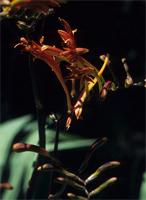
Plants 100–130 (180) cm high. Corms single or in chains of 2–3, 2.5–4(5) cm in diameter; tunics brown, membranous, later fibrous above. Foliage leaves several, basal and cauline, half to two-thirds as long as the stems, lanceolate, plicate, narrowed and thickened below into a pseudopetiolate base; cauline leaves shorter than the basal. Stem inclined above, relatively thick, up to 9 mm in diameter, 2–5-branched, the branches nearly horizontal. Spikes rather congested, 10–22-flowered, flexuous; bracts firm, green, becoming reddish-brown, 7–10 mm long, exceeding the internodes, the outer obtuse or apiculate, the inner shortly 2-toothed. Flowers orange to red or red-brown, zygomorphic, facing to the side; perianth tube curved, (25)30–40(45) mm long, tubular in the lower half, infundibuliform above; tepals unequal, obtuse, the uppermost longest, (10)15–18 × 6–9 mm, the upper laterals 7–10 mm long, spreading, the lower 3 tepals 6–12 mm long, the median one smallest. Stamens unilateral, arched under the uppermost tepal; filaments 25–40 mm long; anthers 6–8 mm long. Style dividing near the anther apices, the branches 4–6 mm long. Capsules 12–14 mm long, globose; seeds 4 mm in diameter, globose or angled.
Habitat
Moist rocky and grassy slopes, often at high elevations, sometimes at forest edges.
Altitude range
5895
0
Distribution
Zimbabwe E Mutare Distr., Vumba, Cloudlands. 8.i.1957. Chase 6315 (SRGH).
Distribution (external)
South Africa (Natal, Transvaal, Orange Free State)
Lesotho
Swaziland
Notes
Flowering in December to February.Easily distinguished from C. aurea by its long, rather tubular flower and the broad plicate leaves.

Related Materials

  • Terms and Conditions
  • Privacy Policy
  • Cookie Policy
  • Cookie Settings
  • Accessibility
  • Help
  • Contact Us
  • Facebook
  • Twitter
ITHAKA

JSTOR is part of ITHAKA, a not-for-profit organization helping the academic community use digital technologies to preserve the scholarly record and to advance research and teaching in sustainable ways.

©2000-2026 ITHAKA. All Rights Reserved. JSTOR®, the JSTOR logo, JPASS®, Aluka®, and ITHAKA® are registered trademarks of ITHAKA.

╳