JSTOR Global Plants Home
  • Home
  • Browse
  • About
  • Access
  • Account
    • Saved Items
    • Profile
  • Log in

Global Plants

Skip to Main Content
  • JSTOR Global Plants Home
  • Global Plants

    • Browse
    • About
    • Access
    • Account
      • Saved Items
      • Profile
Log in
  • Browse
  • About
  • Access
  • Account
    • Saved Items
    • Profile
Advanced Search

Compilation
Crepis rostrata

8 Images see all

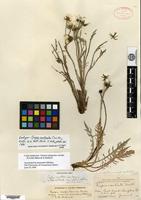
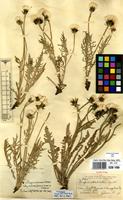
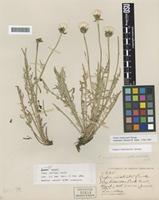
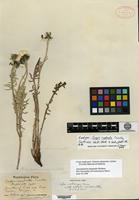
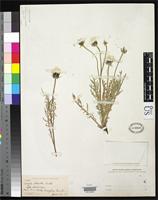
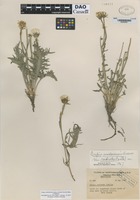
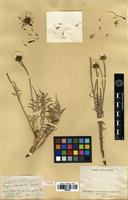
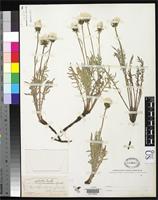
Isotype of Crepis rostrata Coville [family ASTERACEAE]
Isotype of Crepis rostrata Coville [family COMPOSITAE]
Isotype of Crepis rostrata Coville [family ASTERACEAE]
Holotype of Crepis rostrata Coville, F.V. 1896 [family ASTERACEAE]
not on sheet of Crepis rostrata Coville [family ASTERACEAE]
Type of Crepis rostrata Coville [family ASTERACEAE]
Isotype of Crepis rostrata Coville, F.V. 1896 [family ASTERACEAE]
Previous
Next

Name

Identification
Isotype of Crepis rostrata Coville [family COMPOSITAE ] Verified by Not on sheet, Crepis modocensis Greene [family COMPOSITAE ] (stored under name); Verified by Not on sheet,
Related name
  • Crepis scopulorum
  • Crepis rostrata
  • Crepis modocensis

Flora

Entry for Crepis modocensis Greene subsp. rostrata (Coville) Babcock & Stebbins [family COMPOSITAE]
Herbarium
Flora of North America (FNA)
Collection
Flora of North America
Resource Type
Reference Sources
Entry From
Flora of North America, Vol 19,
Names
Crepis modocensis Greene subsp. rostrata (Coville) Babcock & Stebbins [family COMPOSITAE], Publ. Carnegie Inst. Wash., 504: 152. 1938
Crepis rostrata Coville [family COMPOSITAE], Contr. U.S. Natl. Herb., 3: 564, plate 25. 1896
Treatment Author(s)
David J. Bogler
Information
Plants 15–30 cm; setae whitish, conspicuously curled or crisped (1–2 mm). Stems densely setose or tomentose. Leaves: petioles setose; blades 10–15 × 3–4 cm (tomentulose or glabrate, midribs setose). Involucres 12–17 mm. Phyllaries densely setose or tomentose. Cypselae greenish black, 7–10 mm, beaked (beaks 1–2 mm, ribs alternating strong and weak); pappi 7–10 mm. 2n = 22, 33, 44.
Phenology
may (spring), jun-jul (summer)
Altitude range
1000–1100 m;
Distribution
USA Wash.Canada B.C.
Discussion
Subspecies rostrata is distinguished mainly by the dense curly setae of the involucres and cypselae with relatively short, coarse beaks.

Related Materials

  • Terms and Conditions
  • Privacy Policy
  • Cookie Policy
  • Cookie Settings
  • Accessibility
  • Help
  • Contact Us
  • Facebook
  • Twitter
ITHAKA

JSTOR is part of ITHAKA, a not-for-profit organization helping the academic community use digital technologies to preserve the scholarly record and to advance research and teaching in sustainable ways.

©2000-2026 ITHAKA. All Rights Reserved. JSTOR®, the JSTOR logo, JPASS®, Aluka®, and ITHAKA® are registered trademarks of ITHAKA.

╳