JSTOR Global Plants Home
  • Home
  • Browse
  • About
  • Access
  • Account
    • Saved Items
    • Profile
  • Log in

Global Plants

Skip to Main Content
  • JSTOR Global Plants Home
  • Global Plants

    • Browse
    • About
    • Access
    • Account
      • Saved Items
      • Profile
Log in
  • Browse
  • About
  • Access
  • Account
    • Saved Items
    • Profile
Advanced Search

Compilation
Crepis modocensis

8 Images see all

Filed as Crepis modocensis Greene, E.L. 1895 [family ASTERACEAE]
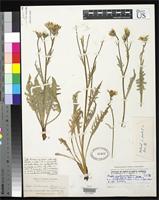
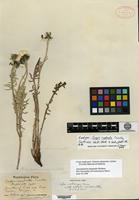
Isotype of Crepis rostrata Coville [family ASTERACEAE]
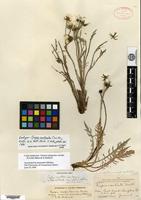
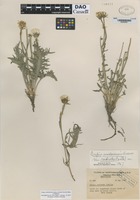
Isotype of Crepis modocensis Greene [family ASTERACEAE]
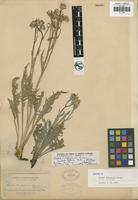
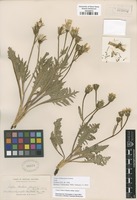
Isotype of Crepis rostrata Coville [family COMPOSITAE]
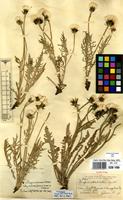
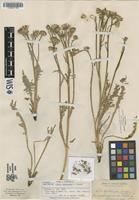
Isotype of Crepis rostrata Coville [family ASTERACEAE]
not on sheet of Crepis rostrata Coville [family ASTERACEAE]
Type of Crepis bakeri Greene [family ASTERACEAE]
Type? of Crepis modocensis Greene [family ASTERACEAE]
Previous
Next

Name

Identification
Isotype of Crepis rostrata Coville [family COMPOSITAE ] Verified by Not on sheet, Crepis modocensis Greene [family COMPOSITAE ] (stored under name); Verified by Not on sheet,
Related name
  • Crepis scopulorum
  • Crepis rostrata
  • Crepis modocensis
Common name
  • Modoc or Siskiyou hawksbeard, Flora of North America Vol. 19

Flora

Entry for Crepis modocensis Greene [family COMPOSITAE]
Herbarium
Flora of North America (FNA)
Collection
Flora of North America
Resource Type
Reference Sources
Entry From
Flora of North America, Vol 19,
Names
Crepis modocensis Greene [family COMPOSITAE], Erythea, 3: 48. 1895
Treatment Author(s)
David J. Bogler
Information
Perennials, 5–35 cm (taproots slender, caudices branched). Stems 1–4, erect, slender to stout, simple or sparsely branched, glabrate to tomentose and bristly-setose. Leaves basal and cauline; petiolate; basal blades lanceolate, 7–25 × 2–4 cm, margins deeply pinnately lobed (lobes lanceolate, dentate, teeth mucronate), apices acuminate, faces tomentulose (at least when young). Heads 1–9, borne singly or 2–9 in cymiform arrays. Calyculi of 8–10, lanceolate, tomentose and often setose bractlets 2–4 mm. Involucres cylindric, 11–21 × 5–10 mm. Phyllaries 8–18, (medially green) lanceolate, 10–16 mm, (bases keeled, margins yellowish, often scarious), apices acute, abaxial faces often densely, blackish or whitish tomentose or setose, sometimes glabrous, adaxial with fine (shiny) hairs. Florets 10–60; corollas yellow, 13–22 mm. Cypselae blackish or greenish, reddish, reddish brown, or yellowish, subcylindric to fusiform, 7–12 mm, apices tapered or beaked (beaks 1–3 mm), ribs 10 (strong to weak); pappi dusky white, 5–13 mm. 2n = 22, 33, 44, 55, 66, 88.
Distribution
w North America.
Discussion
Crepis modocensis is recognized by its tomentose or coarsely bristly stems and petioles, rosettes of deeply pinnately lobed leaves, rather large heads with relatively many phyllaries, and blackish cypselae.

Related Materials

  • Terms and Conditions
  • Privacy Policy
  • Cookie Policy
  • Cookie Settings
  • Accessibility
  • Help
  • Contact Us
  • Facebook
  • Twitter
ITHAKA

JSTOR is part of ITHAKA, a not-for-profit organization helping the academic community use digital technologies to preserve the scholarly record and to advance research and teaching in sustainable ways.

©2000-2026 ITHAKA. All Rights Reserved. JSTOR®, the JSTOR logo, JPASS®, Aluka®, and ITHAKA® are registered trademarks of ITHAKA.

╳