JSTOR Global Plants Home
  • Home
  • Browse
  • About
  • Access
  • Account
    • Saved Items
    • Profile
  • Log in

Global Plants

Skip to Main Content
  • JSTOR Global Plants Home
  • Global Plants

    • Browse
    • About
    • Access
    • Account
      • Saved Items
      • Profile
Log in
  • Browse
  • About
  • Access
  • Account
    • Saved Items
    • Profile
Advanced Search

Compilation
Crassula wrightiana

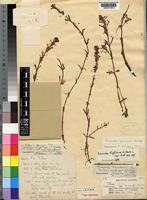
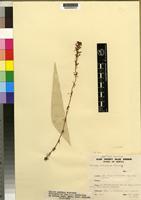
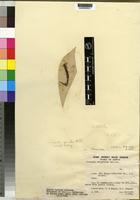
3 Images see all

Type of Crassula wrightiana Bullock [family CRASSULACEAE]
Isoparatype of Crassula wrightiana Bullock [family CRASSULACEAE]
Previous
Next

Name

Identification
Crassula wrightiana Bullock [family CRASSULACEAE ] (stored under name); Verified by Not on sheet,
Related name
  • Crassula aquatica
  • Crassula unrecorded
  • Crassula wrightiana
  • Crassula granvikii
  • Crassula rivularis

Flora

Entry for Crassula granvikii Mildbr. [family CRASSULACEAE]
Herbarium
Royal Botanic Gardens, Kew (K)
Collection
Flora Zambesiaca
Resource Type
Reference Sources
Entry From
FZ, Vol 7, Part 1, page 3, (1983) Author: R. Fernandes
Names
Crassula granvikii Mildbr. [family CRASSULACEAE], in Notizbl. Bot. Gart. Berl. 8: 227 (1922). — Hedberg in Symb. Bot. Upsal. 15, 1: 100 et 278-281, fig. 23 et 24 (1957). — Merxm. & al. in Ann. Naturh. Mus. Wien 75: 112(1971). — Tölken in Contr. Bolus Herb. 8: 88 (1977) in adnot. — G. E. Wickens & Bywater in Kew Bull. 34, 4: 631, t. 17 fig. A-B (1980). Type from Kenya.
Crassula vaillantii [family CRASSULACEAE], sensu Engl., Hochgebirgsfl. Trop. Afr. : 231 (1892). — Schönl. in Trans. Roy. Soc. S. Afr. 17, 3: 182 (1929) pro parte. — Toussaint in F.C.B. 2: 572 (1951) non (Willd.) Roth. (1827).
Crassula vaillantii var. kilimandscharica Engl. [family CRASSULACEAE], in Bot. Jahrb. 39: 468 (1907). — Berger in Engl. & Prantl., Nat. Pflanzenfam. ed. 2, 18a: 388 (1930). Type from Tanzania.
Tillaea rivularis A. Peter [family CRASSULACEAE], in Abh. Ges. Wiss. Göttingen, N. Sér. 13, 2: 80, fig. 14 (1928). Syntypes from Tanzania.
Tillaea repens A. Peter [family CRASSULACEAE], tom. cit.: 80, fig. 15 (1928). Syntypes from Tanzania.
Tillaea vaillantii var. kilimandscharica Engl. A. Peter [family CRASSULACEAE], tom. cit.: 80 (1928). Type as for Crassula vaillantii var. kilimandscharica.
Tillaea aquatica [family CRASSULACEAE], sensu Hancock & Soundy in Journ. E. Afr.Ug. Nat. Hist. Soc. 36: 181 (1931) non L. (1753)
Crassula wrightiana Bullock [family CRASSULACEAE], in Kew Bull. 1932: 487 (1932); op. cit. 1933: 62 (1933); in Hook., Ic. Pl., Sér. 5, 3: t. 3218 (1933). Type from Kenya.
Crassula erubescens Bullock [family CRASSULACEAE], tom. cit.: 488 (1932); tom. cit.: 63 (1933). — Bally in Journ. E. Afr.Ug, Nat. Hist. Soc. 15: 12 (1940). Type from Kenya.
Crassula aquatica [family CRASSULACEAE], sensu Staner in Rev. Zool. Bot. Afr.23: 216 (1932). — Bullock, tom. cit.: 62 (1933) non (L.) Schönl.
Crassula rivularis A. Peter Hutch. & Bruce [family CRASSULACEAE], in Kew Bull. 1941: 88 (1941). — Robyns, Fl. Parc Nat. Alb. 1: 229 (1948). — Toussaint, op. cit.: 571 (1951). — Cufod. in Bull. Jard. Bot. Brux. 24, Suppl.: 171 (1954). Type as for Tillaea rivularis.
Information
Aquatic or terrestrial completely glabrous herb, varying in habit according to habitat. Stem 6-38 cm. long, either erect or ascending and simple, rooting at lower nodes or at most nodes except for the apical ones, or stem widely trailing and rooting at nodes and emitting short, erect branches throughout, these simple or with 1-2 branchlets towards the apex, fleshy, somewhat thick but flaccid, green, mauve or purplish at the nodes; internodes up to 3·8 cm. long, the basal and median ones longer than the leaves, the uppermost equalling them or shorter. Leaves 5·5-20 x 1-5 mm., linear or oblong to oblong spathulate, acute to obtuse, sessile and connate at the base in a hyaline or purplish, 1-2 mm. long sheath, erect or erect-spreading but the undermost patent or slightly reflexed, fleshy, somewhat thick and rigid or nearly membranous on drying, light green, neither lineolate nor punctate near the margin. Flowers 4-merous, axillary, solitary or sometimes 2-3 together; pedicels 2-7 mm. long in flower, up to 12 mm. long in fruit, slender. Calyx 0·75-1·25 mm. long, green or yellow-green; sepals oblong, subacute to rounded at the apex, connate at the base. Petals 1-1·75 mm. long, oblong or oblong-obovate, rounded at the apex, white, sometimes with carmine-red midrib or completely pinkish-white to carmine. Filaments 0·5-0·75 mm. long, carmine-red; anthers 0-15-0-25 mm. — long, transversely ovate or subcircular, purplish. Follicles 1-1·25 mm., obovoid, rounded at the top, contracted into the style, carmine; styles c. 0·5 mm. long, reflexed. Seeds 1-2(4) per follicle, c. 0·5 to 1 mm. long, narrowly oblong, obtuse at the base and apex, minutely and densely tuberculate, the tubercules in longitudinal rows. Scales 0·5-0·75 mm. long, spathulate, truncate at the apex, purplish-hyaline.
Habitat
In damp places along permanent streams or in water
Altitude range
at high levels up to 3200 m. alt.
3200
1500
inferred from high
Distribution
Malawi N Rumphi District, Lake Kaulime, Nyika Plateau, 2250 m., 4.i.1959, Richards 10467(K).
Distribution (external)
Ethiopia
Uganda
Kenya
Tanzania
Rwanda
Burundi
Zaire
Notes
C. granvikii is described with 4-seeded carpels, whereas the type of C. wrightiana has 1-seeded carpels. However, we found that Tanzanian specimens referred to the latter had 1-2-seeded carpels. The species C. erubescens has been distinguished from C. granvikii by its larger leaves. We think that these three taxa should be sunk into a single species which has leaves of variable size according to the humidity of the habitat. The ovaries are initially 4-ovulate, but only 1 or 2 mature seeds are usually formed. C. granvikii and C. erubescens correspond to the land form, whereas C. wrightiana is the form characteristic of more moist or aquatic habitats.

Related Materials

  • Terms and Conditions
  • Privacy Policy
  • Cookie Policy
  • Cookie Settings
  • Accessibility
  • Help
  • Contact Us
  • Facebook
  • Twitter
ITHAKA

JSTOR is part of ITHAKA, a not-for-profit organization helping the academic community use digital technologies to preserve the scholarly record and to advance research and teaching in sustainable ways.

©2000-2026 ITHAKA. All Rights Reserved. JSTOR®, the JSTOR logo, JPASS®, Aluka®, and ITHAKA® are registered trademarks of ITHAKA.

╳