JSTOR Global Plants Home
  • Home
  • Browse
  • About
  • Access
  • Account
    • Saved Items
    • Profile
  • Log in

Global Plants

Skip to Main Content
  • JSTOR Global Plants Home
  • Global Plants

    • Browse
    • About
    • Access
    • Account
      • Saved Items
      • Profile
Log in
  • Browse
  • About
  • Access
  • Account
    • Saved Items
    • Profile
Advanced Search

Compilation
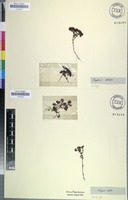
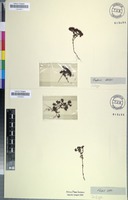
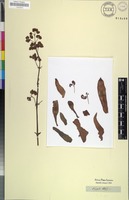
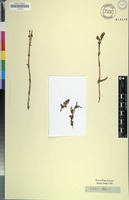
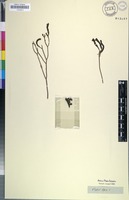
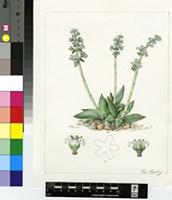
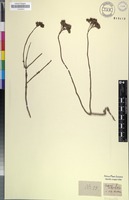
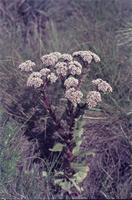
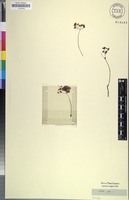
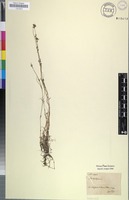
Crassula sp.

16 Images see all

Filed as Crassula sp. [family CRASSULACEAE]
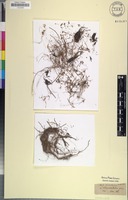
Filed as Psammotropha parvifolia Eckl. et Zeyh. [family MOLLUGINACEAE]
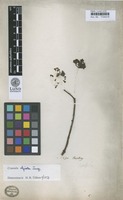
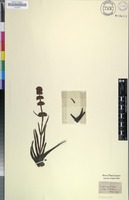
Crassula dejecta Jacq. [family CRASSULACEAE]
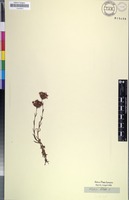
Filed as Crassula sp. [family CRASSULACEAE]
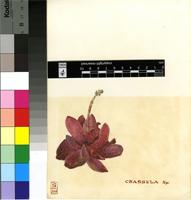
Crassula sp.
Crassula sp.
Filed as Crassula sp. [family CRASSULACEAE]
Crassula sp.
Filed as Crassula sp. [family CRASSULACEAE]
Isosyntype of Crassula saxifraga Harv. [family CRASSULACEAE]
Filed as Crassula sp. [family CRASSULACEAE]
Previous
Next

Name

Identification
Crassula sp. [family CRASSULACEAE ]
Related name
  • Crassula sp.

Flora

Entry for Crassula maputensis R. Fernandes [family CRASSULACEAE]
Herbarium
Royal Botanic Gardens, Kew (K)
Collection
Flora Zambesiaca
Resource Type
Reference Sources
Entry From
FZ, Vol 7, Part 1, page 3, (1983) Author: R. Fernandes
Names
Crassula expansa [family CRASSULACEAE], sensu Schönl. in Ann. Bolus Herb. 2: 57 (1917) pro parte quoad specim. Schlechter 11534 non Dryand. (1789).
Crassula sp. [family CRASSULACEAE], sensu Mogg in Macnae & Kalk, Nat. Hist. Inhaca Isl.: 145 (1958).
Crassula maputensis R. Fernandes [family CRASSULACEAE], in Bol. Soc. Brot., Sér. 2, 52: 178, t. 2 (1978). Type: Mozambique, Maputo, on the road Salamanga-Ponta do Ouro, A. & R. Fernandes & A. Pereira 38 (COI, holotype; LMU).
Information
An annual (or also perennial), diffuse, somewhat fleshy, completely glabrous herb. Stems up to 17(28) cm. long, procumbent, subdichotomously branched, rigid and sometimes subligneous towards the base, rooting at the lower nodes; branches up to 18 cm. long, prostrate, ascending or erect, slender, herbaceous and rather leafy towards the extremity; lower internodes up to 3-5 cm. long, the others successively shorter. Leaves 0-6-2-5 x 0-15-0-7 cm., spathulate or oblong-spathulate to elliptic or oblong-elliptic, obtuse or nearly so at the apex, the narrowest ones nearly acute, entire, narrowing towards a subpetiolar base or rarely contracted below, slightly connate, flat, neither lineolate nor pellucid-punctate, dark green and membranous or nearly translucent on drying. Flowers 5-merous, solitary and axillary usually all along the stem and branches; pedicels capillary, 7-40 mm. long. Calyx 1-25-2 mm. long, up to half as long as corolla; sepals oblong-linear, obtuse, slightly connate at the base. Corolla 3·5-4 mm. long, white; petals 1·5-2 mm. broad, oblong-elliptic or obovate, concave, suberect. Stamens more than half as long as corolla; filaments 2-2·25 mm. long; anthers c. 0·25 mm. long, yellow. Follicles 2-2·5 mm. long, tapering into the c. 1 mm. long styles. Seeds 0·3-0·4 mm., longitudinally lineolate-ribbed.
Habitat
In shaded grassland, open forests and thickets, on wet sandy or clayey-sandy soils.
Range
Known only from Mozambique, but may also occur in Natal
Distribution
Mozambique M between Boane and Porto Henrique, near Boane, 28.vi.1961, Balsinhas 487 (BM; K; LISC; LMA; LMU; PRE); Inhaca Island, Delagoa Bay, 31.viii.1959, Watmough 345 (BR; K; LISC; SRGH).
Notes
C. maputensis differs from its neighbour C. expansa by the broader, flat, obtuse leaves, narrowing distinctly towards the base; by the flowers disposed from below to above along the stem and branches, while in C. expansa they are placed only along the upper half; by the thinner pedicels; by the relatively shorter sepals, usually only 1/3 as long as corolla whereas in C. expansa they are equal 1/2-2/3 as long; by the broader petals which are less connate at the base and, on account of this, somewhat spreading (they are nearly erect in C. expansa); and by the follicles being longer and more tapering into the styles.

Related Materials

  • Terms and Conditions
  • Privacy Policy
  • Cookie Policy
  • Cookie Settings
  • Accessibility
  • Help
  • Contact Us
  • Facebook
  • Twitter
ITHAKA

JSTOR is part of ITHAKA, a not-for-profit organization helping the academic community use digital technologies to preserve the scholarly record and to advance research and teaching in sustainable ways.

©2000-2026 ITHAKA. All Rights Reserved. JSTOR®, the JSTOR logo, JPASS®, Aluka®, and ITHAKA® are registered trademarks of ITHAKA.

╳