JSTOR Global Plants Home
  • Home
  • Browse
  • About
  • Access
  • Account
    • Saved Items
    • Profile
  • Log in

Global Plants

Skip to Main Content
  • JSTOR Global Plants Home
  • Global Plants

    • Browse
    • About
    • Access
    • Account
      • Saved Items
      • Profile
Log in
  • Browse
  • About
  • Access
  • Account
    • Saved Items
    • Profile
Advanced Search

Compilation
Crassula parvisepala

8 Images see all

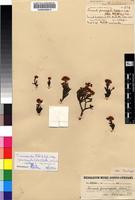
Isotype of Crassula parvisepala Schönl. [family CRASSULACEAE]
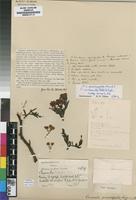
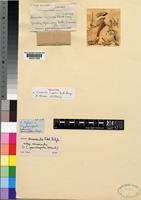
Type of Crassula parvisepala Schonland subsp. sarcocaulis [family CRASSULACEAE]
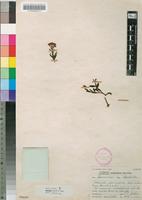
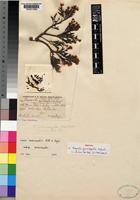
Isotype of Crassula parvisepala Schönland [family CRASSULACEAE]
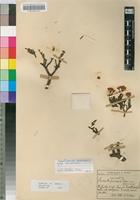
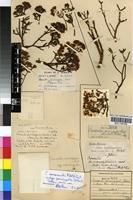
Holotype of Crassula lignosa Burtt Davy [family CRASSULACEAE]
Isotype of Crassula parvisepala Schönland [family CRASSULACEAE]
Type of Crassula parvisepala Schönland [family CRASSULACEAE]
Previous
Next

Name

Identification
Isotype of Crassula parvisepala Schönl. [family CRASSULACEAE ] Crassula sarcocaulis Eckl. & Zeyh. [family CRASSULACEAE ] (stored under name);
Related name
  • Crassula unrecorded
  • Crassula lignosa
  • Crassula sarcocaulis
  • Crassula parvisepala
  • Crassula eylesii

Flora

Entry for Crassula sarcocaulis subsp. sarcocaulis [family CRASSULACEAE]
Herbarium
Royal Botanic Gardens, Kew (K)
Collection
Flora Zambesiaca
Resource Type
Reference Sources
Entry From
FZ, Vol 7, Part 1, page 3, (1983) Author: R. Fernandes
Names
Crassula sarcocaulis subsp. sarcocaulis [family CRASSULACEAE], — Tölken in Contr. Bolus Herb. 8, 1: 252 (1977). — R. Fernandes in Bol. Soc. Brot., Sér .2, 52: t. 4 fig. a-d, t. 5 (1978); op. cit. 55: 110(1982).
Crassula sarcocaulis Eckl. & Zeyh. [family CRASSULACEAE], loc. cit., sensu str. — Walp., Repert. 2: 254 (1843). — Harv. in Harv. & Sond., F.C. 2: 341 (1862) pro parte. — Schönl. in Trans. Roy. Soc. S. Afr.17, 3: 214 (1929) pro parte.
Crassula parvisepala Schönl. [family CRASSULACEAE], in Journ. Linn. Soc., Bot. 31: 549 (1897); in Rec. Albany Mus. 1, 1: 61 (1903); in Trans. Roy. Soc. S. Afr.17, 3:215 (1929) — Burtt Davy, F.P.F.T. 1: 140 (1926). — Schijff & Schoonr. in Bothalia, 10, 3: 489 (1971). — Jacobs., Das Sukk. Lexikon: 146 (1970). — Merxm. & al. in Ann. Naturh. Mus. Wien, 75: 113 (1971). — J. H. Ross, Fl. Natal: 180 (1972). — Type from S. Africa (Transvaal).
Crassula lignosa Burtt Davy [family CRASSULACEAE], op. cit.: 38 & 140. Type from S. Africa (Transvaal).
Information
Shrub (15)30-120 cm. tall. Old branches irregularly rugose, dark grey to nearly black, those,of the current year dark brown or reddish-brown, 4-angular.or narrowly 4-winged on drying, at first ± densely foliate, at fruiting time nearly leafless, internodes 1·7-3 mm. long, shortening successively towards the apex of branchlets. Leaves (4)6-35 x (1)2-5·5(8) mm., narrowly ovate or elliptic to narrowly linear-elliptic, rarely ovate, slightly asymmetrical, ± attenuate towards the usually very acute apex, entire or sometimes slightly undulate at margin on drying, with the marginal dots rarely conspicuous, fleshy, flat (at least the upper ones), green or sometimes dark brownish-green to blackish and often rigid rarely membranous in dry state, very caducous; sheath up to 1 mm. high. Inflorescences 2·5-5 cm. in diam.; pedicels 1·75-4 mm. long, glabrous, brown-reddish. Calyx (1)1·5-3·5(4) mm. long, usually shorter than the half of the corolla; sepals oblong-lanceolate or lanceolate, slightly carenate, submucronate near the apex, connate for up to 1 mm. at the base. Corolla (4-4·5)5-6·5(8) mm. long; petals ovate-oblong or -elliptic, somewhat carenate, subacute and submucronate below the apex, slightly reflexed, connate for ± 0·5-0·75 mm. at the base. Stamens slightly shorter than the corolla; filaments 3·75-4·5(6) mm. long; anthers (0·5)0·75-1 mm. long, dark purple. Follicles 5-7·25 mm. long, attenuate into the straight styles. Seeds c. 0·5 mm.
Habitat
On rock clump-vegetation of high mountains
Altitude range
up to 2400 m.
2400
0
inferred only top
Distribution
Zimbabwe S Bikita, lower E. slope of granite Whaleback on W. bank of Turgwe R. at confluence with Dafana R., 110 m., 5.v.1969, Biegel 3017 (LISC; SRGH).Zimbabwe E Inyanga, Ingangwe Fort, on granite ruins, c. 1920 m., 3.ix.1952, Wild 3854 (K; LISC; PRE; SRGH).Mozambique MS Manica, Sérra Zuira, Tsetsera, on road to Vila Pery, c. 1800 m., 3.iv.1966, Torre & Correia 15650(C; LISC; LMU).Zimbabwe W Matopos, Farm Besna Kobila, c. 1504 in., ii.1954, Miller 2205 (K; LISC; SRGH).
Distribution (external)
S. Afr.(Transvaal, Natal, Cape Prov.)
Swaziland
Notes
C. lignosa Burtt Davy, known only from the type which is a very poor specimen, is not distinct from C. sarcocaulis subsp. sarcocaulis, corresponding to its broad-leaved forms; the irregular, marginal crenations of the leaves referred to by Burtt Davy may be the result of an inapt desiccation. Affinities of C. lignosa with C. lactea Soland, as indicated by Burtt Davy or with C. rubicunda E. Mey. as suggested by Schönland seem to us inadmissible.

Related Materials

  • Terms and Conditions
  • Privacy Policy
  • Cookie Policy
  • Cookie Settings
  • Accessibility
  • Help
  • Contact Us
  • Facebook
  • Twitter
ITHAKA

JSTOR is part of ITHAKA, a not-for-profit organization helping the academic community use digital technologies to preserve the scholarly record and to advance research and teaching in sustainable ways.

©2000-2026 ITHAKA. All Rights Reserved. JSTOR®, the JSTOR logo, JPASS®, Aluka®, and ITHAKA® are registered trademarks of ITHAKA.

╳