JSTOR Global Plants Home
  • Home
  • Browse
  • About
  • Access
  • Account
    • Saved Items
    • Profile
  • Log in

Global Plants

Skip to Main Content
  • JSTOR Global Plants Home
  • Global Plants

    • Browse
    • About
    • Access
    • Account
      • Saved Items
      • Profile
Log in
  • Browse
  • About
  • Access
  • Account
    • Saved Items
    • Profile
Advanced Search

Compilation
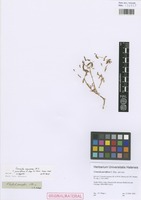
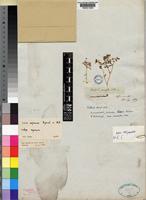
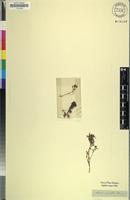
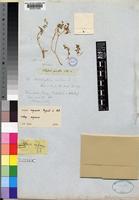
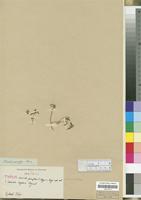
Crassula parviflora

5 Images see all

Original material of Crassula parviflora E. Mey. [family CRASSULACEAE]
Crassula expansa Dryand. subsp. expansa [family CRASSULACEAE]
Filed as Crassula expansa Aiton [family CRASSULACEAE]
Type of Crassula expansa Dryand. subsp. expansa [family CRASSULACEAE]
Type? of Crassula parviflora E. Meyer in Drège nom. nud. [family CRASSULACEAE]
Previous
Next

Name

Identification
Crassula expansa Dryand. [family CRASSULACEAE ] (stored under name); Verified by Not on sheet, Crassula parviflora E. Meyer in Drège nom. nud. [family CRASSULACEAE ] Verified by Not on sheet,
Related name
  • Crassula expansa
  • Crassula parviflora

Flora

Entry for CRASSULA expansa Ait. [family CRASSULACEAE]
Herbarium
Royal Botanic Gardens, Kew (K)
Collection
Flora Capensis
Resource Type
Reference Sources
Entry From
Flora Capensis, Vol 2, page 327, (1894) Author: (By W. H. HARVEY).
Names
CRASSULA expansa Ait. [family CRASSULACEAE], Kew. 1 p. 390;—DC. l. c. 387.
CRASSULA filicaulis E. & Z. [family CRASSULACEAE], ! 1883. Zey! 2524, 653, 2525.
CRASSULA expansa E. Mey. [family CRASSULACEAE], ! in Hb. Drege.
CRASSULA parviflora E. Mey. [family CRASSULACEAE], ! in Hb. Drege.
Information
stem herbaceous, scarcely ligneous at base, irregularly dichotomous, much branched, diffuse, glabrous; the branches filiform; leaves subconnate, spreading or recurved, linear-lanceolate, acute or subacute, fleshy, convex beneath, glabrous; flowers on long thread-like pedicels, axillary, solitary, or the terminal subcymose; calyx-lobes nearly as long as the spreading corolla, linear, blunt, with obtuse interspaces; petals connate at base, elliptic-oblong, subacute; styles shortly subulate; squamæ shortly cuneate. Biennial or annual? Stems 4–12 inches long or more, widely spreading and much divided, pale, leafy throughout. Leaves 1/2 inch apart, 1/2–1 inch long, 1–2 lines wide, rarely wider, mostly acute, shrinking when dry. Pedicels 1/2–1 1/2 inches long, very slender. Flowers 1–2 lines long. A widely distributed species. Dr. Gueinzius ' specimens (in Hb. Hooker) have much larger leaves than usual, being 1 inch long, 3 lines wide: otherwise the plant is the same as Natal specimens of the ordinary size.
Distribution
SOUTH AFRICA Near the Zwartkops R., Uit. and Gauritz R., Swell. E. & Z.! Breede Riv. and Hassagaiskloof; also at Lislap, Zeyher! Between Coega and Zondag Rivers; also Los Tafelberg, Natal, Drege! Port Natal, Dr. Sutherland! Gueinzius! (Herb. Sd., D., Hk., Bth.)

Related Materials

  • Terms and Conditions
  • Privacy Policy
  • Cookie Policy
  • Cookie Settings
  • Accessibility
  • Help
  • Contact Us
  • Facebook
  • Twitter
ITHAKA

JSTOR is part of ITHAKA, a not-for-profit organization helping the academic community use digital technologies to preserve the scholarly record and to advance research and teaching in sustainable ways.

©2000-2026 ITHAKA. All Rights Reserved. JSTOR®, the JSTOR logo, JPASS®, Aluka®, and ITHAKA® are registered trademarks of ITHAKA.

╳