JSTOR Global Plants Home
  • Home
  • Browse
  • About
  • Access
  • Account
    • Saved Items
    • Profile
  • Log in

Global Plants

Skip to Main Content
  • JSTOR Global Plants Home
  • Global Plants

    • Browse
    • About
    • Access
    • Account
      • Saved Items
      • Profile
Log in
  • Browse
  • About
  • Access
  • Account
    • Saved Items
    • Profile
Advanced Search

Compilation
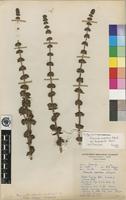
Crassula nodulosa

9 Images see all

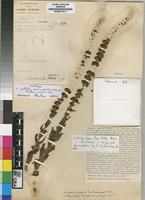
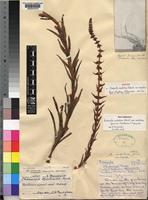
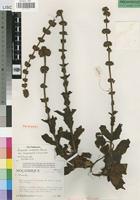
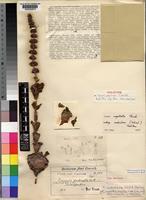
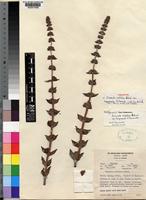
Holotype of Crassula nodulosa Schonland forma nodulosa (Schonland) Toelken [family CRASSULACEAE]
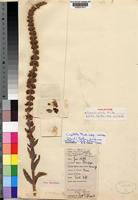
Crassula nodulosa Schönland forma rhodesica [family CRASSULACEAE]
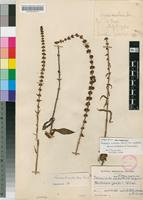
Paratype of Crassula nodulosa Schönland var. longisepala R.Fernandes [family CRASSULACEAE]
Holotype of Crassula pectinata Conrath [family CRASSULACEAE]
Holotype of Crassula nodulosa Schönland var. longisepala R. Fernandes [family CRASSULACEAE]
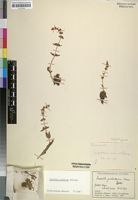
Holotype of Crassula elata N.E.Br. [family CRASSULACEAE]
Holotype of Crassula nodulosa Schönland forma rhodesica R.Fern. [family CRASSULACEAE]
Holotype of Crassula guchabensis Merxm. [family CRASSULACEAE]
Isotype of Crassula nodulosa Schonland var. longisepala R.Fern. [family CRASSULACEAE]
Previous
Next

Name

Identification
Crassula nodulosa Sch”nland [family CRASSULACEAE ] Verified by Not on sheet, Crassula capitella Thunb. [family CRASSULACEAE ] (stored under name); Verified by Not on sheet,
Related name
  • Crassula capitella
  • Crassula rhodesica
  • Crassula pectinata
  • Crassula nodulosa
  • Crassula guchabensis
  • Crassula elata

Flora

Entry for Crassula nodulosa Schönl. [family CRASSULACEAE]
Herbarium
Royal Botanic Gardens, Kew (K)
Collection
Flora Zambesiaca
Resource Type
Reference Sources
Entry From
FZ, Vol 7, Part 1, page 3, (1983) Author: R. Fernandes
Names
Crassula nodulosa Schönl. [family CRASSULACEAE], in Rec. Albany Mus. 1, 1: 56 (1903); tom. cit.: 64; in Trans. Roy. Soc. S. Afr. 17, 3: 247 (1929). — Burtt Davy, F.P.F.T. 1: 141 (1926). — Hutch., Botanist in S. Afr. : 400 et 673 (1946). — Wilman, Check List Fl. Pl. Ferns Griqual. — W.: 77 (1946). — Suesseng. & Merxm. in Trans. Rhodes. Sci. Assoc. 43: 15 (1951). — Friedr. in Mitt. Bot. Staatss. München, 3: 594 (1960); in Prodr. Fl. SW. Afr. 52: 33 (1968). — Jacobs., Das Sukk. Lexikon: 145 (1970). — Guillarmod, Fl. Lesotho: 182 (1971). — R. Fernandes in Bol. Soc. Brot., Sér. 2, 55: 108 (1982). TAB. 5. Type from S. Africa (Cape Prov.).
Crassula enanthiophylla Bak. f. [family CRASSULACEAE], in Bull. Herb. Boiss., Sér. 2, 3: 816 (1903). Type from S. Africa (Transvaal).
Crassula elata N.E. Br. [family CRASSULACEAE], in Kew Bull. 1909: 110 (1909). — Dinter in Fedde,Repert. 16: 243 (1919). Type: Botswana, Palapye, Lugard 247 (K, holotype.).
Crassula pectinata Conrath [family CRASSULACEAE], in Kew Bull. 1914: 246 (1914). Type from S. Africa (Transvaal).
Crassula avasimontana Dinter [family CRASSULACEAE], in Fedde, Repert. 19: 148 (1923). Syntypes from Namibia.
Crassula guchabensis Merxm. [family CRASSULACEAE], in Mitt. Bot. Staatss. München, 1: 81 (1951). Type from Namibia.
Crassula capitella subsp. nodulosa Schönl. Tölken [family CRASSULACEAE], in Journ. S. Afr. Bot. 41, 2: 100 (1975); in Contr. Bolus Herb. 8, 2: 390 (1977). Type as for Crassula nodulosa.
Crassula capitella subsp. enanthiophylla Bak. f. Tölken [family CRASSULACEAE], loc. cit. (1975); tom. cit.: 392 (1977). Type as for Crassula enanthiophylla.
Information
A biennial or perennial succulent herb with a tuberous root and a basal rosette of leaves up to 10 cm. in diameter, sometimes very dense and ± persisting at flowering time. Stem up to 60(80) cm. high, leafy below, floriferous above, usually solitary, rarely 2-3 per root, simple, rarely with some slender short to ± long branches at the median cauline nodes or at the lower floral ones, terete, firm, slender to ± thick (up to 8(11) mm. in diameter at the base), whitish, greyish or fulvous-papillose-pilose (the hairs up to 0·75 mm. long, patent or subretrorse, ± dense, obtuse or acute, sometimes very short and bubble-like). Rosulate leaves ± dense, all spreading or the uppermost erect, up to 5(7) x 3·5 cm., obovate-spathulate to broadly obovate, ovate or suborbicular or oblong to oblanceolate or lanceolate, rounded, obtuse or acute at the apex, entire and pectinate-ciliate at the margin (the cilia up to 1 mm. long, retrorse, acute, rigid, whitish), sessile and somewhat connate at the base, flat, fleshy and green when fresh, firm and ± dark on drying, glabrous or ± densely to sparsely papillose-hairy on both faces or only on the lower one (sometimes glabrous leaves and hairy ones occur in different plants of the same gathering); lower cauline leaves similar to the uppermost basal ones but smaller and less obtuse or more acute, ± approximate to ± distant, subpatent to suberect, the median ones passing gradually into the leafy bracts; lower cauline internodes up to 6·5 cm. long, the following shortening successively into the floral ones. Flowers 5-merous in numerous (up to 34) verticillasters in the axils of opposite leafy bracts, forming a ± long, usually narrow, sometimes up to 4-3 cm. in diam., spike-like inflorescence, interrupted below, nearly continuous towards the apex; lower floral internodes up to 4 cm. long; individual cymes usually very condensed and subcapitate, up to 2·5 cm. in diameter, shortly pedunculate (apparently sessile); bracts similar to the upper cauline leaves, but shorter and relatively broader, the lower ones shorter or longer than the cymes, the others shorter, ± densely to sparsely papillose at least towards the base on the underside or glabrous everywhere; pedicels up to 3·5(4) mm. long, papillose-hairy or glabrous. Calyx (1·5)2-4(4·5) mm. long; sepals ovate-lanceolate to oblong-lanceolate, not to ± attenuate, acute, erect or slightly spreading, ciliate at the margin, connate for ± 0·75 mm. at base, usually hispidulous all over the dorsal surface or only along the median line, rarely completely glabrous, purplish. Corolla 2·25-4 mm. long, white or reddish; petals erect and subconnivent, ovate-oblong to oblong-elliptic or oblong, obtuse or sometimes subacute, with slightly inflexed apex, dorsally mucronate at the inflexion (the mucro ± up to 0·5 mm. long, conical, solid, acute or obtuse), smooth or ciliate at the margins, connate at the base, minutely tuberculate-scabrid (including the mucro) on the outer surface towards the apex. Filaments 0·75-2 mm. long; anthers ± 0·5 mm. to 0·75 mm. long, oblong-ovate. Follicles 1-1·5(2) mm. long, obliquely ovate-oblong, contracted into the very short or almost absent styles; stigmas thick, subsessile, lateral (at least at maturity). Scales up to 0·5 mm. long, as long as to shorter than broad, cuneate-spathulate to subrectangular, truncate or slightly emarginate, narrowly thickened at the upper margin. Seeds minutely tuberculate.

Related Materials

  • Terms and Conditions
  • Privacy Policy
  • Cookie Policy
  • Cookie Settings
  • Accessibility
  • Help
  • Contact Us
  • Facebook
  • Twitter
ITHAKA

JSTOR is part of ITHAKA, a not-for-profit organization helping the academic community use digital technologies to preserve the scholarly record and to advance research and teaching in sustainable ways.

©2000-2026 ITHAKA. All Rights Reserved. JSTOR®, the JSTOR logo, JPASS®, Aluka®, and ITHAKA® are registered trademarks of ITHAKA.

╳