JSTOR Global Plants Home
  • Home
  • Browse
  • About
  • Access
  • Account
    • Saved Items
    • Profile
  • Log in

Global Plants

Skip to Main Content
  • JSTOR Global Plants Home
  • Global Plants

    • Browse
    • About
    • Access
    • Account
      • Saved Items
      • Profile
Log in
  • Browse
  • About
  • Access
  • Account
    • Saved Items
    • Profile
Advanced Search

Compilation
Crassula lineolata

17 Images see all

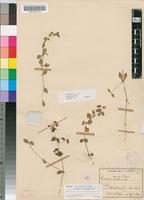
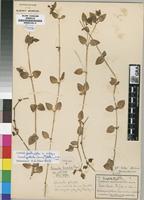
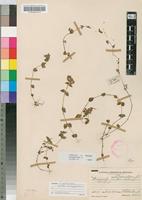
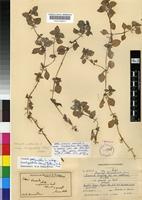
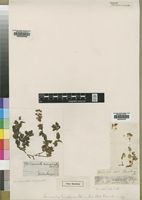
Isosyntype of Crassula lineolata sensu Schönland forma gracilis Schönland [family CRASSULACEAE]
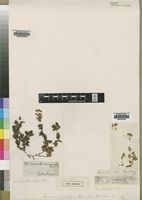
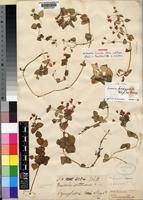
Holotype of Crassula lineolata sensu Schonland var. petiolata Schonland [family CRASSULACEAE]
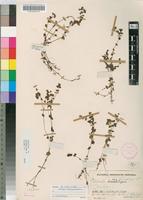
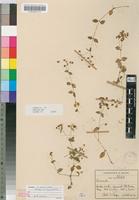
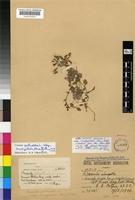
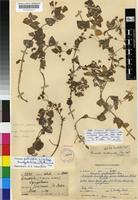
Isosyntype of Crassula lineolata sensu Schönland forma gracilis Schönland [family CRASSULACEAE]
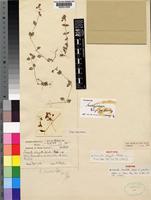
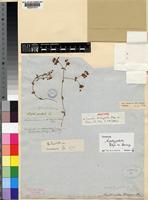
Syntype of Crassula lineolata sensu Schonland var. petiolata Schonland [family CRASSULACEAE]
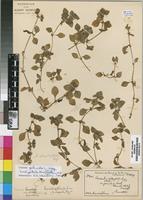
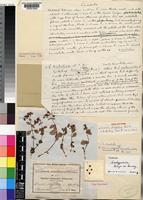
Isosyntype of Crassula lineolata sensu Schönland forma gracilis Schönland [family CRASSULACEAE]
Crassula pellucida L. subsp. alsinoides (Hook.f.)Toelken [family CRASSULACEAE]
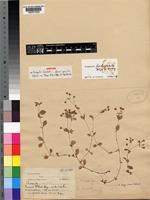
Isosyntype of Crassula lineolata sensu Schönland forma gracilis Schönland [family CRASSULACEAE]
Type? of Crassula lineolata Dryand. [family CRASSULACEAE]
Type of Crassula elongata Schönland [family CRASSULACEAE]
Syntype of Crassula lineolata sensu Schönland forma natalensis Schönland [family CRASSULACEAE]
Syntype of Crassula lineolata Dryand. [family CRASSULACEAE]
Syntype of Crassula lineolata sensu Schönland forma gracilis Schönland [family CRASSULACEAE]
Isotype of Crassula brachypetala Drège ex Harv. [family CRASSULACEAE]
Type? of Crassula lineolata Dryand. [family CRASSULACEAE]
Syntype of Crassula lineolata sensu Schönland forma natalensis Schönland [family CRASSULACEAE]
Holotype of Crassula diabolica N.E.Br. [family CRASSULACEAE]
Syntype of Crassula lineolata Dryand. [family CRASSULACEAE]
Previous
Next

Name

Identification
Crassula lineolata Dryand. [family CRASSULACEAE ] (stored under name);
Related name
  • Crassula unrecorded
  • Crassula diabolica
  • Crassula pellucida
  • Crassula centauroides
  • Bulliarda dregei
  • Crassula alsinoides
  • Crassula dregei
  • Crassula prostrata
  • Crassula elongata
  • Crassula brachypetala
  • Crassula lineolata

Flora

Entry for Crassula alsinoides Hook. f. Engl. [family CRASSULACEAE]
Herbarium
Royal Botanic Gardens, Kew (K)
Collection
Flora Zambesiaca
Resource Type
Reference Sources
Entry From
FZ, Vol 7, Part 1, page 3, (1983) Author: R. Fernandes
Names
Tillaea alsinoides Hook. f. [family CRASSULACEAE], in Journ. Linn. Soc., Bot. 7: 192 (1864). — Schweinf. & Aschers. in Schweinf., Beitr. Fl. Aethiop., Aufzahl.: 271 (1867). — Britten in F.T.A. 2: 387 (1871). Type as above.
Crassula nummulariifolia Bak. [family CRASSULACEAE], in Journ. Linn. Soc., Bot. 20: 38 (1883). Type from Madagascar.
Crassula lineolata [family CRASSULACEAE], sensu J. H. Ross, Fl. Natal: 180 (1972), pro parte quoad specim. Wood 4566, non Dryand. (1789).
Crassula pellucida subsp. alsinoides Hook. f. Tölken [family CRASSULACEAE], in Journ. S. Afr. Bot. 41, 2: 114 (1975); in Contr. Bolus Herb. 8, 1: 193 (1977). Type as above.
Crassula alsinoides Hook. f. Engl. [family CRASSULACEAE], Hochgebirgsfl. Trop. Afr. : 231 (1892); Pflanzenw. Ost-Afr.C: 189 (1895). — R. E. Fr., Wiss. Ergebn. Schwed. Rhod.-Kongo-Exped. 1: 58 (1914). — Mildbr., Wiss. Ergebn. Zweit. Deutsche Z.-Afr. -Exped. 2: 183 (1922). — De Wild., Pl. Bequart. 2: 45 (1923). — Burtt Davy, F.P.F.T. 1: 141 (1926). — Hutch. & Dalz., F.W.T.A. 1, 1:103 (1927). — Schönl. in Trans. Roy. Soc. S. Afr. 27, 3:197 (1929). — Gilliland in Journ. S. Afr. Bot. 4: 94 (1938). — Bally in Journ. E. Afr.Uganda Nat. Hist. Soc. 15: 12 (1940). — Hutch. & Bruce in Kew Bull. 1941: 88 (1941). — Robyns, Fl. Parc Nat. Alb. 1: 230 (1948). — J. Blake, Gard. E. Afr. : 179 (1950). — F. W. Andr., Fl. Pl. Anglo-Egypt. Sudan 1: 76 (1950). — Toussaint, F.C.B. 2: 570 (1951). — Cufod. in Bull. Jard. Bot. Brux. 24, Suppl.: 170 (1954). — Keay in F.W.T.A., ed. 2, 1, 1: 116 (1954). — Hedberg in Symb. Bot. Ups. 15, 1: 99 et 278 (1957). — Binns, H.C.L.M.: 41 (1968). — Merxm. & al. in Ann. Naturh. Mus. Wien 75: 113 (1971). — Greenway & Fitzgerald in Journ. E. Afr.Hist. Nat. Mus. 28, 130: 5 (1972). — G. E. Wickens & Bywater in Kew Bull. 34, 4: 636, t. 20 fig. D-E (1980). — R. Fernandes in Bol. Soc. Brot., Ser. 2, 55: 101 (1982). Type from Fernando-Po.
Information
A perennial, creeping herb, forming dense to lax mats. Stems up to 35(46) cm. long, prostrate or ascending, rooting at the lower nodes (roots very slender), simple or often the ± long prostrate part emitting short to ± long erect or ascending branches, these also rooting, mostly herbaceous-succulent (nearly translucent on drying), 4-gonous, glabrous except for two longitudinal lines of papillose hairs along two opposite sides, pale green; lower and median internodes up to 7·5 cm. long, rather longer than the leaves, the others successively shortening upwards (the uppermost shorter than the leaves). Leaves 0·5-2·8 cm. long (with the petiole) and 0·4-1·5 cm. broad, ovate-cuneate, triangular-ovate to elliptic or rhombic, rarely suborbicular, shortly acuminate, acute and sometimes apiculate at the apex, rarely (the suborbicular ones) obtuse, entire, sometimes minutely papillose-Sérrulate at the margin, cuneate or ± long attenuate into the petiole, glabrous, pale green (paler below), flat, succulent, usually thinly membranous on drying, sometimes longitudinally parallel-lineolate (the lines short, slender, brownish) and with a submarginal row of pellucid small dots; petiole ± 0·4 to ± 1·3 cm. long (delimitation from the lamina usually difficult), glabrous, dilatate below and connate with the opposite one in a sheath, provided with axillary fascicles of minute leaves or with short branchlets; sheath 0·5-1·5 mm. high, papillose-hairy at the margin. Flowers 5(6)-merous, usually solitary in the axils towards the extremities of the stem and branches, one for each node and alternating at the contiguous nodes, sometimes also in contracted terminal few-flowered inflorescences ± concealed by the upper leaves; pedicels 3-21 mm. long (the lowest ones the longest), filiform, ampliate-obconical below the calyx, usually glabrous. Calyx (2·75)4·5-5·5 mm. long, glabrous, green, usually more than half as long as but not exceeding the corolla; sepals (2·5)3·5-5 x 0·75-1(1·5) mm., lanceolate or oblong-lanceolate, attenuate towards the rather acute apex, connate at base for c. 0-5 mm., flat, with whitish-hyaline margins, sometimes brownish-lineolate along the median part. Petals (3)5-6 x 1·25-1·75 mm., oblong-lanceolate, acute, not mucronate, smooth on both faces, nearly free, usually white, rarely tinged with pink towards the apex outside. Filaments ± 3 mm. long; anthers c. 4 mm. long. Follicles (3)4-5·5 mm. long (with the styles), oblong, contracted into the styles, ± equalling the corolla-length, minutely pitted; styles ± 0·5 mm. to ± 0·75 mm. long. Seeds c. 0·5 mm. long, oblong, brownish, minutely tuberculate.
Habitat
In wet or moist forests of mountains
Altitude range
up to 3000 m.
3000
0
inferred only top
Distribution
Malawi S Zomba Plateau, edge of Mlunguzi Dam, 15.v.1967, Salubeni 808 (K; LISC; PRE; SRGH).Zimbabwe E Chipinge, Gun-guinyana Forest Reserve, c. 1056 m., xi.1962, Goldsmith 224/62 (EA; K; LISC; PRE; SRGH).Mozambique MS Gorongosa Mt. near Morombosi R. falls, 23.x.1945, Pedro 436 (K; LMA; PRE).Malawi N Mugesse, Misuku, c. 1600 m., 12.xi.1952, Williamson 99 (BM).Zimbabwe W Coronation Vlei, xii.1940, Farrar 3655 (SRGH).
Distribution (external)
Fernando Po
Cameroon
Sudan
Ethiopia
Somalia
Uganda
Kenya
Tanzania
Zaire
Swaziland
S. Africa (Natal, Transvaal and the Cape)
Notes
In the F.Z. area C. alsinoides has glabrous pedicels, in contrast with the type (from Fernando Po) in which they are papillose. However, glabrous pedicels have also been found in specimens from Cameroon.

Related Materials

  • Terms and Conditions
  • Privacy Policy
  • Cookie Policy
  • Cookie Settings
  • Accessibility
  • Help
  • Contact Us
  • Facebook
  • Twitter
ITHAKA

JSTOR is part of ITHAKA, a not-for-profit organization helping the academic community use digital technologies to preserve the scholarly record and to advance research and teaching in sustainable ways.

©2000-2026 ITHAKA. All Rights Reserved. JSTOR®, the JSTOR logo, JPASS®, Aluka®, and ITHAKA® are registered trademarks of ITHAKA.

╳