JSTOR Global Plants Home
  • Home
  • Browse
  • About
  • Access
  • Account
    • Saved Items
    • Profile
  • Log in

Global Plants

Skip to Main Content
  • JSTOR Global Plants Home
  • Global Plants

    • Browse
    • About
    • Access
    • Account
      • Saved Items
      • Profile
Log in
  • Browse
  • About
  • Access
  • Account
    • Saved Items
    • Profile
Advanced Search

Compilation
Crassula fragilis

6 Images see all

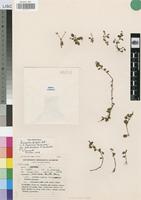
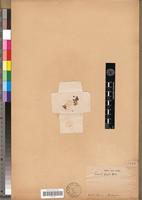
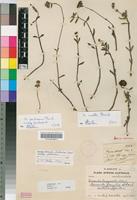
Isotype of Crassula fragilis Baker f. var. suborbicularis R.Fernandes [family CRASSULACEAE]
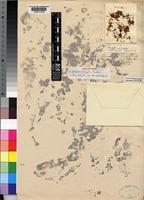
Holotype of Crassula fragilis Baker [family CRASSULACEAE]
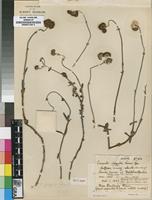
Type of Crassula fragilis Schonland subsp. pubescens [family CRASSULACEAE]
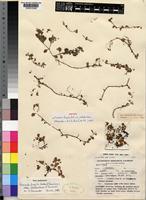
Isotype of Crassula fragilis Baker subsp. suborbicularis R. Fernandes [family CRASSULACEAE]
Type of Crassula fragilis Baker [family CRASSULACEAE]
Isotype of Crassula fragilis Schönland [family CRASSULACEAE]
Previous
Next

Name

Identification
Crassula fragilis Sch”nland [family CRASSULACEAE ] Verified by Not on sheet, Crassula pubescens Thunb. [family CRASSULACEAE ] (stored under name); Verified by Not on sheet,
Related name
  • Crassula fragilis
  • Crassula browniana
  • Crassula expansa
  • Crassula pubescens

Flora

Entry for Crassula fragilis Bak. [family CRASSULACEAE]
Herbarium
Royal Botanic Gardens, Kew (K)
Collection
Flora Zambesiaca
Resource Type
Reference Sources
Entry From
FZ, Vol 7, Part 1, page 3, (1983) Author: R. Fernandes
Names
Crassula fragilis Bak. [family CRASSULACEAE], in Journ. Linn. Soc., Bot. 22: 469 (1887). — Jacobs., Das Sukk. Lexikon: 142 (1970); R. Fernandes in Bol. Soc. Brot., Sér. 2, 55: 106 (1982) non Schönl. (1929). Type from Madagascar.
Crassula expansa subsp. fragilis Bak. Tölken [family CRASSULACEAE], in Journ. S. Afr. Bot. 41, 2: 105 (1975); in Contr. Bolus Herb. 8,1: 169 (1977). — G. E. Wickens & Bywater in Kew Bull. 34, 4: 635, t. 19 fig. A-B (1980). Type as above.
Information
A perennial (or also annual ?), procumbent, delicate, succulent herb. Stems several from a short woody base, up to 25 cm. long, subdichotomously branched, sometimes from below, 4-gonous, slender, somewhat rigid and brownish below, herbaceous and green above, usually puberulous or hispid everywhere (hairs acute, hyaline, spreading, denser and longer above), or sometimes glabrous towards the base, or rarely papillose-puberulous; internodes variable in length, often longer than the leaves. Leaves 0·3-3·5(4·5) cm. long (incl. subpetiolar base) and 0·25-1·3 cm. broad, elliptic, spathulate or obovate to subcircular, acute or nearly so to obtuse or rounded at the apex, entire, cuneate and narrowing into a subpetiolar base, or subsessile, rarely distinctly petiolate, flat, subfleshy when fresh, membranaceous on drying, dark green, sometimes with a purple pattern, usually puberulous or hispidulous on both faces, rarely glabrous, slightly connate at the base. Flowers 5-merous, axillary and solitary, only one at each node, and also in terminal, lax cymes, sometimes in fascicles-like cymes at the end of ± short axillary branchlets; pedicels filiform, hispidulous, elongating in fruit up to 30(35) mm. Calyx 1·5-2·5(2·75) mm. long, green, hispidulous; sepals linear or linear-lanceolate, obtuse, connate at the base for 0·3-0·6 mm. Corolla 2·25-3·5 mm. long, white or pale pink, petals ovate or oblong-obovate, somewhat contracted towards the obtuse apex, smooth, with the median nerve hispid outside. Filaments 1·25-2·25 mm. long. Follicles (with styles) 2·25-3 mm. long; styles 0·3-1 mm. long. Seeds muriculate.

Related Materials

  • Terms and Conditions
  • Privacy Policy
  • Cookie Policy
  • Cookie Settings
  • Accessibility
  • Help
  • Contact Us
  • Facebook
  • Twitter
ITHAKA

JSTOR is part of ITHAKA, a not-for-profit organization helping the academic community use digital technologies to preserve the scholarly record and to advance research and teaching in sustainable ways.

©2000-2026 ITHAKA. All Rights Reserved. JSTOR®, the JSTOR logo, JPASS®, Aluka®, and ITHAKA® are registered trademarks of ITHAKA.

╳