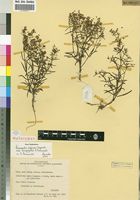
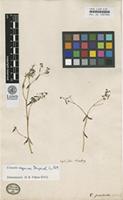
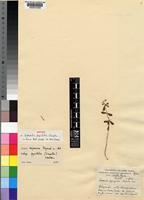
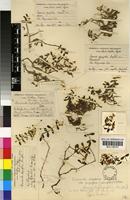
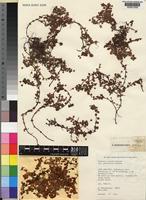
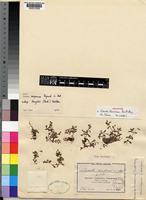
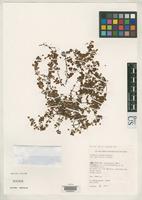
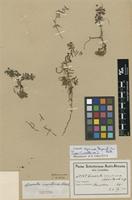
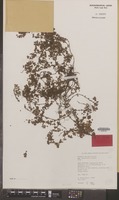
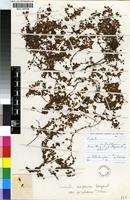
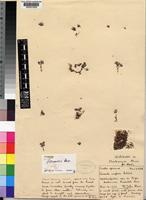
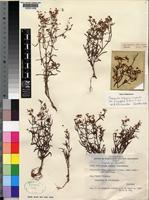
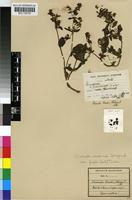
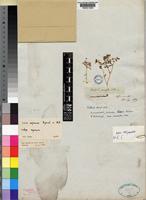
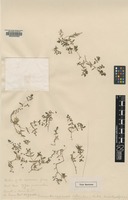
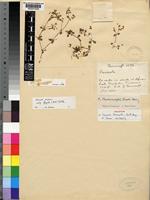
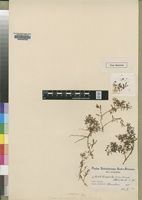
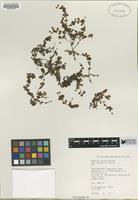
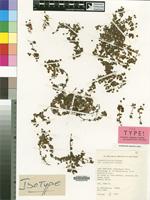
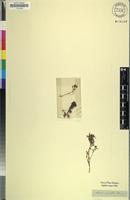
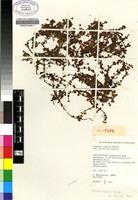
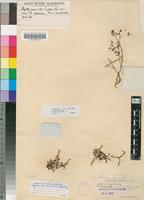
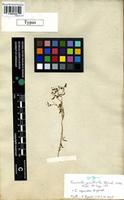
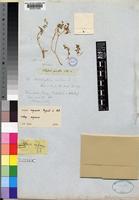
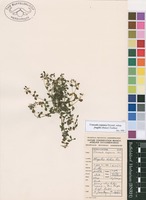
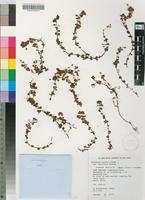
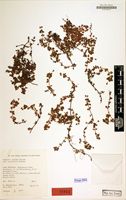
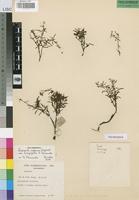
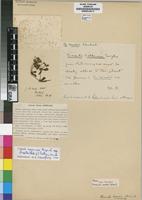
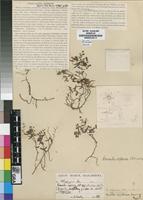
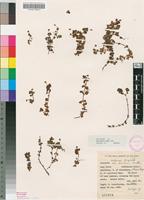
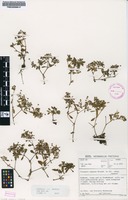
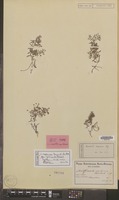
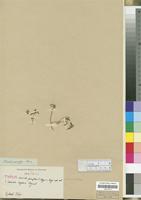
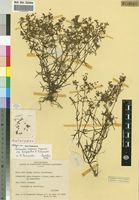
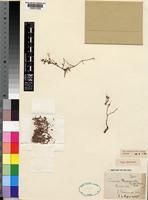
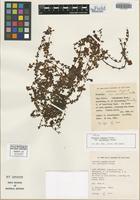
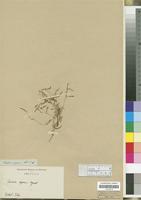
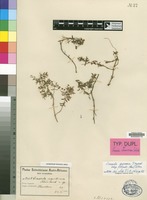
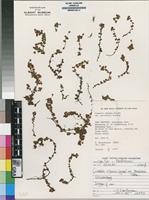
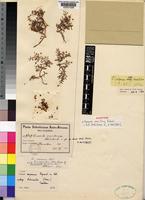
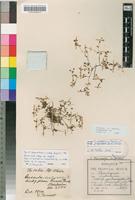
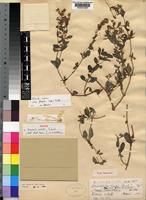
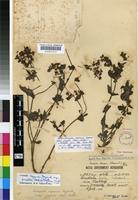
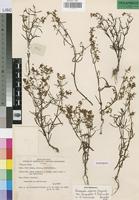
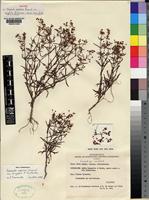
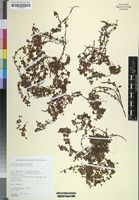
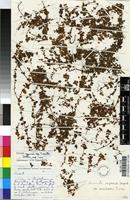
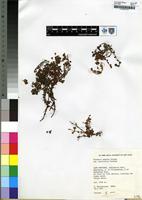
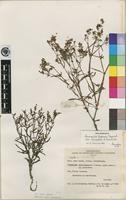
stem herbaceous, scarcely ligneous at base, irregularly dichotomous, much branched, diffuse, glabrous; the branches filiform; leaves subconnate, spreading or recurved, linear-lanceolate, acute or subacute, fleshy, convex beneath, glabrous; flowers on long thread-like pedicels, axillary, solitary, or the terminal subcymose; calyx-lobes nearly as long as the spreading corolla, linear, blunt, with obtuse interspaces; petals connate at base, elliptic-oblong, subacute; styles shortly subulate; squamæ shortly cuneate. Biennial or annual? Stems 4–12 inches long or more, widely spreading and much divided, pale, leafy throughout. Leaves 1/2 inch apart, 1/2–1 inch long, 1–2 lines wide, rarely wider, mostly acute, shrinking when dry. Pedicels 1/2–1 1/2 inches long, very slender. Flowers 1–2 lines long. A widely distributed species. Dr. Gueinzius ' specimens (in Hb. Hooker) have much larger leaves than usual, being 1 inch long, 3 lines wide: otherwise the plant is the same as Natal specimens of the ordinary size.