JSTOR Global Plants Home
  • Home
  • Browse
  • About
  • Access
  • Account
    • Saved Items
    • Profile
  • Log in

Global Plants

Skip to Main Content
  • JSTOR Global Plants Home
  • Global Plants

    • Browse
    • About
    • Access
    • Account
      • Saved Items
      • Profile
Log in
  • Browse
  • About
  • Access
  • Account
    • Saved Items
    • Profile
Advanced Search

Compilation
Craibia bequaertii

10 Images see all

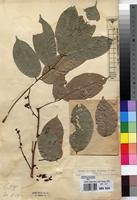
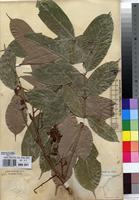
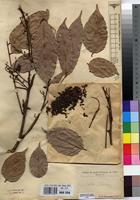
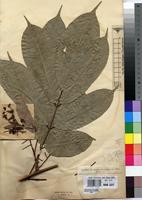
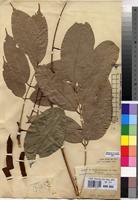
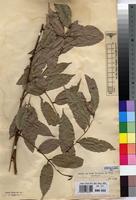
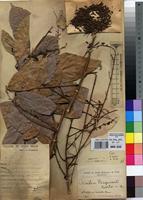
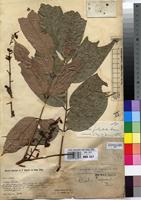
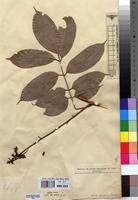
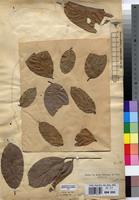
Syntype of Craibia bequaertii De Wild. [family FABACEAE]
Previous
Next

Name

Identification
Craibia bequaertii De Wild. [family FABACEAE ] Verified by Not on sheet, Millettia psilopetala Harms [family FABACEAE ] (stored under name); Verified by Mollel N.P., 2006
Related name
  • Craibia bequaertii
  • Millettia psilopetala

Flora

Entry for MLLETTIA psilopetala Harms [family ]
Herbarium
Royal Botanic Gardens, Kew (K)
Collection
Flora of Tropical East Africa
Resource Type
Reference Sources
Entry From
Flora of Tropical East Africa, page 1, (1971) Author: J. B. GILLETT, R. M. POLHILL & B. VERDCOURT
Names
MLLETTIA psilopetala Harms [family ], in Z.A.E.: 256 (1911); Dunn in J.L.S. 41: 213 (1912); F.P.N.A. 1: 314 (1948); I.T.U., ed. 2: 308 (1952); Hauman in F.C.B. 5: 20, t. 1 (1954); Gillett in K.B. 15: 19 (1961). Type: E. Congo, Beni, Mildbraed 2290 (B, holo. †, K, drawing & fragment!)
Craibia bequaertii De Wild. [family LEGUMINOSAE-PAPILIONOIDEAE], Pl. Bequaert. 3: 362 (1925). Types: Congo, Bequaert 2445, 2597!, 4794!, 6118!, 6647! & Claessens 910, 1023!, 1052 & 1139! (all BR, syn.)
Information
Evergreen shrub or tree up to 10 m. tall, or a liane; young stems dark brown pubescent. Stipules narrowly triangular, 2–3 mm. long; leaf-rhachis shortly pubescent or glabrescent, up to 25 cm. long, including a petiole of up to 12 cm., prolonged 1–2 cm. beyond the lateral leaflets; stipellae absent; petiolules pubescent or glabrescent, up to 8 mm. long; leaflets 7–9, opposite or alternate, oblong-lanceolate, up to 17 cm. long by 6 cm. wide, rounded or acute at the base, with a narrow acute acuminate tip up to 15 mm. long at the apex, glabrous; midrib impressed above; main nerves 6–8 on each side, not reaching the margin. Panicles brown pubescent, terminal and axillary, the floriferous branches several cm. long and many-flowered; bracts narrowly triangular; bracteoles similar, ± 1 mm. long, at the base of the calyx; pedicels up to 5 mm. long. Calyx sparsely and minutely brown pubescent, the tube 5 mm. long, the teeth broadly triangular, ± 0.3 mm. long. Corolla glabrous, greenish-white at first, later purplish-red; blade of standard ±10 mm. wide by 9 mm. long, not ridged or appendaged at the base, claw ± 2 mm. long; blade of wing ±10 mm. long by 3 mm. wide, claw 3 mm.; blade of keel almost beaked, slightly auricled, 10 mm. long, claw 5 mm. Vexillary stamen free, straight; filament-sheath 6–10 mm., free parts 3–6 mm., anthers 0.8 mm. long. Disc 10-lobed. Ovary ± 9 mm. long, densely appressed pubescent, 8–9-ovulate; style curved, erect at the tip, 5 mm. long; stigma minute, discoid. Pod flat at first but sometimes, or perhaps always, becoming turgid when fully mature, up to 18 cm. long, 3 cm. wide and 2.5 cm. thick, glabrescent, 2–5-seeded. Seeds closely contiguous, longitudinal, blackish, subcylindric, 13–42 mm. long, 17–22 mm. wide, 15–20 mm. thick, truncate at the ends; aril absent; funicle not swollen.
Range
DISTR. U2 central and eastern Congo
Altitude range
750–1800 m.
Distribution
UGANDA Toro District near Semliki R., Dawe 675 !UGANDA Ankole District Kalinzu Forest, July 1938, Eggeling 3778 !UGANDA Kigezi District Ishasha Gorge, May 1950, Purseglove 3419!
Notes
The view that the pod of M. psilopetala becomes turgid at maturity is based chiefly on Eggeling 3718. Hauman, in F.C.B., considers that the pods remain flat at maturity. More investigation of the fruits is needed: the species may be variable in this respect.

Related Materials

  • Terms and Conditions
  • Privacy Policy
  • Cookie Policy
  • Cookie Settings
  • Accessibility
  • Help
  • Contact Us
  • Facebook
  • Twitter
ITHAKA

JSTOR is part of ITHAKA, a not-for-profit organization helping the academic community use digital technologies to preserve the scholarly record and to advance research and teaching in sustainable ways.

©2000-2026 ITHAKA. All Rights Reserved. JSTOR®, the JSTOR logo, JPASS®, Aluka®, and ITHAKA® are registered trademarks of ITHAKA.

╳