JSTOR Global Plants Home
  • Home
  • Browse
  • About
  • Access
  • Account
    • Saved Items
    • Profile
  • Log in

Global Plants

Skip to Main Content
  • JSTOR Global Plants Home
  • Global Plants

    • Browse
    • About
    • Access
    • Account
      • Saved Items
      • Profile
Log in
  • Browse
  • About
  • Access
  • Account
    • Saved Items
    • Profile
Advanced Search

Compilation
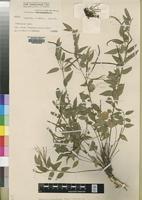
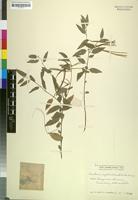
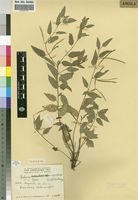
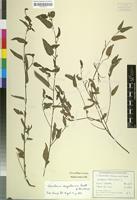
Corchorus angolensis

8 Images see all

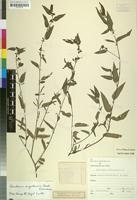
Filed as Corchorus angolensis Exell & Mendonça [family TILIACEAE]
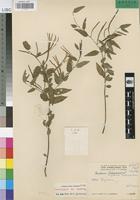
Isotype of Corchorus angolensis Exell & Mendonça [family TILIACEAE]
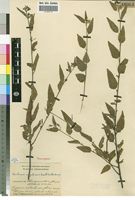
Paratype of Corchorus angolensis Exell & Mendonca [family TILIACEAE]
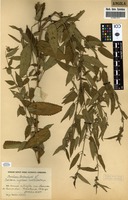
Filed as Corchorus angolensis Exell & Mendonca [family TILIACEAE]
Holotype of Corchorus angolensis Exell & Mendonça [family TILIACEAE]
Isotype of Corchorus angolensis Exell & Mendonça [family TILIACEAE]
Isotype of Corchorus angolensis Exell & Mendonca [family TILIACEAE]
Filed as Corchorus angolensis Exell & Mendonça [family TILIACEAE]
Previous
Next

Name

Identification
Corchorus angolensis Exell & Mendonça [family TILIACEAE ] (stored under name); Corchorus angolensis Exell & Mendonça [family TILIACEAE ]
Related name
  • Corchorus angolensis

Flora

Entry for Corchorus angolensis [family MALVACEAE]
Herbarium
South African National Biodiversity Institute, Compton Herbarium, Cape Town (SAM)
Collection
Flora of Southern Africa
Resource Type
Reference Sources
Entry From
Flora of South Africa, (2003) Author: Dr J.P. Roux
Names
Corchorus angolensis [family MALVACEAE]
Information
Fine-stemmed shrublet up to about 0,6 m tall; stems finely pubescent on all sides. Leaf-blade up to 70 x 28 mm, membranous, lan­ceolate, ovate-lanceolate, oblong-lanceolate, or narrowly lanceolate, apex acute, base ob­tuse to slightly cordate, margin serrate or more rarely serrate-crenate, glabrous or sparsely pilose on both sides; petiole 5-25 mm long, slender, pubescent; stipules about 4 mm long, filiform, pubescent. Inflo­rescence of small (1-) 2-5-flowered cymes opposite the upper leaves; peduncles up to 25 mm long, pubescent; pedicels similar, up to 8 mm long; bracts filiform, similar to the stipu­les. Sepals 10 x 2,5 mm, lanceolate, apex caudate, pubescent outside. Petals 8 x 4,5 mm, narrowly obovate, with a short basal claw ciliate on the margin. Androgynophore about 0,5 mm long, extended above into a puberulent or glabrous annulus. Stamens nu­merous, filamentous. Ovary 3-locular, trigo­nously cylindric, pubescent; style about 3 mm long, slender, glabrous. Capsule 30-60 mm long, on a straight fruiting pedicel, trigonous, undivided at the apex; valves glabrous when mature; seeds numerous, dark grey, 1,5-2,2 x 0,9-1,2 mm.
Habitat
Very near C. confusus (no. 4) but much less variable than that species and with a very characteristic, thin-stemmed, bushy habit.
Use
11. Corchorus angolensis Exell & Men-donga in Bolm Soc. broteriana, ser. 2, 25: 103 (1951); C.F.A. 1,2: 240 (1951); Roessl. in F.S.W.A. 81: 1 (1969). Type: Angola, Huila, Ungueria, Exell & Mendonca 2488 (BM, holo.!;COI!).
Range
A species of dry woodland or river banks. Recorded in South West Africa/Namibia only from the Kaokoland so far but also widespread in Angola. Map 22.

Related Materials

  • Terms and Conditions
  • Privacy Policy
  • Cookie Policy
  • Cookie Settings
  • Accessibility
  • Help
  • Contact Us
  • Facebook
  • Twitter
ITHAKA

JSTOR is part of ITHAKA, a not-for-profit organization helping the academic community use digital technologies to preserve the scholarly record and to advance research and teaching in sustainable ways.

©2000-2026 ITHAKA. All Rights Reserved. JSTOR®, the JSTOR logo, JPASS®, Aluka®, and ITHAKA® are registered trademarks of ITHAKA.

╳