JSTOR Global Plants Home
  • Home
  • Browse
  • About
  • Access
  • Account
    • Saved Items
    • Profile
  • Log in

Global Plants

Skip to Main Content
  • JSTOR Global Plants Home
  • Global Plants

    • Browse
    • About
    • Access
    • Account
      • Saved Items
      • Profile
Log in
  • Browse
  • About
  • Access
  • Account
    • Saved Items
    • Profile
Advanced Search

Compilation
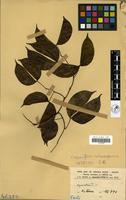
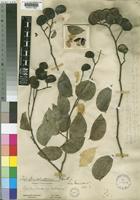
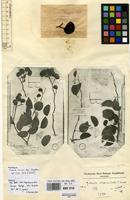
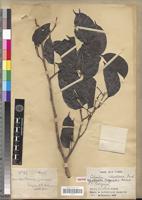
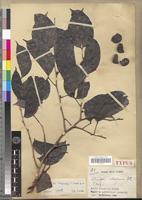
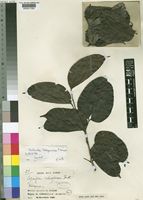
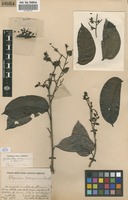
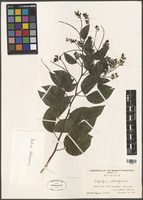
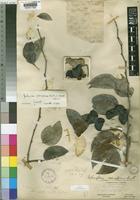
Copaifera coleosperma

9 Images see all

Filed as Copaifera coleosperma [family LEGUMINOSAE-CAESALPINIOIDEAE]
Guibourtia coleosperma (Benth.) J.Léonard [family LEGUMINOSAE-CAESALPINIOIDEAE]
Type of Copaifera coleosperma Benth. [family FABACEAE]
Isotype of Guibourtia pellegriniana Léonard [family FABACEAE-CAESALPINIOIDEAE]
Type of Guibourtia pellegriniana Léonard [family FABACEAE-CAESALPINIOIDEAE]
Type of Guibourtia pellegriniana J.Léonard [family LEGUMINOSAE-CAESALPINIOIDEAE]
Filed as Guibourtia pellegriniana Leonard [family FABACEAE]
Copaifera coleosperma Benth. cv. native mahogany [family FABACEAE]
Guibourtia coleosperma (Benth.) J.Léonard [family LEGUMINOSAE-CAESALPINIOIDEAE]
Previous
Next

Name

Identification
Copaifera coleosperma Benth. [family FABACEAE ] Verified by Not on sheet, Guibourtia coleosperma (Benth.) J.Leonard [family FABACEAE ] (stored under name); Verified by Leonard J., 1949
Related name
  • Copaifera coleosperma
  • Copaifera hymenaefolia
  • Copaifera gorskia
  • Guibourtia pellegriniana
  • Guibourtia coleosperma

Flora

Entry for COPAIFERA coleosperma Benth. [family LEGUMINOSAE-CAESALPINIOIDEAE]
Herbarium
Royal Botanic Gardens, Kew (K)
Collection
Flora of Tropical Africa
Resource Type
Reference Sources
Entry From
Flora of Tropical Africa, Vol 2, page 1, (1871) Author: Papilionaceae by Mr. J. G. Baker; Caesalpinieae and Mimoseae by Prof. Oliver)
Names
COPAIFERA coleosperma Benth. [family LEGUMINOSAE-CAESALPINIOIDEAE], in Linn. Trans. xxv. 316, t. 43 A.
Information
A large tree; branches slender, wholly glabrous. Leaflets unijugate, falcate-ovate or oblong-ovate, obtusely acuminate or more broadly pointed, coriaceous, glabrous, strongly reticulate, 2–2 3/4 in. long, 1–1 1/3 in. broad, petiolules about 1 line, petiole 1/2–1 in. Flowers (not seen) in terminal and axillary panicles. Legumes much compressed, coriaceous, somewhat semiorbicular, glabrous, rugulose or finely tuberculate-corrugate when dry, 3/4–1 1/4 in. long on a gynophore of 2–3 lines. Seeds conspicuously arillate; testa shining; cotyledons plano-convex, uniform, not resiniferous.
Distribution
South Central Batoka highlands, Dr. Kirk!
Notes
Dr. Kirk states that in some localities this tree “has been planted at least 100 years ago.” The red aril is used in preparing a nourishing drink. As pointed out by Mr. Bentham, this plant so far as fruiting specimens enable one to judge is identical with the Cuban C. hymenæifolia, excepting in the aril. Are they the same species? Which, if either, is the introduced plant? The leaflets in this species are more completely penniveined than in C. Gorskiana, in which the nervation is that of Bauhinia, the principal nervures usually radiating from the base.

Related Materials

  • Terms and Conditions
  • Privacy Policy
  • Cookie Policy
  • Cookie Settings
  • Accessibility
  • Help
  • Contact Us
  • Facebook
  • Twitter
ITHAKA

JSTOR is part of ITHAKA, a not-for-profit organization helping the academic community use digital technologies to preserve the scholarly record and to advance research and teaching in sustainable ways.

©2000-2026 ITHAKA. All Rights Reserved. JSTOR®, the JSTOR logo, JPASS®, Aluka®, and ITHAKA® are registered trademarks of ITHAKA.

╳