JSTOR Global Plants Home
  • Home
  • Browse
  • About
  • Access
  • Account
    • Saved Items
    • Profile
  • Log in

Global Plants

Skip to Main Content
  • JSTOR Global Plants Home
  • Global Plants

    • Browse
    • About
    • Access
    • Account
      • Saved Items
      • Profile
Log in
  • Browse
  • About
  • Access
  • Account
    • Saved Items
    • Profile
Advanced Search

Compilation
Convolvulus roseus

5 Images see all

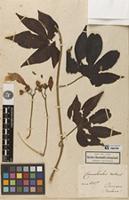
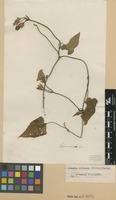
Holotype of Convolvulus roseus Kunth [family CONVOLVULACEAE]
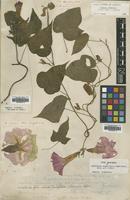
Type of Convolvulus roseus Miller [family CONVOLVULACEAE]
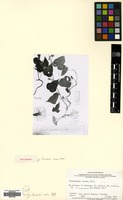
Type of Convolvulus roseus Mill. [family CONVOLVULACEAE]
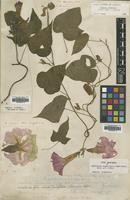
Type of Convolvulus roseus Miller [family CONVOLVULACEAE]
Filed as Ipomoea tiliacea (Willd.) Choisy [family CONVOLVULACEAE]
Previous
Next

Name

Identification
Convolvulus roseus Miller [family CONVOLVULACEAE ] Ipomoea congesta R.Br. [family CONVOLVULACEAE ] (stored under name); Ipomoea acuminata (Vahl) Roem. & Schult. [family CONVOLVULACEAE ] Verified by Stearn,W.T.,
Related name
  • Ipomoea acuminata
  • Convolvulus roseus
  • Ipomoea congesta

Flora

Entry for Ipomoea acuminata (Vahl) Roem. & Schultes [family CONVOLVULACEAE]
Herbarium
Royal Botanic Gardens, Kew (K)
Collection
Flora of Tropical East Africa
Resource Type
Reference Sources
Entry From
Flora of Tropical East Africa, page 1, (1963) Author: B. VERDCOURT (East African Herbarium)
Names
Ipomoea acuminata (Vahl) Roem. & Schultes [family CONVOLVULACEAE], Syst. 4 : 228 (1819). Type : West Indies, Santa Cruz, West (not found at C)
Convolvulus roseus Mill. [family CONVOLVULACEAE], Gard. Dict., ed. 8, No. 18 (1768); Britten in J.B. 47 : 46 (1909), non Ipomoea rosea Choisy. Type : West Indies, Jamaica, Houston (BM, holo.!)
Convolvulus acuminatum Vahl [family CONVOLVULACEAE], Symb. Bot. 3 : 26 (1794).
Ipomoea congesta R. Br. [family CONVOLVULACEAE], Prodr. : 485 (1810); van Ooststr. in Fl. Males, ser. 1, 4 (4) : 465, fig. 39a (1953); Verdc. in Taxon 6 : 231 (1957); Meeuse in Bothalia 6 : 735(1958). Type : Australia, Queensland, Cape York Peninsula, Endeavour R., Banks & Solander (BM, holo. !)
Ipomoea cathartica Poir. [family CONVOLVULACEAE], in Lam., Encycl., Suppl. 4 : 633 (1816). Type : West Indies, Santo Domingo, Poiteau (specimen No. 6829 in P–JU, holo. !)
Ipomoea leari Paxton [family CONVOLVULACEAE], Mag. Bot. 6 : 267 (1839). Type : a plant cultivated in Chelsea from seed from Ceylon collected by Lear (CGE, holo.)
Information
Herbaceous plant; stems twining or prostrate and rooting at the nodes, pilose. Leaf-blade ovate, 5–17 cm. long, 3.5–16 cm. wide, entire or sometimes 3-lobed, acuminate at the apex, cordate at the base, pilose above and sometimes densely so beneath; petiole 2–18 cm. long. Flowers few to several in fairly dense cymes; peduncle hairy, 0.5–20 cm. long; pedicels 2–15 mm. long. Sepals lanceolate, 1.4–2.2 cm. long, 3–5 mm. wide, herbaceous, glabrescent or softly pubescent, particularly at the base, but not bristly. Corolla blue or bluish-purple, often red-tinged, funnel-shaped, 5–8.5 cm. long, glabrous; tube whitish at the base.
Range
DISTR. K3, 4; T3; Z pantropical, often cultivated as an ornamental.
Altitude range
0–1750 m.
Distribution
KENYA Trans-Nzoia District Kitale, May 1956, Bogdan H121/56!KENYA Nairobi, Napier 1841 ! ;KENYA Kiambu District Muguga, cultd., 18 Jan. 1955, Greenway in E.A.H. 10952 !TANGANYIKA Lushoto District Amani, 14 Feb. 1950, Verdcourt 75 ! & 15 Jan. 1929, Greenway 1088! & 12 Oct. 1908, Brönnle 2113 (in part) !ZANZIBAR Zanzibar I. , Bungi, 18 Oct. 1961, Faulkner 2928
Notes
The specimen labelled Convolvulus purpureus in the Linnean Herbarium (No. 218.10) is this present species. The complicated nomenclature of the “ Morning Glories ” has been dealt with in Taxon 6 : 231–233 (1957) & 7 : 84–85 (1958). I. leari is a distinctive cultivated form of which Brönnle 2113 is an example but it is not worth a name save from a horticultural point of view. I. indica (Burm.) Merr. is possibly an earlier name for this species but the identification is very doubtful. The name used is not invalidated by I. acuminata Ruiz & Pavon (1799), which, being published in synonymy, is a nomen illegitimum.

Related Materials

  • Terms and Conditions
  • Privacy Policy
  • Cookie Policy
  • Cookie Settings
  • Accessibility
  • Help
  • Contact Us
  • Facebook
  • Twitter
ITHAKA

JSTOR is part of ITHAKA, a not-for-profit organization helping the academic community use digital technologies to preserve the scholarly record and to advance research and teaching in sustainable ways.

©2000-2026 ITHAKA. All Rights Reserved. JSTOR®, the JSTOR logo, JPASS®, Aluka®, and ITHAKA® are registered trademarks of ITHAKA.

╳