JSTOR Global Plants Home
  • Home
  • Browse
  • About
  • Access
  • Account
    • Saved Items
    • Profile
  • Log in

Global Plants

Skip to Main Content
  • JSTOR Global Plants Home
  • Global Plants

    • Browse
    • About
    • Access
    • Account
      • Saved Items
      • Profile
Log in
  • Browse
  • About
  • Access
  • Account
    • Saved Items
    • Profile
Advanced Search

Compilation
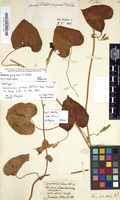
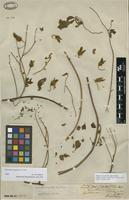
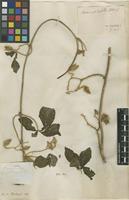
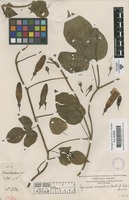
Convolvulus pilosus

9 Images see all

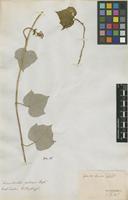
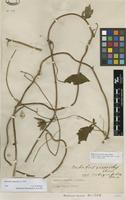
Holotype of Convolvulus pilosus Rottler [family CONVOLVULACEAE]
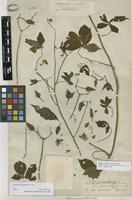
Type of Convolvulus pilosus Wikstr. [family CONVOLVULACEAE]
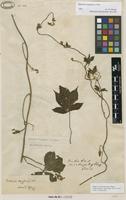
Filed as Convolvulus pilosus Roxb. [family CONVOLVULACEAE]
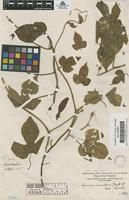
Filed as Ipomoea suaveolens (M. Martens & Galeotti) Hemsl. [family CONVOLVULACEAE]
Filed as Convolvulus pilosus Roxb. [family CONVOLVULACEAE]
Type of Convolvulus pilosus Wikstr. [family CONVOLVULACEAE]
Filed as Ipomoea suaveolens (M. Martens & Galeotti) Hemsl. [family CONVOLVULACEAE]
Type of Convolvulus pilosus Wikstr. [family CONVOLVULACEAE]
Previous
Next

Name

Identification
Convolvulus pilosus Roxb. [family CONVOLVULACEAE ] (stored under name); Verified by Not on sheet, Ipomoea dichroa Hochst. in A.Rich. [family CONVOLVULACEAE ] Verified by Haller, Albrecht von (junior),
Related name
  • Convolvulus not on sheet
  • Batatas pentaphylla
  • Convolvulus pilosus
  • Merremia pentaphylla
  • Convolvulus pentaphyllus
  • Batatas cissoides
  • Convolvulus guadaloupensis
  • Ipomoea suaveolens
  • Merremia aegyptia
  • Ipomoea pentaphylla
  • Ipomoea dichroa

Flora

Entry for IPOMOEA arachnosperma Welw. [family CONVOLVULACEAE]
Herbarium
Royal Botanic Gardens, Kew (K)
Collection
Flora of Tropical East Africa
Resource Type
Reference Sources
Entry From
Flora of Tropical East Africa, page 1, (1963) Author: B. VERDCOURT (East African Herbarium)
Names
IPOMOEA arachnosperma Welw. [family CONVOLVULACEAE], Apont. : 588 (1859); Meeuse in Fl. Pl. Afr. 31, t. 1203 (1956) & in Bothalia 6 : 736 (1958). Type : Angola, Loanda, Welwitsch 6243 (BM, iso.!)
Convolvulus bicolor Desr. [family CONVOLVULACEAE], in Lam., Encycl. 3 : 564 (1791), non Vahl (1794), non
Ipomoea bicolor Lam. [family CONVOLVULACEAE], nec Sweet. Type : Senegal, Geoffroy (P, holo. !)
Convolvulus dichrous Roem. & Schultes [family CONVOLVULACEAE], Syst. 4 : 263 (1819), nom. illegit. Type : as C. bicolor Desr.
Convolvulus pilosus Roxb. [family CONVOLVULACEAE], Fl. India, ed. Carey & Wall., 2 : 55 (1824), non Rottler (1803); nom. illegit. Type : Bengal, Patturghatta, Wallich 1401 (K, holo. !)
Ipomoea pilosa (Roxb.) Sweet [family CONVOLVULACEAE], Hort. Brit. : 289 (1827); Bak. & Rendle in F.T.A. 4 (2) : 161 (1905); F.W.T.A. 2 : 218 (1931), non Houttuyn (1777); nom. illegit.
Information
Annual; stems prostrate or twining, up to 2.3 m. long, densely covered with white or yellow hairs. Leaf-blade deeply 3-lobed, rarely entire, 5–13 cm. long, 6–13 cm. wide, acute or acuminate at the apex, cordate at the base, thin, green, but bristly-pubescent above, covered with dense white-cottony tomentum beneath; petiole 4–7 cm. long. Flowers several in lax or dense cymes; peduncle 1.5–7(–15) cm. long; secondary branches 1.5–3(–10) cm. long; bracts 7 mm. long and 2 mm. wide. Sepals lanceolate, 1.2–2.2 mm. long, 2.5–3 mm. wide, bristly or setose and glandular. Corolla pink or mauve, 1.2–1.7(–2.0) cm. long, pubescent above. Capsule ovoid, 8 mm. tall, ± pubescent above. Seeds velvety-white-pubescent (rarely quite glabrous) and black, ovoid, 4.5 mm. long.
Range
DISTR. U3; K1, 4, 5; T1, 2, 5, 7, 8 throughout most of tropical Africa and India
Altitude range
400–1100 m.
Distribution
KENYA Northern Frontier Province Dandu, 6 May 1952, Gillett 13073 ! ;KENYA Machakos District Mtito Andei, 23 June 1953, Bally 8974 !KENYA South Kavirondo District Homa Bay, July 1934, Napier 3453 in C.M. 6648 !TANGANYIKA Shinyanga, Nov. 1938, Koritschoner 2273 !TANGANYIKA Mpwapwa, Hornby 238 ! ;TANGANYIKA Lindi District Nachingwea, 29 June 1952, Anderson 779 !UGANDA Teso District Serere, July 1932, Chandler 882 !
Notes
I. arachnosperma is scarcely more than a small-flowered form of I. ficifolia and specimens with the flowers badly preserved are difficult to place. Andrews (Fl. Pl. Sudan 3 : 114 (1956)) uses the name I. aitonii Lindl. for I. pilosa Sweet non Cav. but states that the flowers are 1 inch [2.5 cm.] long. Dr. S. M. Walters informs me that the type of I. aitonii in the Cambridge University Herbarium has flowers up to 3 cm. long so the name does not apply to I. arachnosperma.

Related Materials

  • Terms and Conditions
  • Privacy Policy
  • Cookie Policy
  • Cookie Settings
  • Accessibility
  • Help
  • Contact Us
  • Facebook
  • Twitter
ITHAKA

JSTOR is part of ITHAKA, a not-for-profit organization helping the academic community use digital technologies to preserve the scholarly record and to advance research and teaching in sustainable ways.

©2000-2026 ITHAKA. All Rights Reserved. JSTOR®, the JSTOR logo, JPASS®, Aluka®, and ITHAKA® are registered trademarks of ITHAKA.

╳