JSTOR Global Plants Home
  • Home
  • Browse
  • About
  • Access
  • Account
    • Saved Items
    • Profile
  • Log in

Global Plants

Skip to Main Content
  • JSTOR Global Plants Home
  • Global Plants

    • Browse
    • About
    • Access
    • Account
      • Saved Items
      • Profile
Log in
  • Browse
  • About
  • Access
  • Account
    • Saved Items
    • Profile
Advanced Search

Compilation
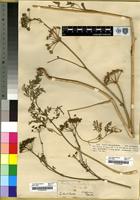
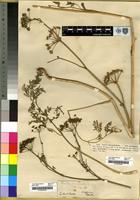
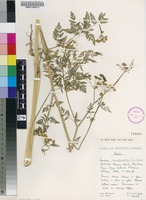
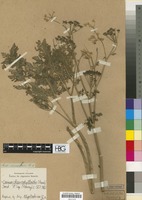
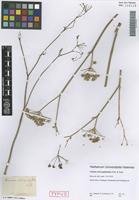
Conium chaerophylloides

5 Images see all

Filed as Conium chaerophylloides Eckl. and Zeyh. [family APIACEAE]
Type of Conium chaerophylloides Eckl. and Zeyh. [family APIACEAE]
Filed as Conium chaerophylloides (Thunb.) Sond. [family APIACEAE]
Filed as Conium chaerophylloides (Thunb.) Sond. [family UMBELLIFERAE/APIACEAE]
Type of Conium chaerophylloides Eckl. & Zeyh. [family APIACEAE]
Previous
Next

Name

Identification
Conium chaerophylloides Eckl. & Zeyh. [family APIACEAE ] (stored under name); Verified by C. F. Ecklon & C. L. P. Zeyher,
Related name
  • Conium chaerophylloides

Flora

Entry for Conium maculatum L. [family UMBELLIFERAE]
Herbarium
Royal Botanic Gardens, Kew (K)
Collection
Flora Zambesiaca
Resource Type
Reference Sources
Entry From
FZ, Vol 4, Part 0, page 553, (1978) Author: M. L. Gonçalves
Names
Conium maculatum L. [family UMBELLIFERAE], Sp. Pl. 1: 243 (1753). TAB. 148. Type from Europe.
Seseli chaerophylloides Thunb. [family UMBELLIFERAE], Prodr. PI. Cap.: 51 (1794 Type from S. Africa.
Conium chaerophylloides Thunb. Eckl. & Zeyh. [family UMBELLIFERAE], Enum. Pl. Afr. Extratrop.: 355 (1837).—Burtt Davy, F.P.F.T. 1: 518 (1926). Type as above.
Information
Erect, glabrous biennial herb up to 2 m. with a somewhat fleshy taproot. Stem with rather fine, regular grooving, often with irregular, characteristic purple spots, but sometimes unspotted especially in southern Africa. Leaves up to 35 cm. long, 2–3-pinnate, broadly ovate to deltate in outline; ultimate segments lanceolate to elliptic, deeply and coarsely divided, apices of the lobes slightly mucronate; petioles up to 10 cm. long, dilated at the base to form a conspicuous sheath. Terminal umbels on short peduncles, overtopped by the longer-peduncled laterals. Bracts and bracteoles well developed, lanceolate to broadly lanceolate, often with a whitish margin, somewhat caducous. Umbels with up to 20 rays 2–3·5 cm. long, partial umbels with 6–15 flowers on pedicels 2–5 mm. long. Calyx teeth obsolete; petals white with a short inflexed tip. Fruit ovoid to suborbicular, somewhat laterally compressed; Stylopodium depressed; styles deflexed with somewhat swollen bases. Ribs well developed, either linear or very distinctly undulate; vittae 0; seed channelled on the inner face.
Habitat
Waste places, damp ground and streamsides.
Distribution
Mozambique GI Chibuto, Estacao Experimental de Marriquerique, fl. & fr. 8.ix.1956, Barbosa & Montalvão 7474 (LMA).Zimbabwe C Salisbury, fl. 27.viii.1974, Biegel 4559 (K).
Notes
Very poisonous!No good reasons appear to have been advanced for maintaining the southern African representatives of this genus as a separate species (C. chaerophylloides), and accordingly it is here reduced to synonymy. The slight character differences attributed to the southern African representative seem to be contained within the total variation pattern of the widespread C. maculatum. It is possible that the general population now present in southern Africa may be the result of the chance introduction of a few individuals which represented genetically a very limited range of the total variability of the species. Thus the stems of the southern African material are immaculate and the ribs of the fruit are linear and not undulate (var. leiocarpum in Europe); at the same time the leaves seem to be rather more finely divided than is usual. However, all these states are found within the variability of C. maculatum and, while experimental work may throw further light on this situation, it is unlikely to justify specific recognition. Some specimens, e.g. Biegel 4559 (K) from a Salisbury rubbish dump, are fairly clearly recent importations from Europe or some other region outside the F.Z. area.

Related Materials

  • Terms and Conditions
  • Privacy Policy
  • Cookie Policy
  • Cookie Settings
  • Accessibility
  • Help
  • Contact Us
  • Facebook
  • Twitter
ITHAKA

JSTOR is part of ITHAKA, a not-for-profit organization helping the academic community use digital technologies to preserve the scholarly record and to advance research and teaching in sustainable ways.

©2000-2026 ITHAKA. All Rights Reserved. JSTOR®, the JSTOR logo, JPASS®, Aluka®, and ITHAKA® are registered trademarks of ITHAKA.

╳