JSTOR Global Plants Home
  • Home
  • Browse
  • About
  • Access
  • Account
    • Saved Items
    • Profile
  • Log in

Global Plants

Skip to Main Content
  • JSTOR Global Plants Home
  • Global Plants

    • Browse
    • About
    • Access
    • Account
      • Saved Items
      • Profile
Log in
  • Browse
  • About
  • Access
  • Account
    • Saved Items
    • Profile
Advanced Search

Compilation
Commiphora rubriflora

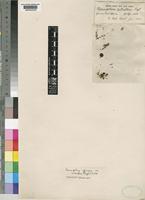
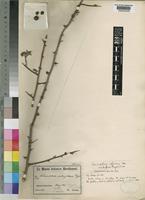
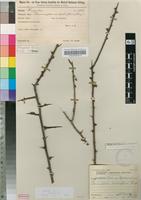
3 Images see all

Commiphora africana (A.Rich.) Engl. var. rubriflora (Engl.) Wild [family BURSERACEAE]
Isotype of Commiphora rubriflora Engl. [family BURSERACEAE]
Previous
Next

Name

Identification
Commiphora africana (A.Rich.) Engl. [family BURSERACEAE ] (stored under name); Verified by Willd, H., Commiphora rubriflora Engl. [family BURSERACEAE ]
Related name
  • Commiphora rubriflora
  • Commiphora africana

Flora

Entry for Commiphora africana var. rubriflora Engl. Wild [family BURSERACEAE]
Herbarium
Royal Botanic Gardens, Kew (K)
Collection
Flora Zambesiaca
Resource Type
Reference Sources
Entry From
FZ, Vol 2, Part 1, page 263, (1963) Author: H. Wild
Names
Commiphora africana var. rubriflora Engl. Wild [family BURSERACEAE], in Bol. Soc. Brot., Sér. 2, 33: 42 (1959). Type from Tanganyika.
Commiphora rubriflora Engl. [family BURSERACEAE], Bot. Jahrb. 30: 336 (1901); op. cit. 48: 490 (1912); in Engl. & Prantl, Nat. Pflanzenfam. ed. 2, 19a: 440 (1931). Type: Tanganyika, Unyika, Goetze 1406 (B, holotype†; K).
Information
Leaves and stems more densely pilose or tomentose than in var. africana. Calyx and pedicels pubescent.
Habitat
Ecology as for species.
Distribution
Zimbabwe S Fort Victoria, Umshandige Dam, fl. 6.x.1949, Wild 2884 (SRGH).Zimbabwe E Umtali, fl. 29.ix.1954, Chase 5303 (BM; SRGH).Mozambique N between Muatua and Angoche, fl. & fr. 7.xi.1936, Torre 980 (COI).Zimbabwe W Bulawayo, fl. x.1930, Steedman in Herb. Eyles 6626 (K; SRGH).Zambia N Kalambo Falls, fl. 2.xi.1951, Robertson 205 (K; PRE; SRGH).
Distribution (external)
Tanganyika
Uganda
Notes
Chase 5303 is a specimen somewhat intermediate between the two varieties as the hairs on the calyx are very sparse.Although the pseudaril is apparently absent in C.africana and other members of Sect. Africanae (Engl.) Wild, there is evidence that it is not in reality so but that it has been absorbed into the tissue of the endocarp and is now indistinguishable from it. This is shown by some specimens (e.g., Angus 1060 (FHO; K) from Sesheke) which have a lobulate pseudaril enclosing about three-quarters of the endocarp. In mature fruits of this kind the naked endocarp is black and the pseudaril surface creamy white, as is the whole surface in typical specimens, but if a transverse section be cut through below the edge of the pseudarillar tissue no black or otherwise distinguishable lower layer can be seen.

Related Materials

  • Terms and Conditions
  • Privacy Policy
  • Cookie Policy
  • Cookie Settings
  • Accessibility
  • Help
  • Contact Us
  • Facebook
  • Twitter
ITHAKA

JSTOR is part of ITHAKA, a not-for-profit organization helping the academic community use digital technologies to preserve the scholarly record and to advance research and teaching in sustainable ways.

©2000-2026 ITHAKA. All Rights Reserved. JSTOR®, the JSTOR logo, JPASS®, Aluka®, and ITHAKA® are registered trademarks of ITHAKA.

╳