JSTOR Global Plants Home
  • Home
  • Browse
  • About
  • Access
  • Account
    • Saved Items
    • Profile
  • Log in

Global Plants

Skip to Main Content
  • JSTOR Global Plants Home
  • Global Plants

    • Browse
    • About
    • Access
    • Account
      • Saved Items
      • Profile
Log in
  • Browse
  • About
  • Access
  • Account
    • Saved Items
    • Profile
Advanced Search

Compilation
Commiphora pyracanthoides

8 Images see all

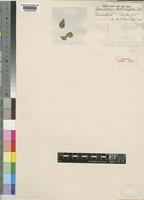
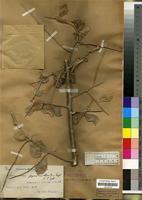
Holotype of Commiphora berberidifolia Engl. [family BURSERACEAE]
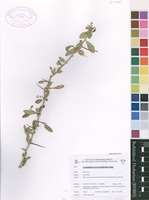
Filed as Commiphora pyracanthoides Engl. [family BURSERACEAE]
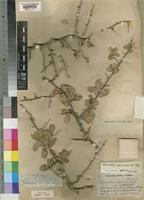
Commiphora glandulosa Schinz [family BURSERACEAE]
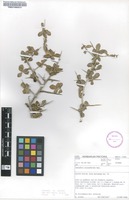
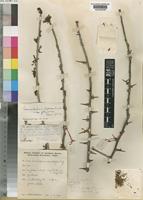
Isoneotype of Commiphora pyracanthoides Engl. [family BURSERACEAE]
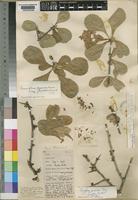
Holotype of Commiphora pyracanthoides Engl. [family BURSERACEAE]
Filed as Commiphora pyracanthoides Engl. [family BURSERACEAE]
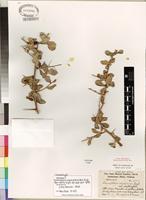
Neotype of Commiphora pyracanthoides Engl. [family BURSERACEAE]
Commiphora glandulosa Schinz [family BURSERACEAE]
Previous
Next

Name

Identification
Commiphora pyracanthoides Engl. [family BURSERACEAE ] (stored under name); Verified by Engler, A.,
Related name
  • Commiphora glandulosa
  • Commiphora abyssinica
  • Commiphora pyracanthoides
  • Commiphora subsessilifolia
  • Commiphora berberidifolia
  • Commiphora lugardae

Flora

Entry for Commiphora pyracanthoides [family BURSERACEAE]
Herbarium
South African National Biodiversity Institute, Compton Herbarium, Cape Town (SAM)
Collection
Flora of Southern Africa
Resource Type
Reference Sources
Entry From
Flora of South Africa, (2003) Author: Dr J.P. Roux
Names
Commiphora pyracanthoides [family BURSERACEAE]
Information
Dioecious or polygamous many-stemmed shrub, 0,5-3 m tall, occasionally a small tree with single trunk up to 3 m tall; bark greyish green or yellowish green, flaking in small yel­lowish papery pieces; young branchlets gla­brous, spine-tipped. Leaves usually simple but on long shoots often trifoliolate with smaller lateral leaflets, with long glandular hairs at base but otherwise glabrous, green, subsessile, mar­gin finely crenate-serrate, occasionally almost entire, apex acute or obtuse, base cuneate, lam­ina of simple leaves/terminal leaflet elliptic, narrowly obovate or obovate, (16-)25(-55)x (8—)16(—32) mm, lateral leaflets narrowly elliptic or elliptic, (4-)8(-12)x(2-)3(-10) mm. Inflorescence: reduced cymes of flowers borne in clusters. Flowers unisexual or bisex­ual, hypogynous. Pedicel 0,5-1 mm long, pe- dicel and calyx without glandular hairs (gla­brous). Disc 4-lobed, folded to form 4 large lobes towards the outside, inside of lobes deeply grooved, not adnate to perianth. Sta­mens 8. Fruit ellipsoid to subglobose, ± 11x8x7 mm, glabrous; putamen rugose, with a hump on less convex race; pseudo-aril red, with 4 arms of equal length reaching almost to apex of putamen.
Habitat
In certain areas of S.W.A./Namibia it is impossible to distinguish on habit alone between C. glandulosa (no. 4) and C. pyracanthoides because both species can be either shrub-like or small trees. When occurring together in the same area, however, they can usually easily be distin­guished as C. glandulosa is a small tree with a single bole and C. pyracanthoides a small, often many-stemmed shrub.
Use
5. Commiphora pyracanthoides Engl, in Bot. Jb. 26: 368 (1899); in Pflanzenfam. edn 2,19a: 437 (1931); Burtt Davy, Fl. Transv. 2: 485 (1932); Wild in Bolm Soc. broteriana, sir. 2, 33: 43, 82(1959); Wild in F.Z. 2: 268 (1963); Merxm. in F.S.W.A. 70: 8 (1968); J. J. A. v.d. Walt in Bothalia 11: 60, fig. 8-13 (1973); in Mitt. bot. StSamml., Miinch. 12: 208, fig. 5, 29a & a, (1975). Type: S.W.A./Namibia, Otjimbingwe, Fischer 8 (holo.t; ?); Neotype: S.W.A./Namibia, Little Karas Mountains, Holoog, Pearson 9747 (K!).
Range
Widely distributed in S.W.A./Namibia, Botswana, northern Tvl., Swaziland and northern Zululand. Known from a few localities in northern Cape. It grows in sandy, well-drained soil in savanna-woodland, shrub-thornveld and broken mopaniveld. Also recorded from Zimbabwe and Mozambique. Map 7.

Related Materials

  • Terms and Conditions
  • Privacy Policy
  • Cookie Policy
  • Cookie Settings
  • Accessibility
  • Help
  • Contact Us
  • Facebook
  • Twitter
ITHAKA

JSTOR is part of ITHAKA, a not-for-profit organization helping the academic community use digital technologies to preserve the scholarly record and to advance research and teaching in sustainable ways.

©2000-2026 ITHAKA. All Rights Reserved. JSTOR®, the JSTOR logo, JPASS®, Aluka®, and ITHAKA® are registered trademarks of ITHAKA.

╳