JSTOR Global Plants Home
  • Home
  • Browse
  • About
  • Access
  • Account
    • Saved Items
    • Profile
  • Log in

Global Plants

Skip to Main Content
  • JSTOR Global Plants Home
  • Global Plants

    • Browse
    • About
    • Access
    • Account
      • Saved Items
      • Profile
Log in
  • Browse
  • About
  • Access
  • Account
    • Saved Items
    • Profile
Advanced Search

Compilation
Commiphora gracilifrondosa

5 Images see all

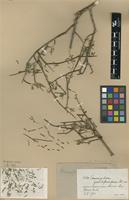
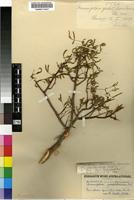
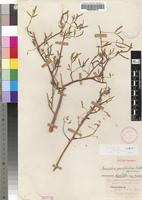
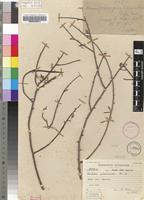
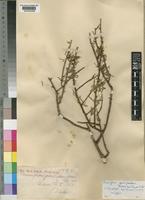
Type of Commiphora gracilifrondosa Dinter ex J.J.A.van der Walt [family BURSERACEAE]
Isotype of Commiphora gracilifrondosa Dinter ex J.J.A.van der Walt [family BURSERACEAE]
Previous
Next

Name

Identification
Isotype of Commiphora gracilifrondosa Dinter ex J.J.A.van der Walt [family BURSERACEAE ] (stored under name);
Related name
  • Commiphora oblanceolata
  • Commiphora gracilifrondosa

Flora

Entry for Commiphora gracilifrondosa [family BURSERACEAE]
Herbarium
South African National Biodiversity Institute, Compton Herbarium, Cape Town (SAM)
Collection
Flora of Southern Africa
Resource Type
Reference Sources
Entry From
Flora of South Africa, (2003) Author: Dr J.P. Roux
Names
Commiphora gracilifrondosa [family BURSERACEAE]
Information
Dioecious shrub-like tree 1-3 m tall, trunk branching above ground level into thick stems with succulent appearance; bark reddish brown with dark spots, not peeling; young branchlets glabrous, slender, not spine-tipped. Leaves trifoliolate with the terminal leaflet of­ten irregularly lobed, glabrous, green; petiole 4-20 mm long; leaflets linear to cultrate but very variable in size and form, sessile or sub­sessile, margin irregularly and rather coarsely dentate-serrate, apex obtuse to acute, base cuneate, terminal leaflet (15-)25(-45)x (10-)15(-20) mm, lateral leaflets (7-)20 (-35)Xl-2 mm. Inflorescence: dichasial cymes up to 50 mm long, sparsely glandular, or flowers solitary. Flowers unisexual, perigy­nous. Pedicel 1-4 mm long, pedicel, calyx and hypanthium sparsely glandular. Disc 4-lobed, adnate to hypanthium. Stamens 4 only. Fruit subglobose to ellipsoid, ± 10x8x7 mm, gla­brous; putamen smooth; pseudo-aril cupular with 2 long commissural arms, covering lower quarter of more convex face of putamen and lower half of other face.
Habitat
The relatively large leaves with characteristic leaflets, distinguish this species from others with a similar habit.
Use
16. Commiphora gracilifrondosa Dinter ex J. J. A. v.d. Walt in Jl S. Afr. Bot. 37: 190 (1971); in Bothalia 11: 95, fig. 94-99 (1973); in Mitt. bot. StSamml., Munch. 12: 216, fig. 12 (1975): Type: S.W.A./Namibia, Warmbad, near Auros, Dinter 5124 (BOL, holo.; S!; K!; Bt).
Range
Occurs in north-western Cape and southern part of S.W.A./Namibia. It has been collected from Goodhouse in the west to Kenhardt in the east where it grows on the arid mountains along the Orange River. Map 18.

Related Materials

  • Terms and Conditions
  • Privacy Policy
  • Cookie Policy
  • Cookie Settings
  • Accessibility
  • Help
  • Contact Us
  • Facebook
  • Twitter
ITHAKA

JSTOR is part of ITHAKA, a not-for-profit organization helping the academic community use digital technologies to preserve the scholarly record and to advance research and teaching in sustainable ways.

©2000-2026 ITHAKA. All Rights Reserved. JSTOR®, the JSTOR logo, JPASS®, Aluka®, and ITHAKA® are registered trademarks of ITHAKA.

╳