JSTOR Global Plants Home
  • Home
  • Browse
  • About
  • Access
  • Account
    • Saved Items
    • Profile
  • Log in

Global Plants

Skip to Main Content
  • JSTOR Global Plants Home
  • Global Plants

    • Browse
    • About
    • Access
    • Account
      • Saved Items
      • Profile
Log in
  • Browse
  • About
  • Access
  • Account
    • Saved Items
    • Profile
Advanced Search

Compilation
Commelina subcucullata

4 Images see all

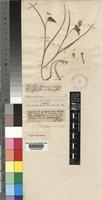
Commelina holubii C.B.Clarke [family COMMELINACEAE]
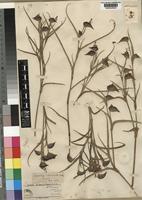
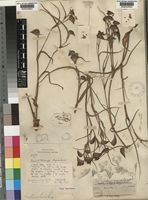
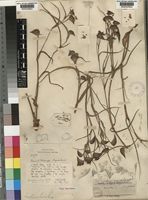
Commelina subcucullata C.B.Clarke [family COMMELINACEAE]
Type of Commelina subcucullata C.B.Clarke [family COMMELINACEAE]
Previous
Next

Name

Identification
Commelina subcucullata C.B.Clarke [family COMMELINACEAE ] (stored under name); Verified by Clarke, C.B., Commelina welwitschii C.B.Clarke [family COMMELINACEAE ]
Related name
  • Commelina welwitschii
  • Commelina subcucullata
  • Commelina holubii
  • Commelina livingstoni

Flora

Entry for COMMELINA subcucullata C. B. Clarke [family COMMELINACEAE]
Herbarium
Royal Botanic Gardens, Kew (K)
Collection
Flora of Tropical Africa
Resource Type
Reference Sources
Entry From
Flora of Tropical Africa, Vol 8, page 25, (1902) Author: (By C. B. Clarke.)
Names
COMMELINA subcucullata C. B. Clarke [family COMMELINACEAE]
Information
More or less hairy. Stems 1 ft. long, suberect at the base; internodes 2–4 1/2 in. long. Leaves 4–5 1/2 in. long, linear, but more or less dilated at the base, where they are sometimes 1/2 in. wide. Peduncles solitary towards the ends of the branches, erect, exserted 1–2 in. from the leaf-sheaths. Spathes 3/4 in. long, ovate-acuminate, acute, more or less hairy, pale brown, with purple longitudinal veins; the margins connate at the base for 1/12– 1/6 in. Petals (from the dried plant) appear yellow to brown-red. Capsule 1/5 in. long, square, 4-seeded. Seeds globose, smooth, brown.
Distribution
Nyasaland Mozamb. Dist. Mount Malosa, 4000–6000 ft., Whyte! Mount Zomba, 4000–6000 ft., Whyte! Mount Mlanji, Scott-Elliot, 8675!
Notes
This may prove only a variety of C. Carsoni. The typical five specimens of Whyte, with acuminate highly coloured spathes, having the margins distinctly connate at the base, look distinct enough; but Scott-Elliot, 8675, has less acuminate, less coloured spathes, with nearly free margins, and looks half-way to C. Carsoni .

Related Materials

  • Terms and Conditions
  • Privacy Policy
  • Cookie Policy
  • Cookie Settings
  • Accessibility
  • Help
  • Contact Us
  • Facebook
  • Twitter
ITHAKA

JSTOR is part of ITHAKA, a not-for-profit organization helping the academic community use digital technologies to preserve the scholarly record and to advance research and teaching in sustainable ways.

©2000-2026 ITHAKA. All Rights Reserved. JSTOR®, the JSTOR logo, JPASS®, Aluka®, and ITHAKA® are registered trademarks of ITHAKA.

╳