JSTOR Global Plants Home
  • Home
  • Browse
  • About
  • Access
  • Account
    • Saved Items
    • Profile
  • Log in

Global Plants

Skip to Main Content
  • JSTOR Global Plants Home
  • Global Plants

    • Browse
    • About
    • Access
    • Account
      • Saved Items
      • Profile
Log in
  • Browse
  • About
  • Access
  • Account
    • Saved Items
    • Profile
Advanced Search

Compilation
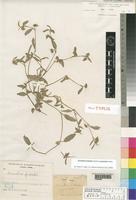
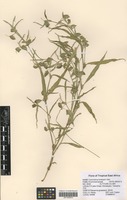
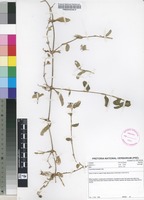
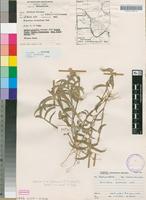
Commelina forskaolii

8 Images see all

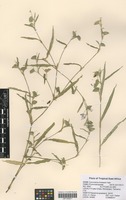
Filed as Commelina forskaolii Vahl [family COMMELINACEAE]
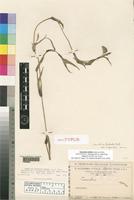
Holotype of Commelina latifolia Hochst. ex A.Rich. var. major Chiov. [family COMMELINACEAE]
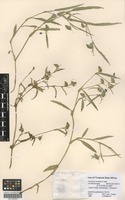
Filed as Commelina forskaolii Vahl [family COMMELINACEAE]
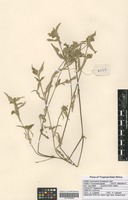
Holotype of Commelina forskaolii Vahl f. geniculata A.Terracc. [family COMMELINACEAE]
Filed as Commelina forskaolii Vahl [family COMMELINACEAE]
Previous
Next

Name

Identification
Commelina latifolia Hochst. ex A.Rich. [family COMMELINACEAE ] (stored under name); Verified by Data not digitized, Commelina forskaolii Vahl [family COMMELINACEAE ] Verified by Data not digitized,
Related name
  • Commelina forskaolii
  • Commelina latifolia

Flora

Entry for COMMELINA forskaolii Vahl [family COMMELINACEAE]
Herbarium
Royal Botanic Gardens, Kew (K)
Collection
Flora Somalia
Resource Type
Reference Sources
Entry From
Flora Somalia, Vol 4, (1995) Author: by R. B. Faden [updated by M. Thulin 2008]
Names
COMMELINA forskaolii Vahl [family COMMELINACEAE], (1805), as “ forskalei ”.
Information
Perennial (or annual?), sometimes with a definite base and tuberous roots or, more commonly, without a base, and with fibrous roots only; shoots ascending to decumbent and rooting at the nodes, often forming cleistogamous flowers on short, subterranean shoots from the rooted nodes. Leaves distichous, sheaths c. 0.5–1.3 cm long, puberulous, sometimes with a line of longer hairs along the fused edge, ciliate at the apex, blade elliptic to linear-lanceolate, flat to conduplicate, 1.5–6(–7) x 0.4–1.2(–2) cm, apex acute to rounded, often mucronulate and recurved, base oblique, cuneate, surfaces puberulous or pilose-puberulous or the upper sometimes subglabrous, margins strongly undulate. Spathes solitary on 0.4–1.3 cm long peduncles with a line of pubescence, not falcate, 0.8–1.5 x 0.45–0.8 cm, hirsute-puberulous, margins fused basally, glabrous, often violet; upper cincinnus usually well­developed, exserted, 1-flowered, lower 2–3-flowered. Flowers bisexual and male, c. 1.5 cm wide; paired sepals shortly fused basally or ± free; petals dark blue, the lower one very reduced and lanceolate or subulate; lateral stamens with lyrate, winged filaments, anthers blue, medial stamen with larger saddle-shaped, blue or blue-violet connective with yellow, sterile basal lobes. Capsules obovoid, 6–6.5 x 4–4.5 mm when seeds of ventral cells developed, 3.5–4 x 2–2.5 mm when only dorsal cell developed, dorsal cell indehiscent, keeled on the back and with low, longitudinal, crenate ridges or rows of tubercles, 1-seeded, ventral cells usually abortive, occasionally the apical seed developed. Seeds of ventral cells, when present, transversely elliptic to broadly ovate, c. 2.5–3 x 2 mm, testa brown, smooth, farinose.
Range
N1; C1, 2; S1–3 Kenya and Ethiopia southwards to South Africa and Namibia, westwards to Senegal
Altitude range
c. 0–1500 m.
Distribution
SOMALIA Faden & Kuchar 88/107; Gillett & al. 24938; Thulin, Dahir & Hedrén 7298.
Distribution (external)
Arabia
Socotra
Madagascar
India
Notes
Baar, baar biot, horsa-had (Som.). The habitats at the higher elevations near Hargeisa are not stated and possibly are different from those recorded above. The species is used in Somalia for the treatment of wounds.

Related Materials

  • Terms and Conditions
  • Privacy Policy
  • Cookie Policy
  • Cookie Settings
  • Accessibility
  • Help
  • Contact Us
  • Facebook
  • Twitter
ITHAKA

JSTOR is part of ITHAKA, a not-for-profit organization helping the academic community use digital technologies to preserve the scholarly record and to advance research and teaching in sustainable ways.

©2000-2026 ITHAKA. All Rights Reserved. JSTOR®, the JSTOR logo, JPASS®, Aluka®, and ITHAKA® are registered trademarks of ITHAKA.

╳